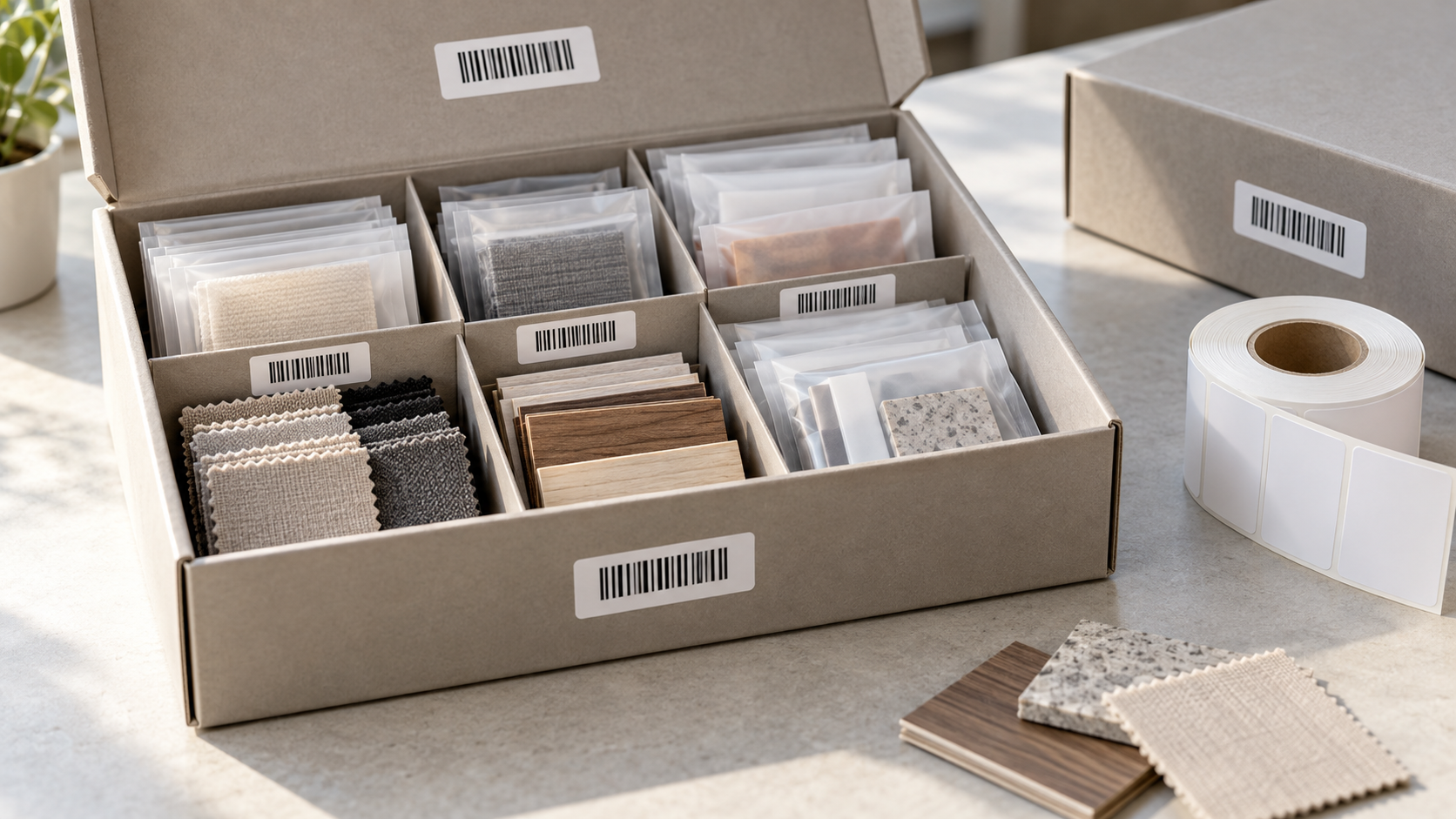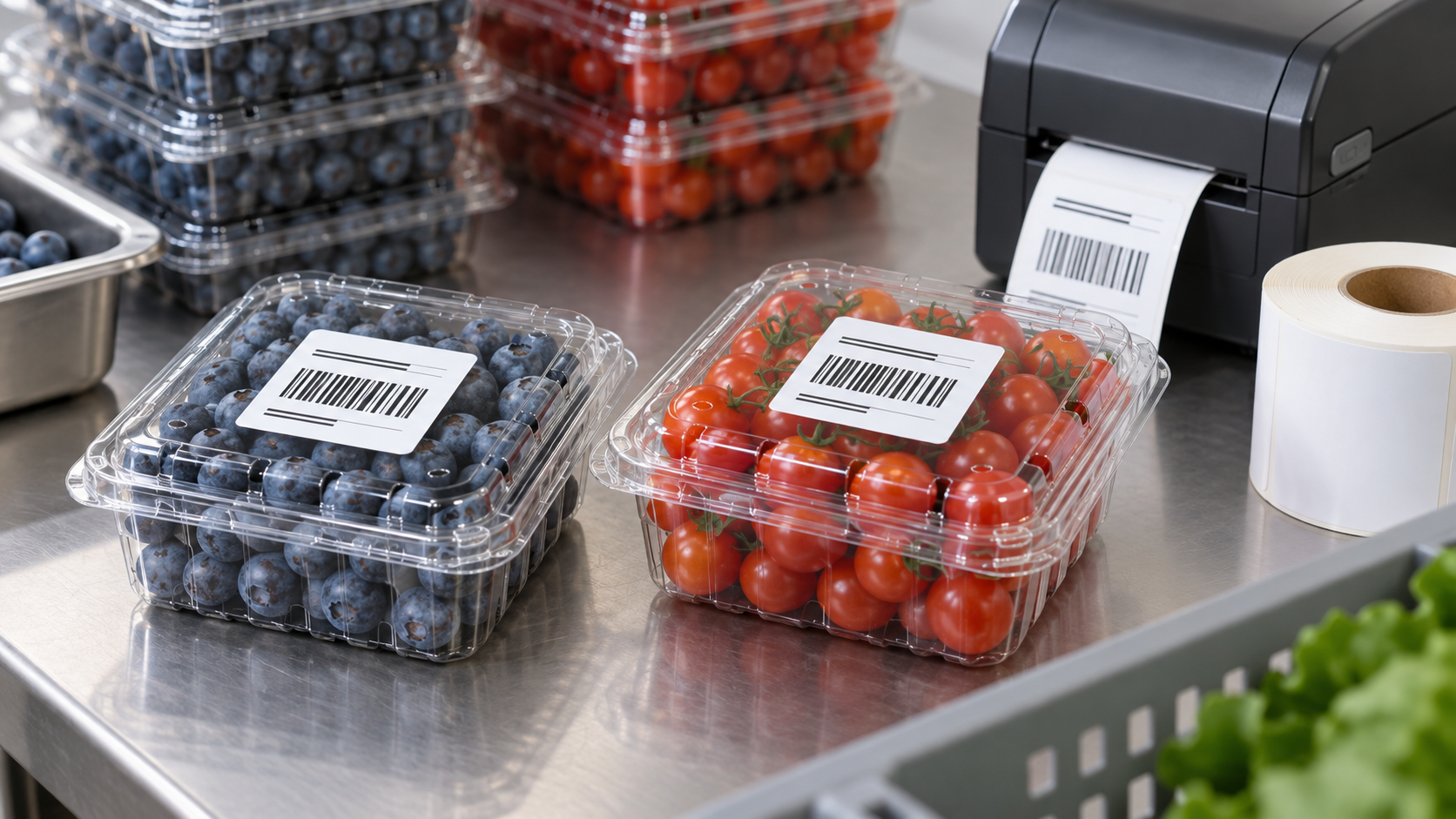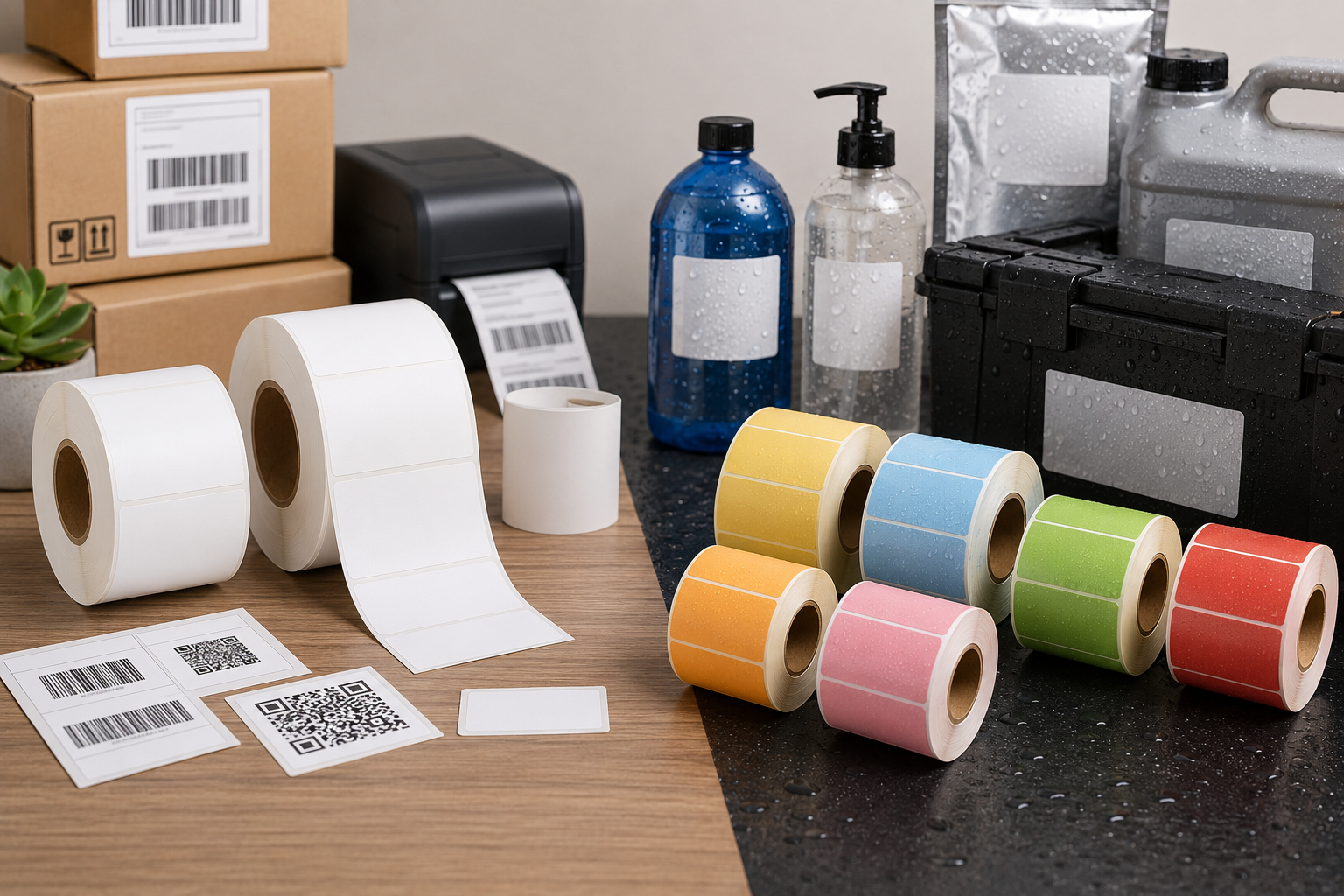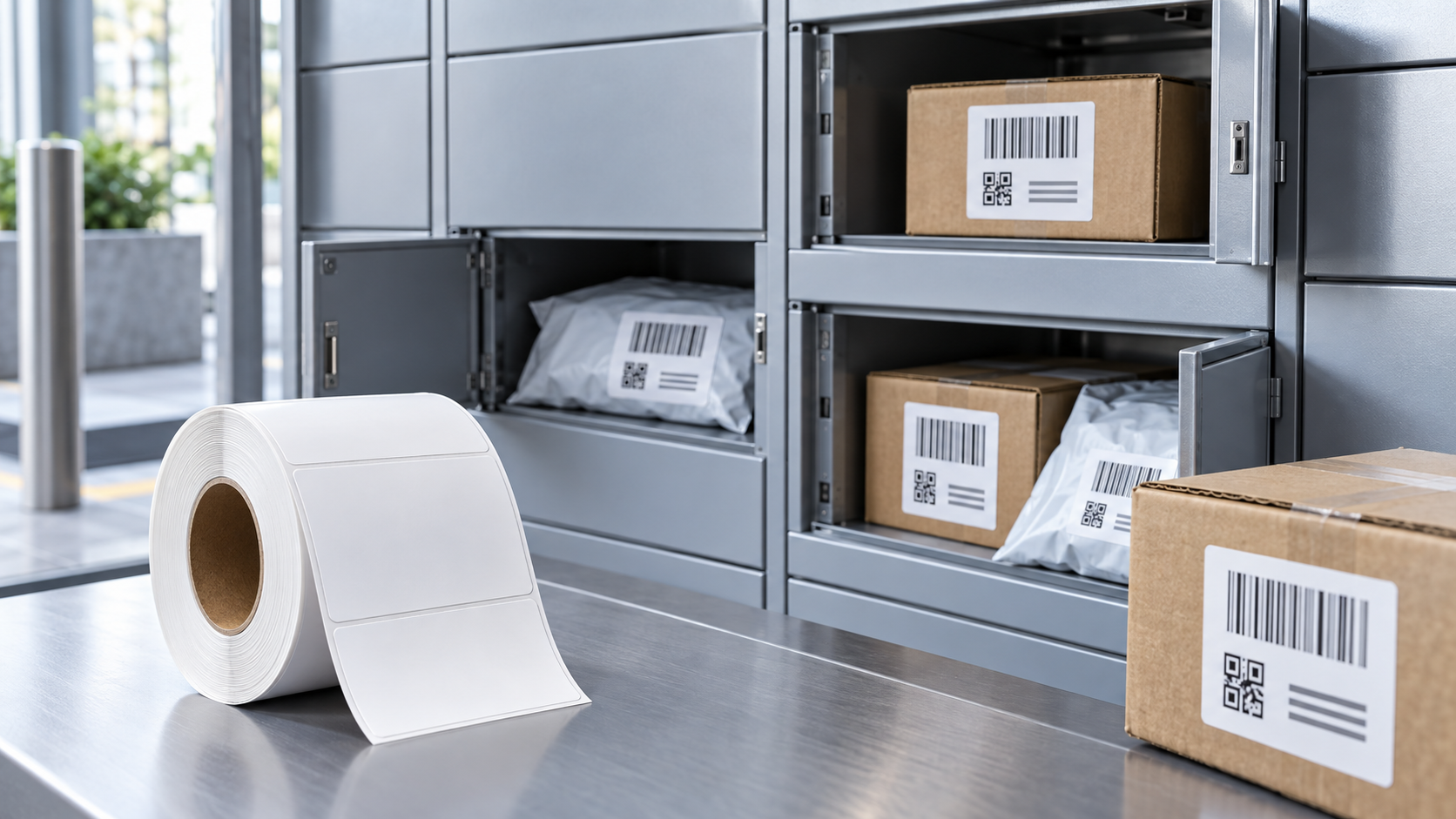
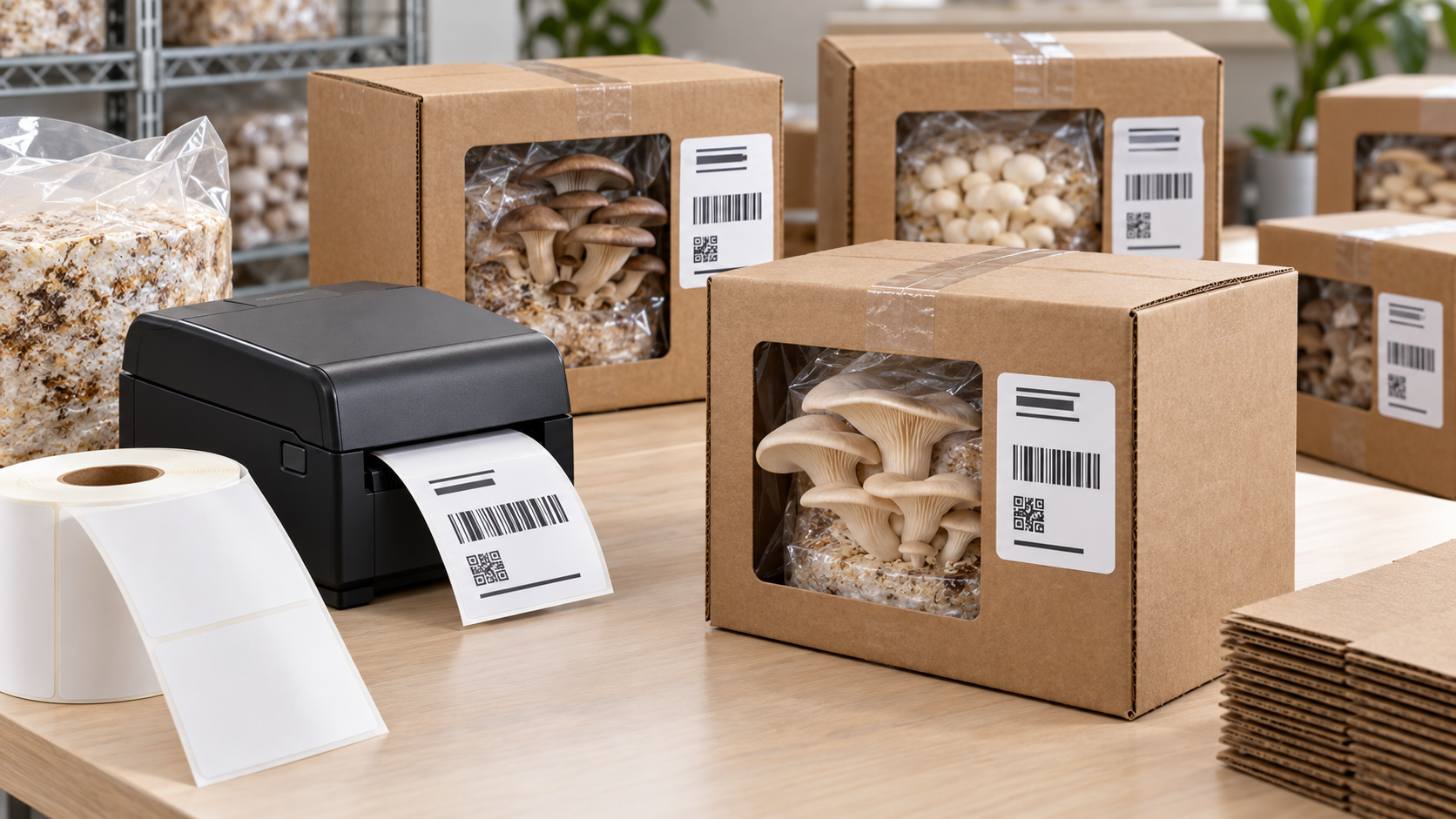
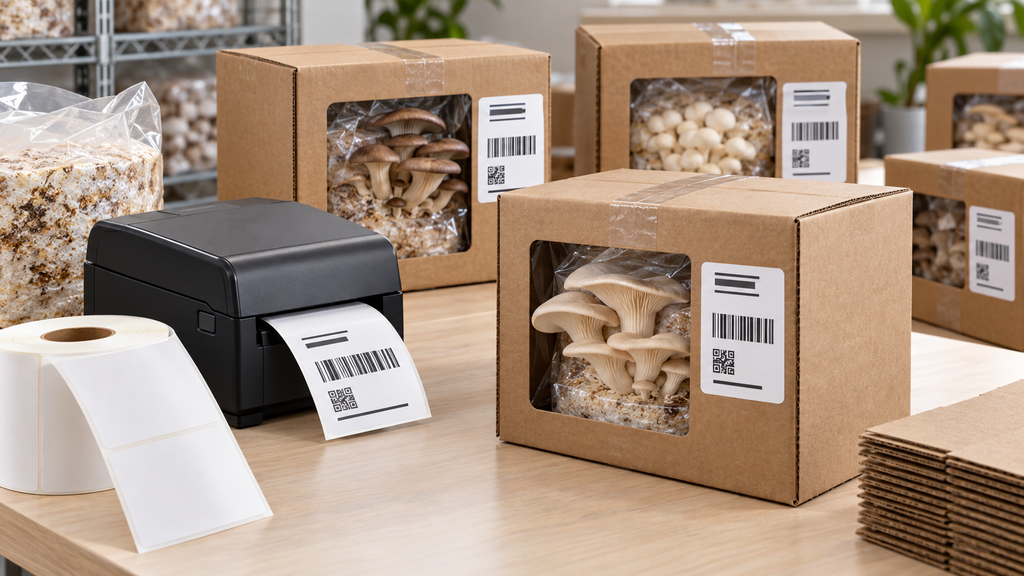
A mushroom grow kit combines living material, packaging, and instructions. Its thermal label should identify the species and lot without covering ventilation, a display window, or the opening instructions. Apply the variable-data label to a dry outer carton panel and test it through the kit’s planned storage and shipping life.
Keep the Lot With the Kit
The species name alone is not enough to investigate a quality issue. Print a kit lot or batch code tied to the assembly record, and verify it before sealing. If a kit includes several inner components, the outer code should point to the exact parts used. Do not relabel a returned kit as a new lot simply because the carton is replaced.
Avoid Moisture and Openings
Grow media and misting instructions create a wetter context than an ordinary dry retail carton. Keep the label on the outside, away from windows, vents, and opening tabs. A large label spanning a window may obscure the product or interfere with inspection. Use a flat panel on the finished filled box, not an empty carton mockup.
Check Instructions and Dates
The label may carry a pack date or a short setup reference, while detailed growing instructions belong in a stable printed insert or approved digital content. Verify that the date rule follows the producer’s actual product process. A variable template should not overwrite fixed safety or care information already printed on the carton.
Trial the Full Kit Route
Pack sample kits with the normal inner bag and media, then follow storage, case packing, transport, and customer opening. Check code readability, edge lift, and whether moisture reaches the label. Include the longest intended hold interval. If the carton is displayed under bright light for months, test image life or use a longer-lived print method for customer-facing data.
Define el trabajo antes de elegir el material
Write down exactly what the label on mushroom grow kit cartons must accomplish during kit packing, storage, delivery, and customer setup. Decide which field a worker reads, which code a scanner captures, and when the information can be retired. The working data may include species, kit lot, pack date, inventory code, and setup reference; distinguish fields that must be printed from those better kept in the inventory system. Decide who owns an incorrect record and how it is corrected. A label specification based only on dimensions misses the process that gives the printed mark its meaning.
Adapta el adhesivo a la superficie real
Test the proposed adhesive on kraft cartons and protective outer bags, using the exact material supplied to production. Apply it at the normal work area temperature and inspect it after the planned dwell, not only after a few minutes. The main challenges here are moisture near grow media, display windows, and changing kit batches. A stronger adhesive may hold better but can create residue or damage during removal. If direct application is unreliable or undesirable, assess a preprinted carton with a small variable batch label. Keep approved samples from each packaging or carrier supplier so a later material substitution triggers a targeted retest.
Para esta aplicación, compara mushroom kit labels on the actual kraft cartons and protective outer bags and through the planned handling interval. Ask for samples before choosing a full production roll.
Elige el rollo y la impresora a la vez
A correctly sized blank label can still be incompatible with the printer used for mushroom grow kit cartons. Check media path clearance, sensing method, roll winding, core diameter, and usable print width against the device specification. Then print the longest expected identifier and the smallest barcode in the production layout. Run enough labels to expose intermittent feed errors. If print darkness must be increased sharply to make the stock readable, investigate material and printhead condition before approving the roll.
Haz que cada escaneo sea deliberado
Design the barcode for the scanner and distance used with mushroom grow kit cartons. Leave the required clear margin, preserve contrast, and keep the code away from folds, seams, edges, or moving parts. Put the most useful human-readable identifier beside it so staff can spot a mismatch. If more than one code appears on the object, state which workflow uses each one and remove obsolete routing codes. Print the longest data value and smallest label in the test set; a short sample code can hide layout problems.
Coloca la etiqueta en un punto fijo
The preferred position is a dry flat carton panel away from the window and opening tab. Apply only after the object or package has reached the form it will have during normal handling. Remove loose dust or moisture where the process permits, press across the entire label, and check the corners. Give workers a simple placement guide showing the approved zone and the areas to avoid. If the application surface changes between suppliers or batches, check a few finished units before the shift continues. An attractive label applied in the wrong place is still a failed label.
Realiza una prueba que refleje el uso real
Print a production roll and test it on the hardest version of mushroom grow kit cartons, then follow it through kit packing, storage, delivery, and customer setup. Check printer feed, initial readability, adhesion, edge lift, and scanning at each real handoff. Include the worst expected combination of moisture near grow media, display windows, and changing kit batches. Keep both successful and failed examples with the time and conditions recorded. If a sample fails, change one factor at a time, such as placement, adhesive, size, or print settings. This makes the result useful for purchasing rather than a vague pass or fail.
Control de reimpresiones y etiquetas antiguas
Correction rules matter as much as first-time printing for mushroom grow kit cartons. Define who may edit species, kit lot, pack date, inventory code, and setup reference and whether the previous code must be voided. Reprint from the corrected system record, compare the new label with the physical unit, and remove the outdated version. If identity is uncertain, hold the item in a designated exception area. Handwritten changes over a barcode can conceal the error from a person while leaving the machine-readable data unchanged.
Facilita al proveedor las especificaciones de aprobación
Send a sample of kraft cartons and protective outer bags, the printer model, a dimensioned label drawing, roll geometry, required data and barcode layout, expected life, and the environmental conditions described above. Ask for converted-roll samples of the proposed construction. Agree on the acceptance test before a bulk order, including feed performance, scan success, bond after normal handling, and removal behavior when relevant. Record the approved material, adhesive, liner, die cut, and winding as one controlled specification. Compare cost per successfully labeled unit rather than only the blank-label price.
A la hora de evaluar etiquetas térmicas directas for mushroom grow kit cartons, give the supplier the real surface, printer details, and pass criteria rather than a size alone.