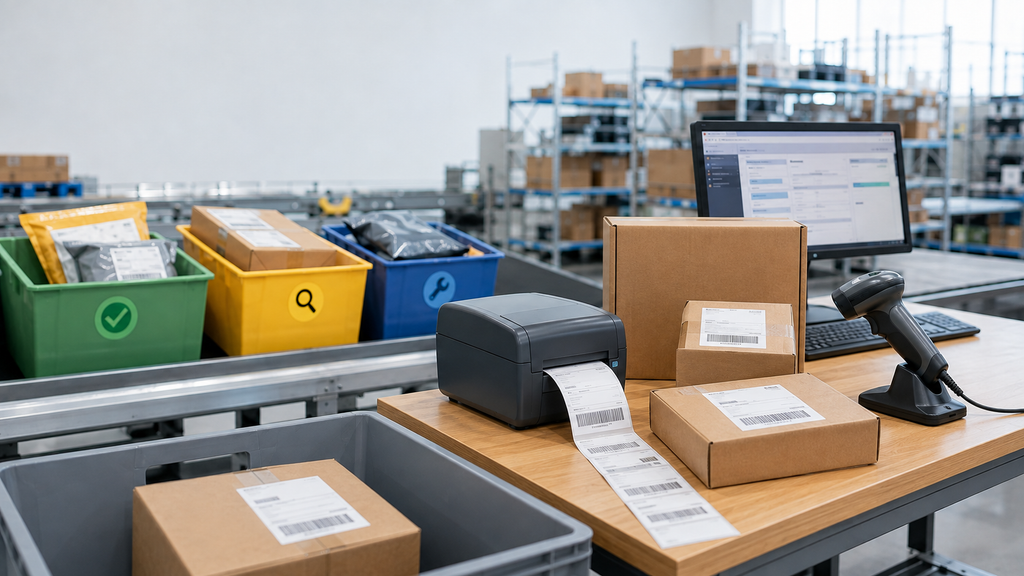
Returns create a second identification journey after the original shipment. Well-designed thermal labels can connect the parcel, return authorization, inspection result, disposition, and inventory record without forcing employees to retype information. The purpose of this guide is to help online retailers, returns centers, and reverse-logistics teams make a decision that can be tested, documented, and repeated.
Buyers comparing return labels should begin with the application and printer requirements, then narrow the available constructions. A category page can help identify options, but the final choice still needs a specification and a representative trial.
Separate Carrier and Internal IDs
The carrier label moves the parcel through transportation, while an internal barcode or QR code can retrieve the return record. Combining roles without a clear hierarchy creates scanning confusion. This is a frequent source of hidden variation in how thermal labels can improve e-commerce returns processing. The most dependable control is a short specification supported by an approved sample and a test result that another location or employee can reproduce.
Assign one primary identifier to each process step. Place internal codes where they will not obstruct carrier routing marks, and retire or cover obsolete logistics labels according to carrier guidance. Record the result in the approved item file so the same decision does not have to be rediscovered after a staff, printer, or supplier change.
Design for Unpredictable Packaging
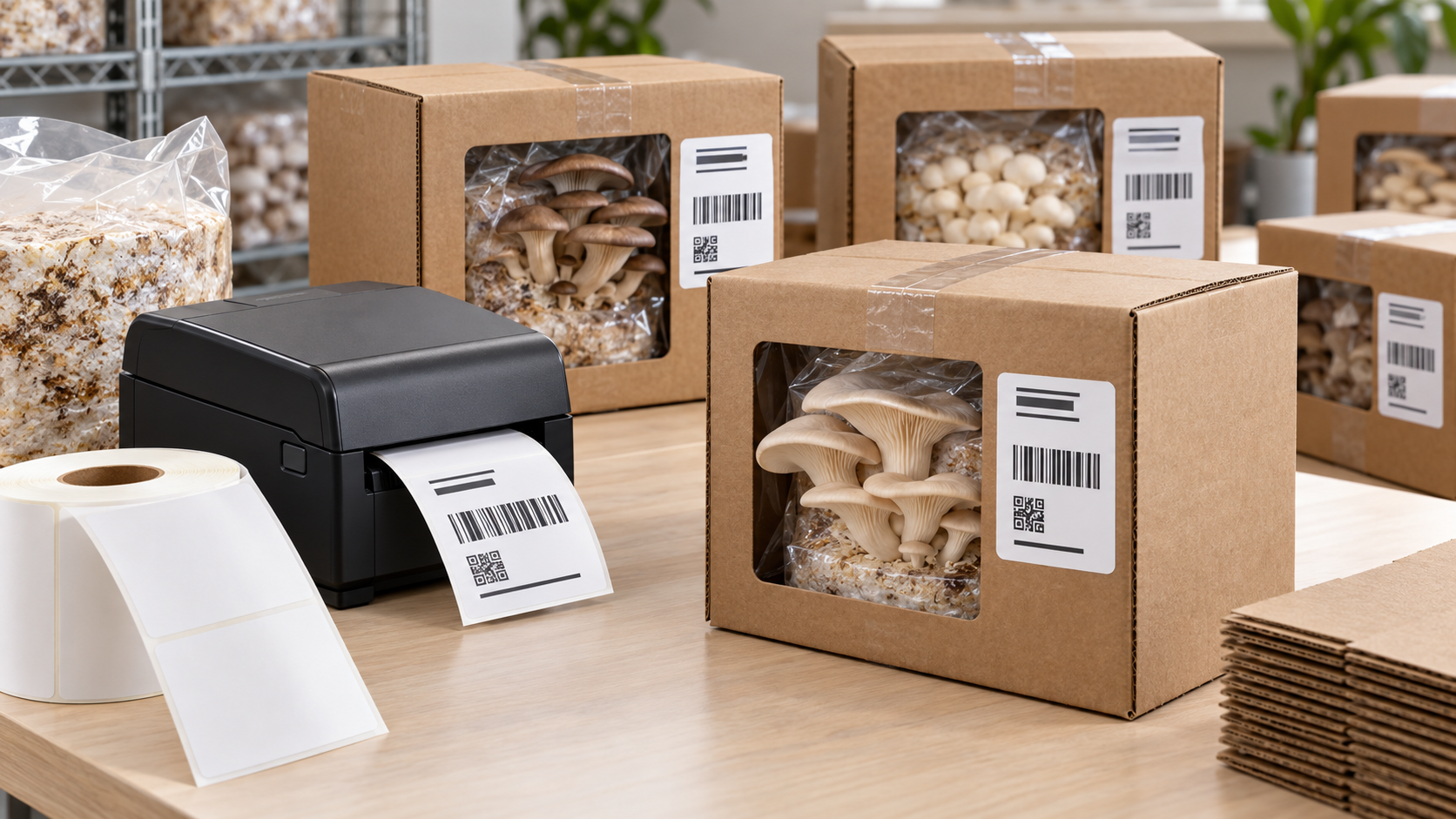
Customers may return goods in original cartons, poly mailers, reused boxes, or replacement packaging. Surface condition and available space vary more than in outbound packing. The decision about design for unpredictable packaging should be made before a large order is placed. Correcting the requirement on paper is inexpensive; correcting stocked media, interrupted production, or mislabeled goods is not.
Choose an application zone that works across common packages and test difficult recycled or dusty surfaces. Provide simple instructions and avoid label sizes that force folding over edges. Record the result in the approved item file so the same decision does not have to be rediscovered after a staff, printer, or supplier change.
Connect the Label to the Returns Record
A concise machine-readable identifier is usually more reliable than printing every detail on the package. The code should retrieve the current record rather than expose unnecessary customer data. For online retailers, returns centers, and reverse-logistics teams, connect the label to the returns record should be treated as an operating requirement rather than a purchasing detail. It can affect uptime, scan success, rework, and the experience of the person who handles the labeled item next.
Use a stable return authorization or parcel identifier, validate duplicate handling, and define what happens when the system is offline. Keep human-readable fallback text for essential routing. Record the result in the approved item file so the same decision does not have to be rediscovered after a staff, printer, or supplier change.
Use Status Labels at Inspection
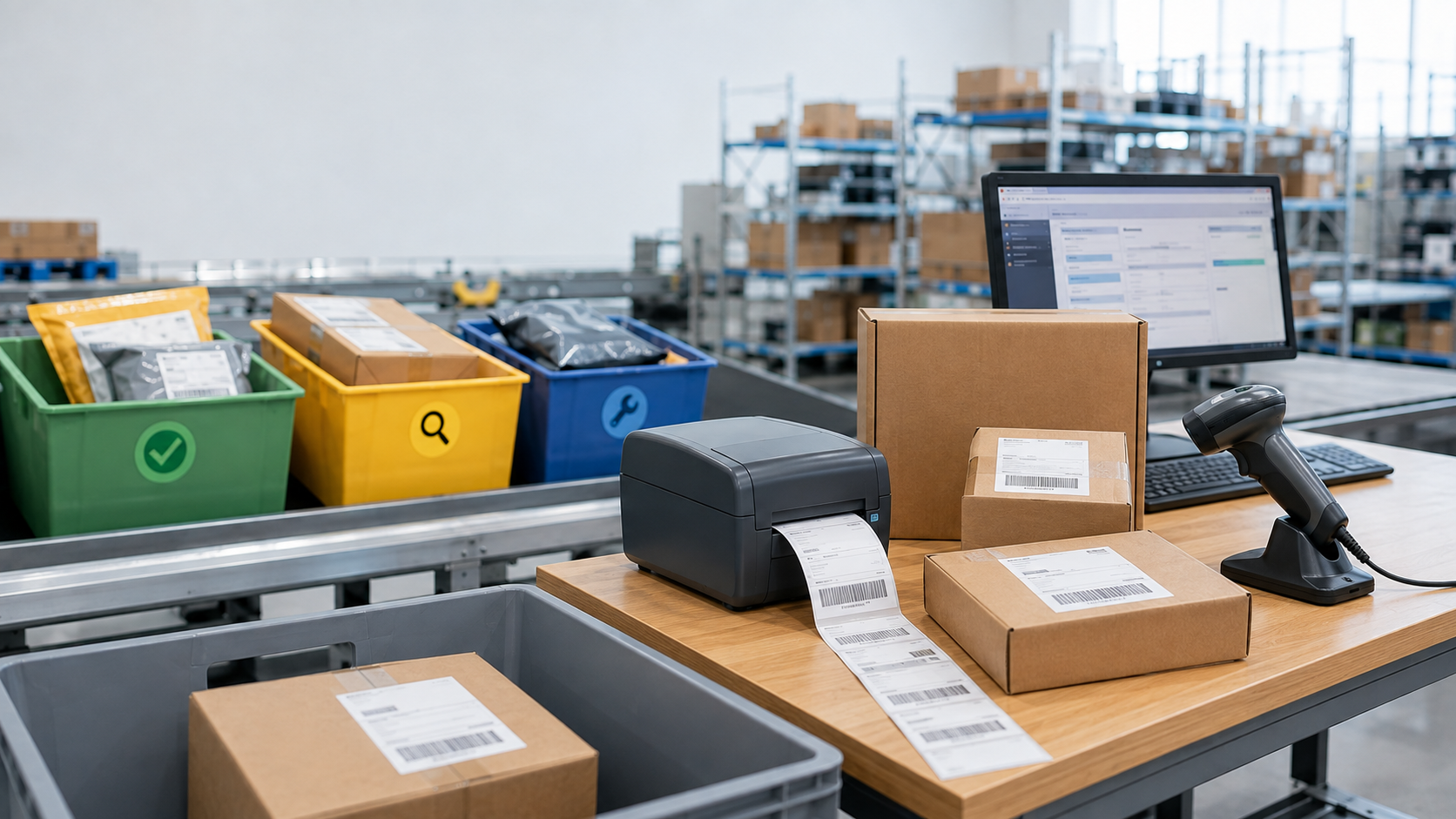
Products may be routed to restock, repair, refurbishment, quarantine, recycling, or disposal. Clear visual and scannable status reduces repeated handling. The risk increases when purchasing, the supplier, and operators interpret use status labels at inspection differently. A shared definition makes the result repeatable and provides useful evidence when the how thermal labels can improve e-commerce returns processing workflow needs troubleshooting.
Create controlled status templates with distinct wording and, where useful, color. Require a scan that updates the system before the physical item moves to the next zone. Record the result in the approved item file so the same decision does not have to be rediscovered after a staff, printer, or supplier change.
Avoid Barcode Damage During Opening
Labels placed across carton seams may be cut, torn, or covered when a return is opened. Stretch wrap, tape, and marker writing can also interfere with scans. A representative trial is especially useful for avoid barcode damage during opening because a catalog description cannot reproduce the complete environment. Use normal equipment, materials, timing, and handling instead of an ideal desk demonstration.
Keep the process barcode on a flat protected panel away from cutting lines. Train receiving teams not to place inspection stickers over active codes. Record the result in the approved item file so the same decision does not have to be rediscovered after a staff, printer, or supplier change.
Measure Return-Cycle Accuracy
Faster printing has limited value if items are misrouted or records remain incomplete. Useful measures connect labels to the entire reverse-logistics outcome. For this part of how thermal labels can improve e-commerce returns processing, consistency matters more than an impressive one-time result. The approved approach should work across the roll, across shifts, and across the range of conditions defined by the business.
Track first-pass scans, manual lookups, unidentified parcels, relabels, routing errors, and time from receipt to disposition. Use the findings to revise templates and placement rules. Record the result in the approved item file so the same decision does not have to be rediscovered after a staff, printer, or supplier change.
A Practical Buying Checklist
- Separate Carrier and Internal IDs: Assign one primary identifier to each process step.
- Design for Unpredictable Packaging: Choose an application zone that works across common packages and test difficult recycled or dusty surfaces.
- Connect the Label to the Returns Record: Use a stable return authorization or parcel identifier, validate duplicate handling, and define what happens when the system is offline.
- Use Status Labels at Inspection: Create controlled status templates with distinct wording and, where useful, color.
- Avoid Barcode Damage During Opening: Keep the process barcode on a flat protected panel away from cutting lines.
When the specification for how thermal labels can improve e-commerce returns processing is clear, online retailers, returns centers, and reverse-logistics teams can discuss it with a specialist source such as thermal label supplier and compare available formats without relying on guesswork. For this application, the supplier should confirm requirements related to separate carrier and internal ids and the buyer’s actual equipment; claims not shown in the written product data should be verified before purchase.
Frequently Asked Questions
What should a buyer verify about separate carrier and internal ids? The carrier label moves the parcel through transportation, while an internal barcode or QR code can retrieve the return record. Combining roles without a clear hierarchy creates scanning confusion. Assign one primary identifier to each process step. Place internal codes where they will not obstruct carrier routing marks, and retire or cover obsolete logistics labels according to carrier guidance.
What should a buyer verify about design for unpredictable packaging? Customers may return goods in original cartons, poly mailers, reused boxes, or replacement packaging. Surface condition and available space vary more than in outbound packing. Choose an application zone that works across common packages and test difficult recycled or dusty surfaces. Provide simple instructions and avoid label sizes that force folding over edges.
What should a buyer verify about connect the label to the returns record? A concise machine-readable identifier is usually more reliable than printing every detail on the package. The code should retrieve the current record rather than expose unnecessary customer data. Use a stable return authorization or parcel identifier, validate duplicate handling, and define what happens when the system is offline. Keep human-readable fallback text for essential routing.
Final Recommendation
The central lesson for online retailers, returns centers, and reverse-logistics teams is straightforward: Returns create a second identification journey after the original shipment. Well-designed thermal labels can connect the parcel, return authorization, inspection result, disposition, and inventory record without forcing employees to retype information. Treat the selected label as a controlled part of the workflow, preserve the approved sample and settings, and review performance with evidence. That gives purchasing a fair basis for comparing price, service, and quality without sacrificing dependable printing, application, or scanning.