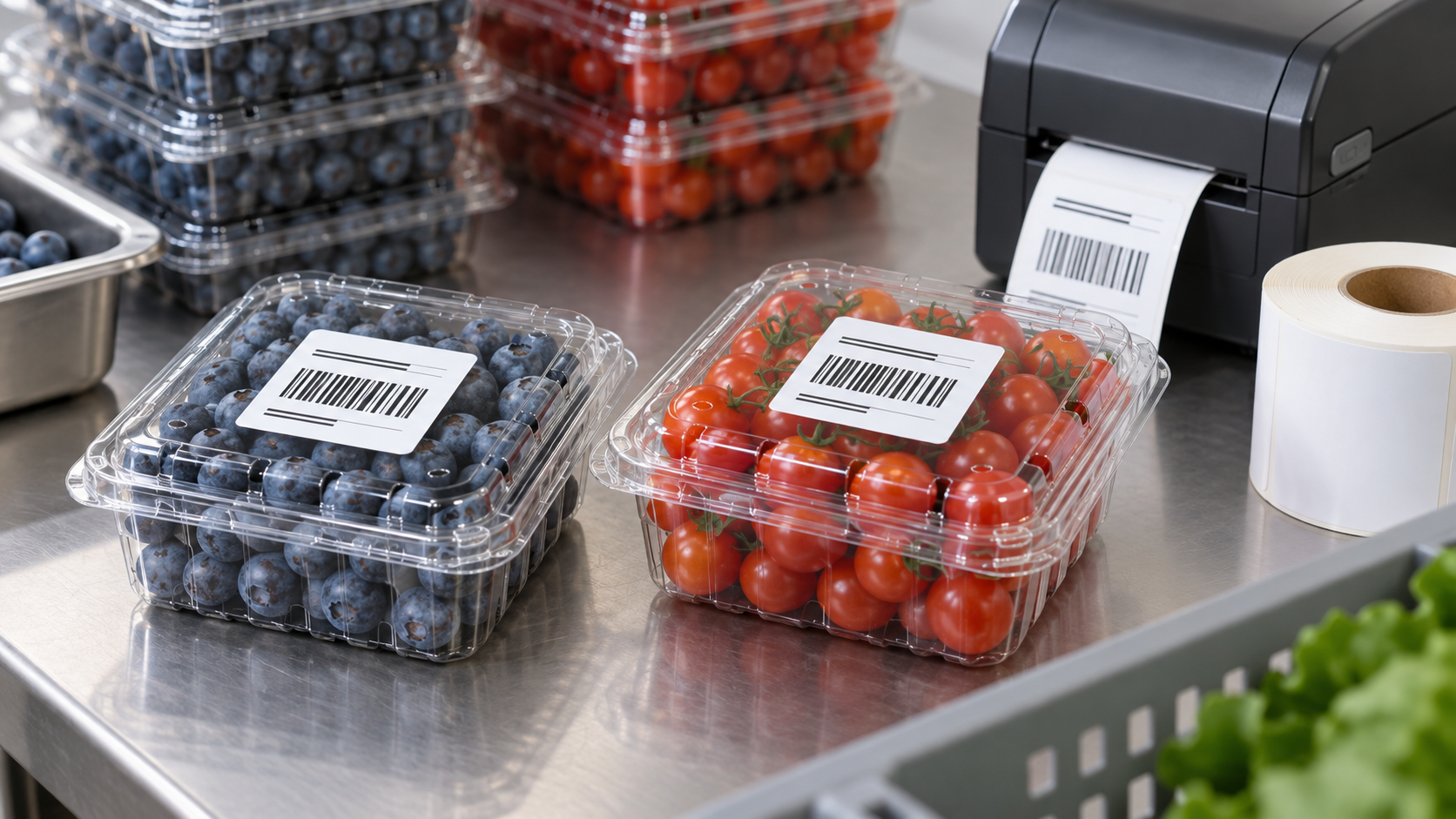
A produce clamshell label must stay legible and attached to the outside of the package from packing through chilled display. The main obstacles are condensation, curved or vented plastic, and handling by shoppers. Select the placement first, then test the label on filled packs through the real temperature cycle. A stock label that looks fine on a dry empty lid may fail after cooling.
Place the Label on Packaging, Not Produce
Choose a flat outer lid or side panel that does not bring the adhesive into contact with the food. Avoid vents, hinges, snap closures, and sealing edges. If a label or adhesive could contact food under the intended use, seek a material with documented suitability for that specific food-contact application and market. Do not infer food-contact compliance from the phrase ‘food label.’ The label’s role may be outside-pack identification, which has different exposure and regulatory considerations.
Allow for the Lid’s Shape
Clear clamshell lids often have ribs, domes, and small flat panels. Measure the usable flat area on the filled, closed pack, not the nominal lid dimensions. A label that bridges a ridge can peel at the corners or wrinkle a barcode. Keep a margin from the edge so handling does not catch it. If the required information will not fit legibly, consider a different package panel or an approved sleeve instead of forcing a large stiff label across a curved lid.
Define the Temperature Sequence
The sequence might be label, chill, store, transport, display; or chill first and label later. Adhesives behave differently when applied to a warm dry surface than to a cold wet one. Tell the supplier the application temperature, minimum package temperature, humidity, and expected shelf life. If condensation is present at labeling, drying the exterior or moving application earlier may be simpler than changing stock. Validate the actual process, including time for adhesive bond development before refrigeration.
When comparing produce clamshell labels request samples for the exact plastic and the actual chilled packing sequence.
Use an Appropriate Barcode Layout
If the pack carries a retail code, follow the retailer’s required symbol, size, and placement rules. Keep the bars and quiet zones on a flat, light background; avoid printing over transparent areas where berries or tomatoes behind the label alter contrast. Include the human-readable item and pack details needed at checkout or inventory control. Test with the point-of-sale scanner, not just a phone. A readable code on one pack may become hidden when clamshells are stacked.
Separate Variable and Fixed Information
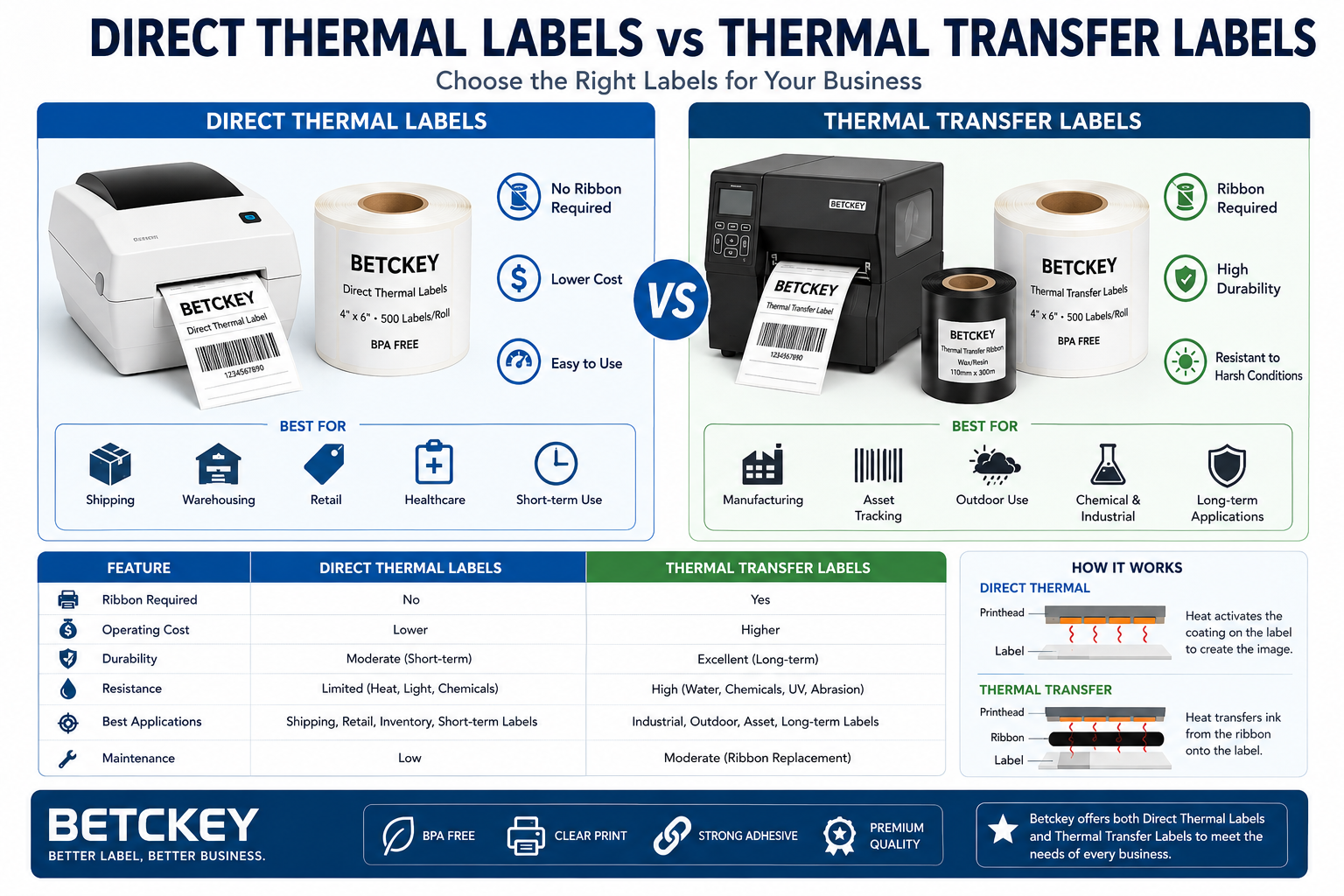
A direct thermal printer is useful for variable fields such as pack date, lot, price, or weight, depending on the operation. Fixed branding and mandatory product information may be carried by a preprinted label or a separate package element. Make sure the variable template cannot omit a required field or use an old date rule. Check the first print after every product or lot change. Avoid tiny text that technically fits but cannot be read under retail lighting.
Choose Adhesive for the Plastic
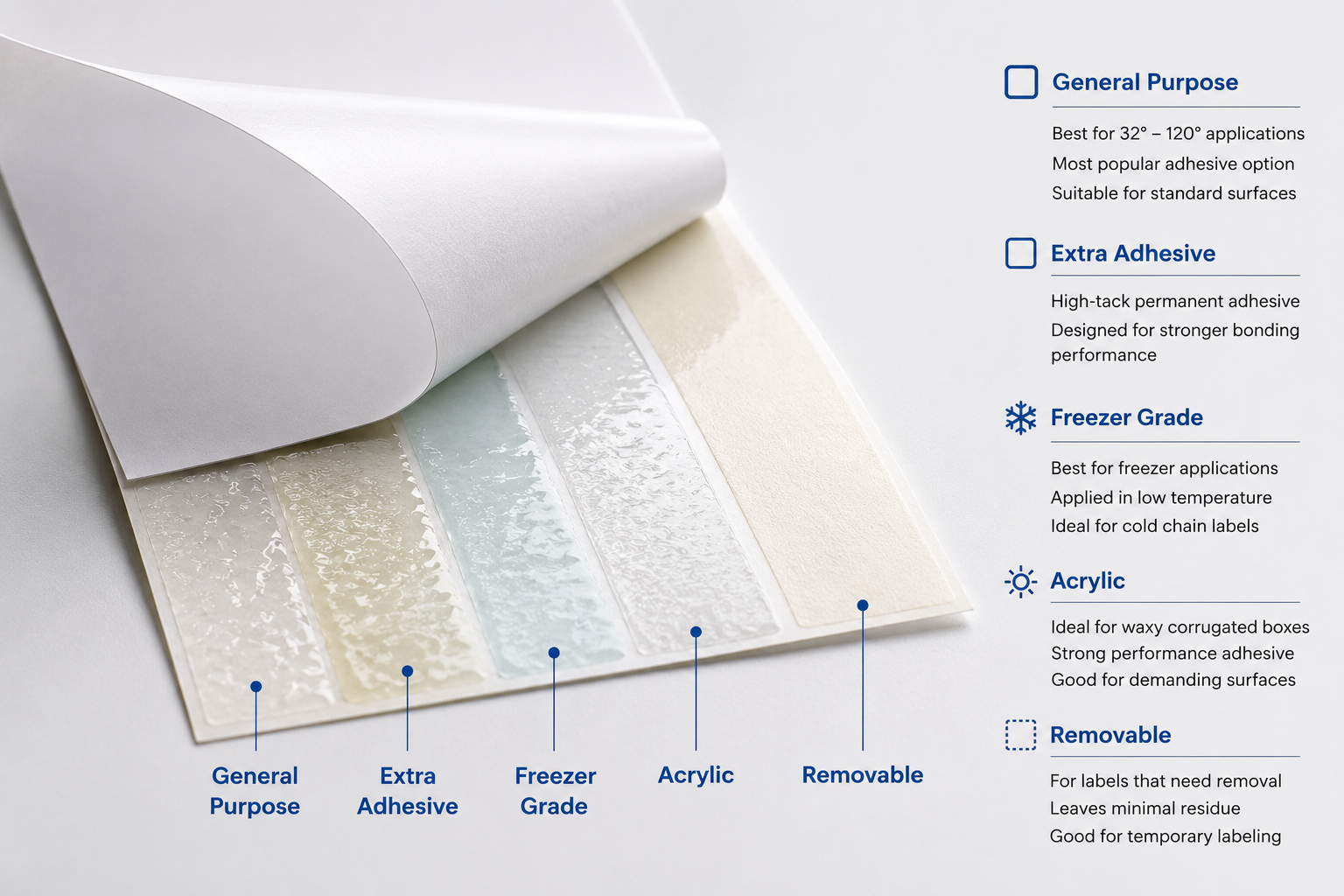
Different clamshell resins and surface treatments can give very different adhesion results. A label that holds on one supplier’s package may lift on a similar-looking substitute. Test the exact plastic and the intended placement after cooling and handling. If clean removal is required by the retailer or recycler, include removal behavior in the test. Stronger tack alone is not a complete specification; it can make application forgiving yet leave undesirable residue or damage a thin lid.
Check Moisture and Rub Resistance
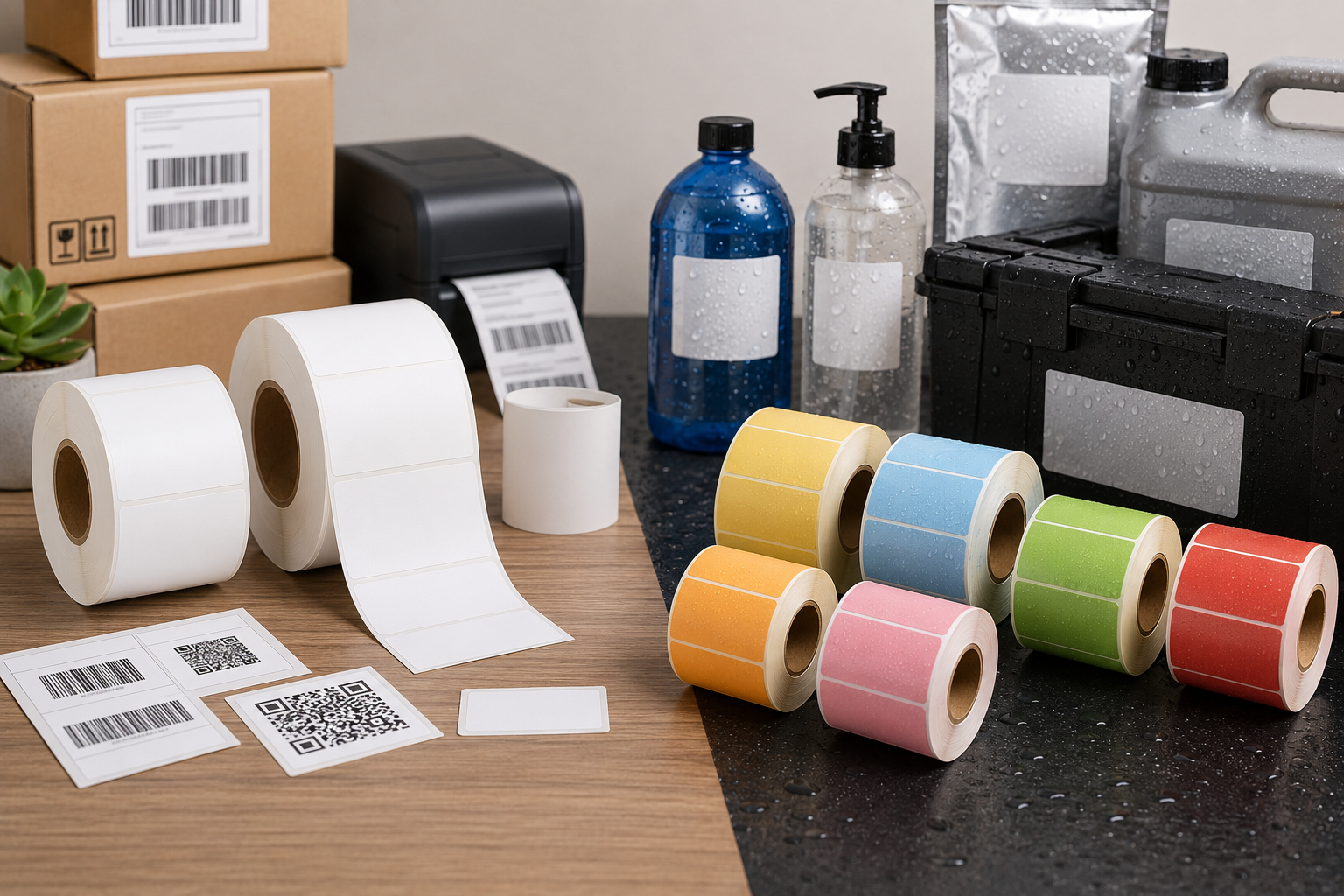
Condensation can wet the label face, soften some papers, and challenge the adhesive edge. Compare candidate stocks after a realistic chill-to-room-temperature cycle. Rub the printed data lightly with the handling materials used on the line and rescan the code. Do not assume a coated direct thermal paper is waterproof or suitable for every wet condition. If the required readable life is long or the pack is repeatedly washed, another material or print method may be necessary.
Protect Food Safety and Traceability
The label should identify the product and lot as required by the operation’s traceability plan without obstructing tamper evidence or package closure. Confirm that dates, origin statements, nutrition claims, and other consumer information meet the rules in the markets where the pack is sold. A label supplier can specify materials but cannot determine the legal content of every food label. Keep approved artwork and variable-data rules under version control, and retain a sample from each changeover.
Test at Packing and at the Shelf
Run a pilot on the smallest and largest clamshells, with the actual product fill. Inspect application speed, wrinkles, printer feed, edge lift, and scan results immediately after packing, after chilled transport, and during display. Include a pack with visible condensation and one handled repeatedly. Ask store staff whether the code is easy to present to a checkout scanner. Record failures by package supplier and temperature stage so the material or workflow change targets the actual cause.
A supplier of food packaging labels can help identify a suitable roll construction once the surface and use conditions are defined.
What to Tell the Label Supplier
Provide a sample clamshell, the intended label location, pack-line temperature, cold-chain range, expected display life, printer model, roll geometry, and barcode artwork. Ask for a converted-roll trial on actual filled packs. State whether the adhesive must be removable and whether any part of the label can contact food under realistic use. Approve the stock only when packaging, print, application, and checkout scanning all meet the agreed criteria.
A Simple Approval Decision
Approve a candidate only after it passes three practical gates. First, the printer feeds and images the roll consistently across a full production run. Second, the label stays flat and readable on the worst-case clamshell after cooling, transport, and ordinary handling. Third, the required code scans at the retail checkout without a special angle or repeated attempts. Keep a photographed approved sample with the packaging and label specifications. Recheck the combination whenever the clamshell resin, lid shape, packing temperature, artwork, or label converter changes, even if the finished pack looks similar.