Custom thermal labels can look simple at first. A buyer chooses a label size, sends a design or specification to a supplier, and waits for the finished rolls to arrive.
In reality, choosing the right custom thermal labels involves much more than selecting dimensions.
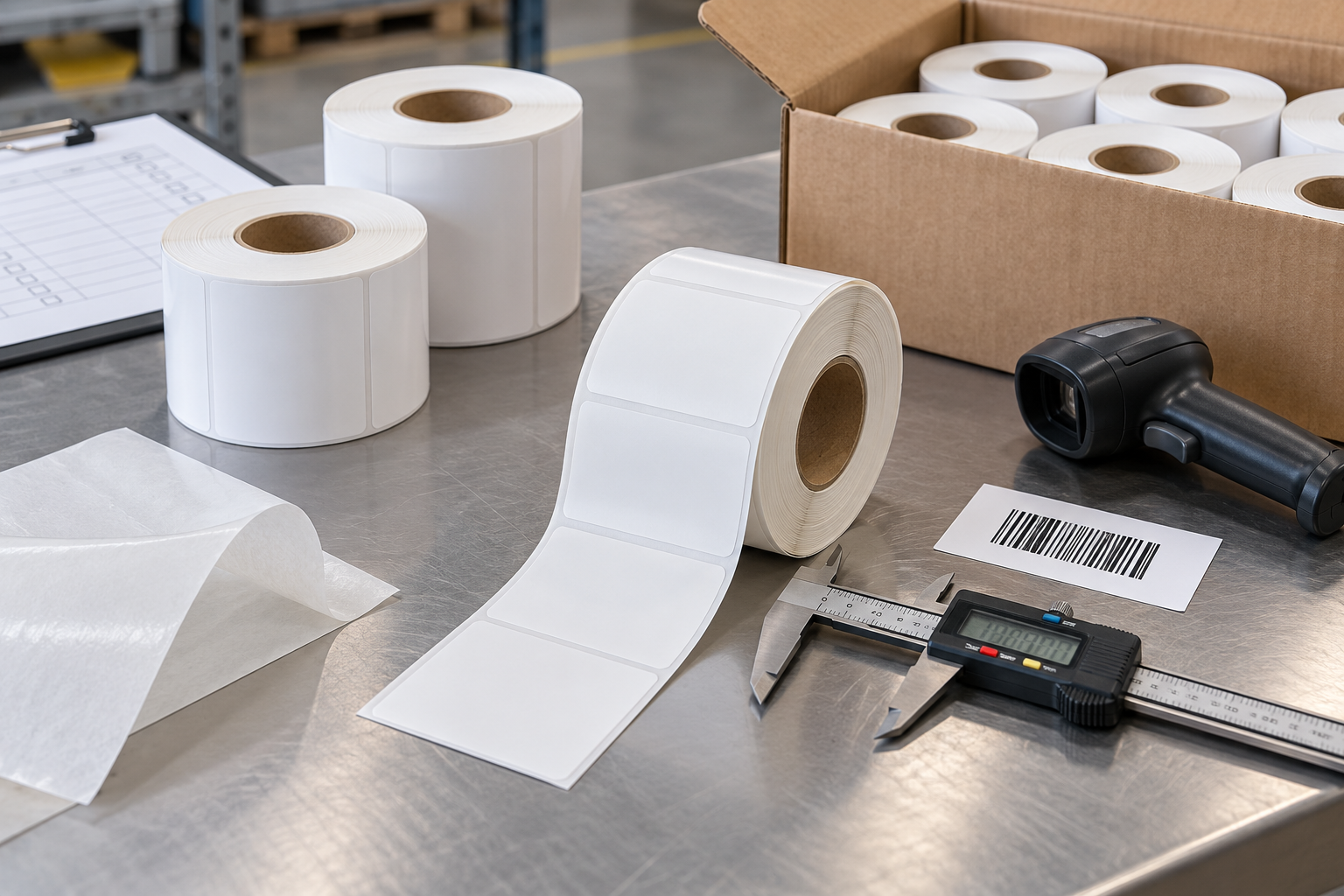
The size must match the printer and application. The label material must handle the conditions in which it will be used. The adhesive must bond correctly to the surface without falling off too early or leaving unwanted residue. Roll direction, core size, outer diameter, label gap, and thermal printing method can also affect whether the labels work smoothly in daily operations.
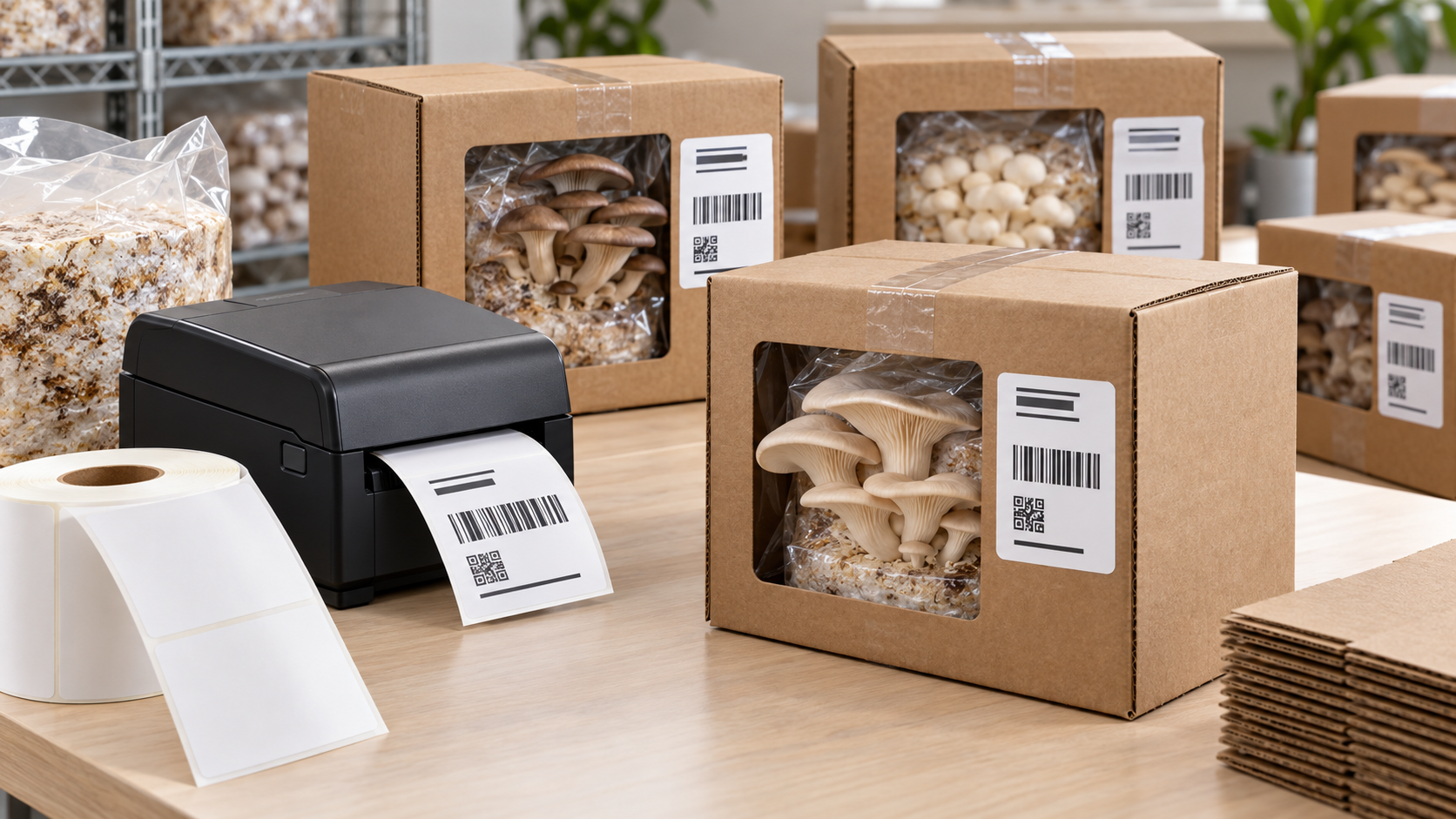
For ecommerce businesses, warehouses, retailers, laboratories, manufacturers, and logistics companies, a poor label specification can lead to wasted labels, printer feeding problems, unreadable barcodes, and damaged packages.
This buyer’s guide explains how to choose custom thermal labels based on size, material, and adhesive. It also covers several technical details that buyers should confirm before placing a bulk or wholesale order.
What Are Custom Thermal Labels?
Custom thermal labels are labels manufactured according to a buyer’s specific size, material, adhesive, color, shape, or roll configuration requirements.
Unlike a standard stock label, such as a common 4 x 6 shipping label, a custom label can be designed for a particular product, container, printer, or workflow.
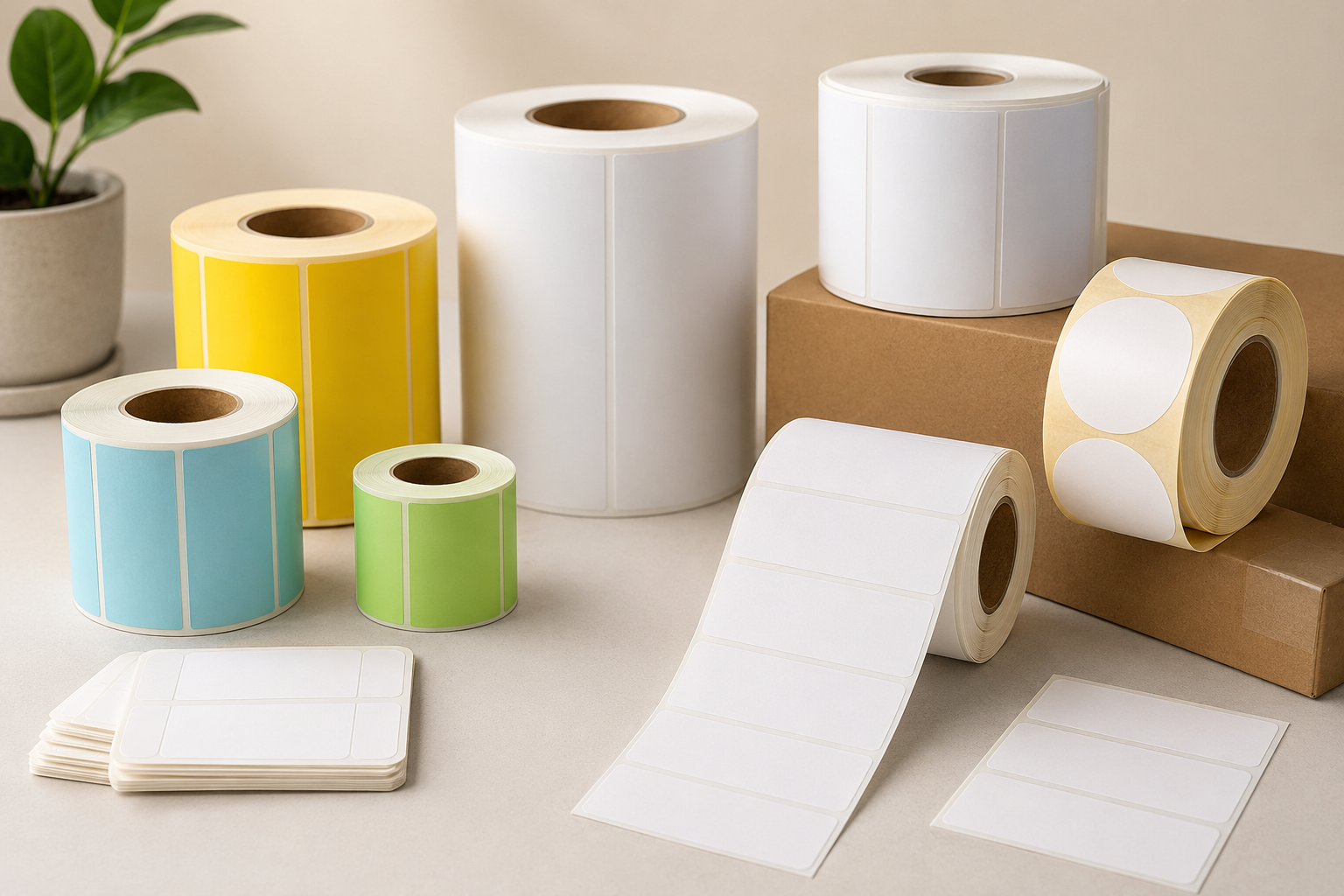
Custom options may include:
- Special label widths and heights
- Round or oval shapes
- Permanent or removable adhesive
- Paper or synthetic materials
- Water-resistant label construction
- Colored thermal labels
- Preprinted logos or graphics
- Special core sizes
- Custom roll quantities
- Specific unwind directions
- Continuous thermal label rolls
- Die-cut labels with a gap between each label
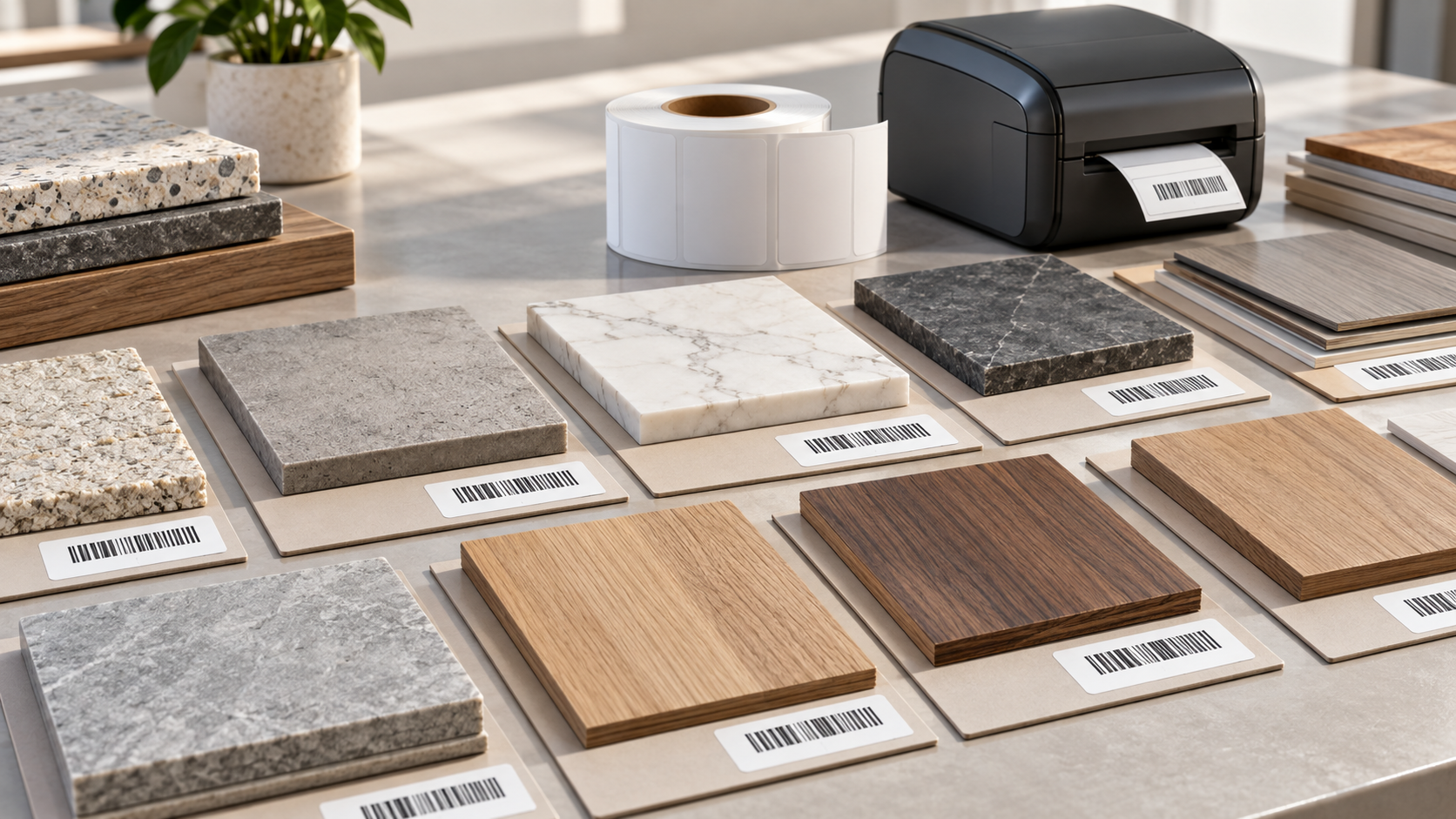
For example, a warehouse may need a 2 x 1 inch permanent label for plastic storage bins. A bakery may need a removable date label for reusable food containers. An ecommerce warehouse may need colored thermal labels to separate shipping zones. A laboratory may require synthetic labels that can better handle moisture.
The purpose of customization is not simply to make a label look different. A good custom thermal label should improve the labeling process and solve a specific operational problem.
How to Choose the Right Size for Custom Thermal Labels
Label size is one of the first specifications a buyer needs to confirm.
However, the best label size is not always the largest size that fits the product. Buyers should consider how much information needs to be printed, how the label will be scanned, where it will be applied, and whether the printer can handle the label width.
Measure the Available Labeling Area
Start by measuring the actual surface where the label will be applied.
Do not rely only on the overall size of a box, bottle, bag, shelf, or container.
A package may be 6 inches wide, but curves, seams, handles, openings, or textured areas can reduce the usable labeling area.
For a flat box, measure the clean flat panel.
For a bottle, check whether the surface is curved.
For a plastic bag, consider whether the label will cross a fold or wrinkle.
For a warehouse bin, make sure the label does not cover an opening or interfere with handling.
It is often helpful to test a paper sample in the exact proposed size before ordering thousands of custom labels.
Consider How Much Information You Need to Print
The label must provide enough space for the required information.
This may include:
- Product names
- SKU numbers
- Barcodes
- QR codes
- Shipping addresses
- Lot numbers
- Dates
- Prices
- Location codes
- Warning information
Trying to place too much information on a very small label can reduce readability.
Barcode size is particularly important. A barcode that is compressed, poorly printed, or placed too close to the edge may become difficult to scan.
For small inventory labels, a 1 x 2 inch or similar format may provide enough space for a short SKU and barcode.
For shipping applications, 4 x 6 inch thermal labels are widely used because they provide much more space for address information, carrier barcodes, routing information, and other shipping data.
The exact size should follow the real printing requirement instead of being selected only according to price.
Check Your Thermal Printer’s Maximum Print Width
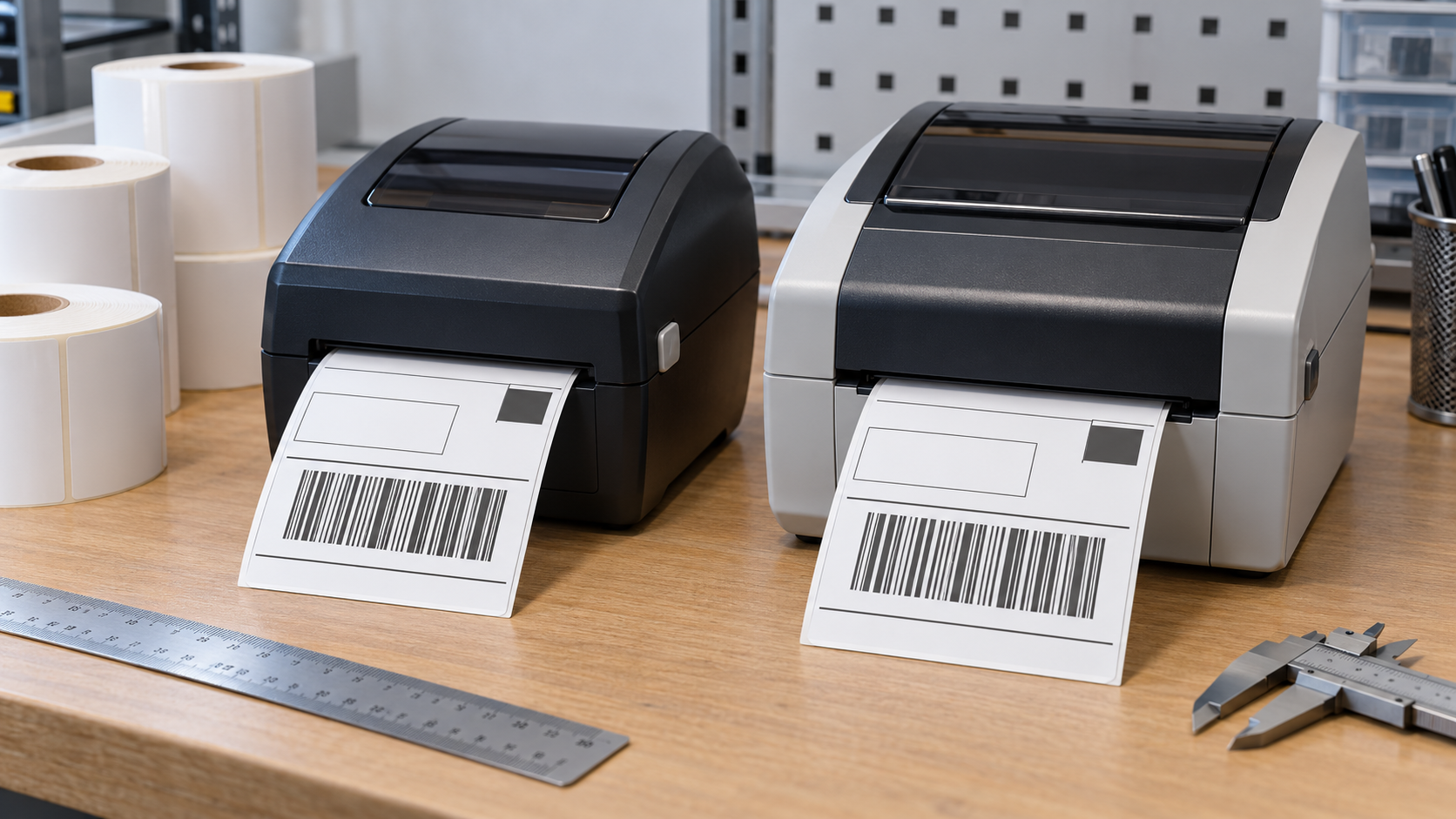
A custom label must be compatible with the printer.
A printer’s physical size does not automatically tell you the maximum label width it can print.
Some desktop label printers are designed for small address and inventory labels. Others can handle 4-inch-wide shipping labels.
Before ordering custom thermal labels, confirm:
- Maximum media width
- Maximum print width
- Minimum label width
- Label sensing method
- Supported roll diameter
- Supported core size
For example, Brother, Zebra, DYMO, and other thermal printers may use different media systems and roll configurations.
Betckey supplies thermal label options compatible with multiple major printer categories, including Brother, Zebra, and DYMO applications. However, buyers still need to match the custom specification to the exact printer model.
A label can have the correct width but still create problems if the roll core or outer diameter does not fit the printer.
Choose Between Die-Cut and Continuous Labels
Custom thermal labels are commonly produced as die-cut labels or continuous labels.
Die-cut labels are cut into a fixed shape and size. Each label is separated by a gap or another sensing feature.
For example:
2 x 1 inch labels
3 x 2 inch labels
4 x 6 inch labels
Die-cut labels work well when every printed label needs the same dimensions.
Continuous thermal labels are supplied as a continuous strip of label material. The printer or software controls the printed length.
Continuous labels can be useful when printed information varies significantly in length.
For example, one label may need to be 2 inches long, while another may need to be 5 inches long.
When ordering custom labels, tell the supplier whether your printer uses gaps, black marks, notches, or continuous media. The printer must be able to detect and feed the label construction correctly.
Think About Label Shape
Rectangular labels are the most common, but custom thermal labels can also be produced in other shapes.
Round labels may be used for:
- Product identification
- Container lids
- Color coding
- Sample tracking
- Retail applications
Square labels can work well for QR codes and product information.
Special shapes may improve appearance, but unusual die-cut shapes can increase manufacturing complexity and cost.
For most logistics, warehouse, and inventory applications, simple rectangular or round labels are usually the most efficient choice.
How to Select the Right Material for Custom Thermal Labels
Label material affects print quality, durability, flexibility, and resistance to environmental conditions.
The two broad material categories buyers often consider are paper and synthetic materials.
Direct Thermal Paper Labels
Direct thermal paper is a common material for shipping, inventory, warehouse, and retail labels.
The label surface contains a heat-sensitive coating. A direct thermal printer uses heat from the printhead to create the printed image.
No ink or toner is required.
Direct thermal paper is popular because it is:
- Cost-effective
- Easy to print
- Suitable for high-volume operations
- Widely compatible with thermal printers
- Available in many standard and custom sizes
Paper labels are a good choice for applications such as:
Shipping labels
Address labels
Short-term inventory labels
Barcode labels
Retail labels
Warehouse labels
However, buyers should understand the limitations of direct thermal paper.
Heat, strong light, friction, and certain chemicals can affect the printed image. Paper also provides less water and tear resistance than many synthetic materials.
For a package that only needs a label during a normal shipping cycle, direct thermal paper may be perfectly suitable.
For labels exposed to moisture, oil, or rough handling, a more durable material may be better.
Synthetic Thermal Label Materials
Synthetic thermal labels are manufactured from non-paper materials designed to provide greater durability.
Depending on the construction, synthetic labels may offer improved resistance to:
- Water
- Oil
- Tearing
- Abrasion
- Moisture
These labels can be useful for:
Cold storage
Bottles
Plastic containers
Cosmetics
Soap products
Laboratory environments
Warehouses with higher humidity
Reusable containers
Betckey, for example, offers removable synthetic direct thermal label options designed for applications where resistance to water, oil, and tearing is important.
A buyer should never simply ask for a “waterproof label” without explaining the actual environment.
Will the label be exposed to light splashes?
Will it be submerged?
Will it be stored in a freezer?
Will oil touch the surface?
Will the container be washed?
These conditions are very different.
The more detailed the application information, the easier it is for a thermal label supplier to recommend a suitable material.
Paper vs. Synthetic Custom Thermal Labels
The choice between paper and synthetic material usually depends on cost and durability requirements.
Choose direct thermal paper when:
The application is short term.
The environment is relatively dry.
The label does not need strong tear resistance.
Cost efficiency is important.
The label is mainly used for shipping or basic inventory.
Consider synthetic material when:
Moisture is common.
The label may contact oil.
The label needs better tear resistance.
The container is handled repeatedly.
Paper labels are failing in the current application.
More durable does not always mean better.
Using a premium synthetic material for a basic shipping carton may unnecessarily increase label costs.
A professional supplier should help the buyer choose a material that is sufficient for the application without over-specifying the product.
Colored Thermal Labels
Color is another material and customization option.
Colored thermal labels may help businesses organize operations without changing the printed information.
For example:
Red labels may identify urgent orders.
Blue labels may indicate a shipping zone.
Yellow labels may highlight quality inspection status.
Green labels may mark completed inventory checks.
Colored labels can be helpful in warehouses because workers can recognize a category visually before reading a barcode or text.
Businesses may also use colored thermal labels for product organization, promotions, price identification, and internal tracking.
When choosing colored thermal labels, barcode contrast should still be considered.
Dark printed barcodes generally require a sufficiently light background for clear scanning. Decorative color should never reduce the readability of important data.
How to Choose Adhesive for Custom Thermal Labels
The adhesive is one of the most important parts of a thermal label.
A high-quality label material can still fail if the adhesive is wrong for the application surface.
Buyers should think about what the label is sticking to, the temperature during application, how long the label needs to stay attached, and whether the label should later be removed.
Permanent Adhesive
Permanent adhesive is designed to create a strong, long-term bond.
It is commonly used for:
Shipping boxes
Inventory items
Warehouse cartons
Product packaging
Asset identification
Logistics applications
Permanent thermal labels are a good option when the label should remain attached during the entire handling, storage, or delivery process.
However, “permanent” does not mean that the label will stick equally well to every possible surface.
A label applied to clean cardboard may perform differently from the same label applied to a dusty plastic bin.
Surface energy, texture, contamination, and temperature can all affect adhesion.
Buyers should describe the actual substrate when discussing a custom label order.
Removable Adhesive
Removable thermal labels are designed to remain attached during use while allowing easier removal later.
They may be used for:
Reusable containers
Storage bins
Temporary inventory identification
Retail displays
Shelves
Short-term organization
Food containers
A removable label can help reduce the time workers spend scraping adhesive residue from containers.
For businesses that frequently change product information, dates, or inventory locations, removable labels can improve workflow efficiency.
Betckey offers removable label options for applications where temporary labeling is preferred.
Buyers should still test removable labels on the actual surface.
A removable adhesive that performs well on glass may behave differently on aged plastic, painted metal, or textured containers.
Choosing Adhesive Based on Surface
The application surface should always be discussed before custom label production.
Cardboard
Cardboard is one of the most common surfaces for thermal labels.
However, recycled boxes, rough corrugated surfaces, dusty cartons, and coated cardboard can all behave differently.
Permanent adhesive is commonly selected for shipping and warehouse cartons.
Plastic
Plastic can be more challenging.
Different plastic types have different surface characteristics.
Smooth plastic bins may accept some adhesives easily, while other plastic materials can be harder to label.
Flexible plastic bags create another challenge because the surface may bend, wrinkle, or stretch.
For custom labels used on plastic, physical samples and application testing are strongly recommended.
Glass
Glass generally provides a smooth surface.
The main question is often whether the label should be permanent or removable.
Reusable jars, bottles, or containers may benefit from removable adhesive.
Metal
Metal surfaces can be smooth, painted, textured, cold, or oily.
The buyer should explain the environment and surface condition.
For industrial applications, standard adhesive should not automatically be assumed to be suitable.
Application Temperature Matters
A commonly overlooked issue is the temperature when the label is first applied.
A label placed on a room-temperature box and later moved into a cold environment may perform differently from a label applied directly to a frozen surface.
This distinction is important.
Adhesive needs to make proper contact with the surface.
When the application temperature is too low for the adhesive system, the label may not develop a strong initial bond.
Buyers ordering custom labels for refrigerators, freezers, or cold-storage operations should explain:
The application temperature
The storage temperature
The surface material
Whether condensation is present
This information helps prevent premature lifting or peeling.
Permanent vs. Removable Adhesive: Which Should You Choose?
Ask one simple question:
Does the label need to be removed?
If the answer is no, permanent adhesive is often the practical choice.
If the label needs to be replaced regularly, removable adhesive may improve efficiency.
For example, a shipping label on a cardboard box normally does not need to be removed.
A location label on a reusable warehouse tote may need to be replaced many times.
Using permanent labels for reusable containers can create layers of old labels and adhesive residue.
Using removable labels on a shipping package may create unnecessary risk if the label is not designed for the handling conditions.
Adhesive choice should match the workflow.
Printer Compatibility Requirements for Custom Thermal Labels
A custom label is not complete until the roll construction matches the printer.
Buyers should provide the exact printer brand and model whenever possible.
For example:
Brother QL series
DYMO LabelWriter series
Zebra desktop printers
Zebra industrial printers
Rollo thermal printers
Other desktop thermal printers
The supplier may need to confirm several specifications.
Core Size
The core is the cardboard or plastic tube in the center of a label roll.
Common thermal label core sizes may include smaller desktop cores and larger industrial cores.
A 1-inch core is common in many desktop label applications.
A 3-inch core is commonly associated with larger industrial rolls.
However, buyers should never choose only by general category.
Confirm the actual printer specification.
Roll Outer Diameter
Core size and roll diameter are not the same thing.
Two label rolls can both use a 1-inch core but have very different outer diameters.
A larger roll contains more labels but may not fit inside a compact desktop printer.
Before ordering a high label count per roll, confirm the maximum roll diameter supported by the printer.
Label Gap and Sensor Detection
Many printers detect the gap between die-cut labels.
Others may use black marks, notches, or continuous media settings.
The custom label construction must match the printer’s sensor system.
Incorrect media specifications can cause:
Skipped labels
Incorrect label positioning
Media-out errors
Multiple blank labels feeding
Printing between labels
When switching to a new custom size, the printer may also need calibration or updated media settings.
Roll Unwind Direction
Roll direction describes how labels come off the roll.
This can be especially important in automated label applicators and certain industrial workflows.
For basic desktop printers, roll direction may be less complicated, but the supplier should still understand how the label is loaded.
For custom wholesale orders, providing a photo of the existing label roll can reduce communication mistakes.
Custom Printed Thermal Labels vs. Blank Thermal Labels
Another important decision is whether to order blank thermal labels or preprinted thermal labels.
Blank Custom Thermal Labels
Blank labels are printed on demand with a thermal printer.
They are ideal for variable information such as:
Addresses
Barcodes
Order numbers
Dates
Prices
SKU numbers
Tracking information
Blank thermal labels provide flexibility.
The buyer can use the same label roll for many different products or orders.
Preprinted Custom Thermal Labels
A custom label supplier may also provide labels with preprinted elements.
For example, a company logo, colored border, warning message, or fixed product information may already appear on the label.
The thermal printer then adds variable data.
A preprinted label may contain:
Company logo
“Fragile” information
Return instructions
Color coding
Fixed headings
The printer adds:
Barcode
Order number
Customer name
Date
This combination can improve branding while keeping the thermal printing workflow flexible.
Buyers should provide accurate artwork files and confirm whether the preprinted area could interfere with barcode scanning.
What Information Should You Give a Custom Thermal Label Supplier?
The clearer the specification, the faster a supplier can evaluate the custom project.
Before requesting a quote, prepare the following information:
Label width and height
Shape
Material preference
Permanent or removable adhesive
Application surface
Application temperature
Storage environment
Printer brand and model
Core size
Maximum roll diameter
Labels per roll
Order quantity
Label gap or media detection requirement
Blank or preprinted label requirement
Color requirements
Expected annual volume
You should also explain the application in simple terms.
For example:
“We need a removable direct thermal label for reusable plastic storage bins in a warehouse.”
This is much more helpful than:
“We need a good 2 x 1 label.”
The first description tells the supplier why the label is needed. The second only provides a size.
At Betckey, custom label projects can be evaluated according to size, material, adhesive, and application requirements. With an own-factory supply model and experience across Brother-, Zebra-, and DYMO-compatible label categories, buyers can discuss both standard and custom thermal labeling requirements.
Why Samples and Testing Matter Before a Bulk Order
Even experienced buyers should test custom thermal labels before placing a large order.
A specification may look correct on paper but perform differently in a real warehouse, printer, or packaging environment.
Testing should include several areas.
Printer Feeding Test
Print multiple labels continuously.
Check for:
Skipped labels
Label jams
Incorrect detection
Roll resistance
Poor alignment
Do not only print one label.
Some feeding problems appear during longer print runs.
Print Quality Test
Print real data.
Use your actual barcode format, font size, QR code, and graphics.
Check whether the printed information is dark and clear.
Scan the barcode using the equipment used in the real workflow.
Adhesion Test
Apply the label to the real surface.
The surface should be in its normal condition.
If workers normally apply labels to cold bins, test cold bins.
If labels are applied to corrugated boxes, test the actual cardboard.
Check the label after several hours and again after normal handling.
Removal Test
For removable labels, test removal after the expected use period.
A label that removes cleanly after ten minutes may behave differently after two weeks.
Test according to the real workflow.
Environmental Test
Expose samples to realistic conditions.
This may include:
Humidity
Moisture
Cold
Oil
Friction
Normal warehouse handling
A good sample test can prevent a much more expensive mistake after mass production.
How to Balance Price and Quality When Buying Custom Thermal Labels
Custom thermal label buyers often compare quotations based on price per roll or price per label.
Price is important, especially for businesses printing thousands or millions of labels.
However, the lowest unit price does not always produce the lowest operating cost.
Consider the cost of:
Wasted labels
Reprinting
Barcode scanning failures
Printer downtime
Labels peeling from packages
Workers replacing damaged labels
Customer complaints
A slightly more suitable adhesive or material may cost more per label but reduce operational problems.
At the same time, buyers should avoid unnecessary specifications.
A heavy-duty synthetic label may not be needed for a cardboard shipping box that is used for three days.
The goal is to choose the right performance level.
A reliable thermal label supplier should help buyers balance durability, compatibility, and cost.
Betckey’s product range includes permanent labels, removable labels, colored labels, removable water-resistant options, round labels, and custom label solutions. For wholesale buyers, factory-based supply and broad compatibility options can help simplify purchasing across multiple labeling applications.
Common Mistakes to Avoid When Ordering Custom Thermal Labels
Several purchasing mistakes appear repeatedly.
The first is choosing a size without checking printer compatibility.
The second is choosing adhesive without identifying the application surface.
The third is using paper labels in an environment where moisture regularly damages them.
The fourth is paying for synthetic materials when a standard paper shipping label is sufficient.
Another common mistake is assuming all “permanent” adhesives are identical.
Buyers may also forget to check core size and roll outer diameter.
Finally, some companies place a very large order before performing an application test.
Custom labels are manufactured for a specific buyer. Technical details should be confirmed before full production.
A simple sample test is often worth the extra step.
Final Thoughts on Choosing Custom Thermal Labels
Choosing custom thermal labels is a technical purchasing decision, not simply a design decision.
Start with the application.
Ask where the label will be used, what it will stick to, how long it needs to remain attached, and what environmental conditions it will face.
Then select the size.
Make sure the label is large enough for the required barcode, text, or shipping information while remaining compatible with the printer.
Next, choose the material.
Direct thermal paper is a cost-effective choice for many shipping, inventory, retail, and warehouse applications. Synthetic materials can provide better durability when moisture, oil, or tearing is a concern.
Finally, choose the adhesive.
Permanent adhesive is suitable for long-term labeling, while removable adhesive can improve workflows involving reusable containers or frequently changing information.
Printer compatibility, core size, roll diameter, media sensing, and label testing should also be part of the buying process.
For businesses purchasing thermal labels in bulk, working with an experienced supplier can make specification development much easier. Betckey provides a broad range of thermal label solutions, including permanent, removable, colored, round, water-resistant removable, and custom label options. With compatibility experience across major printer categories and its own factory capabilities, Betckey can support businesses looking for both standard and customized thermal label solutions.
The best custom thermal label is not necessarily the most expensive or the most durable.
It is the label that prints correctly, sticks properly, fits the workflow, and performs consistently from the first roll to the last.
FAQs About Custom Thermal Labels
1. What information do I need to order custom thermal labels?
You should provide the label size, shape, material requirement, adhesive type, printer model, core size, roll quantity, total order quantity, and application details. It is also helpful to explain the surface the label will stick to and whether the label will be exposed to moisture, oil, cold, or frequent handling. For preprinted custom labels, you may also need to provide artwork files.
2. Should I choose paper or synthetic material for custom thermal labels?
Direct thermal paper is suitable for many shipping, warehouse, retail, and short-term inventory applications. Synthetic materials may be a better choice when labels need improved resistance to water, oil, or tearing. The best option depends on the actual environment. Buyers should avoid selecting a more expensive material unless the application requires the additional durability.
3. What is the difference between permanent and removable thermal label adhesive?
Permanent adhesive is designed to provide a stronger, longer-term bond and is commonly used on shipping boxes, product packaging, and inventory items. Removable adhesive is designed for temporary labeling and easier removal, making it suitable for reusable containers, bins, shelves, and frequently updated labels. Adhesive performance can vary depending on the surface and temperature, so testing on the actual application surface is recommended.