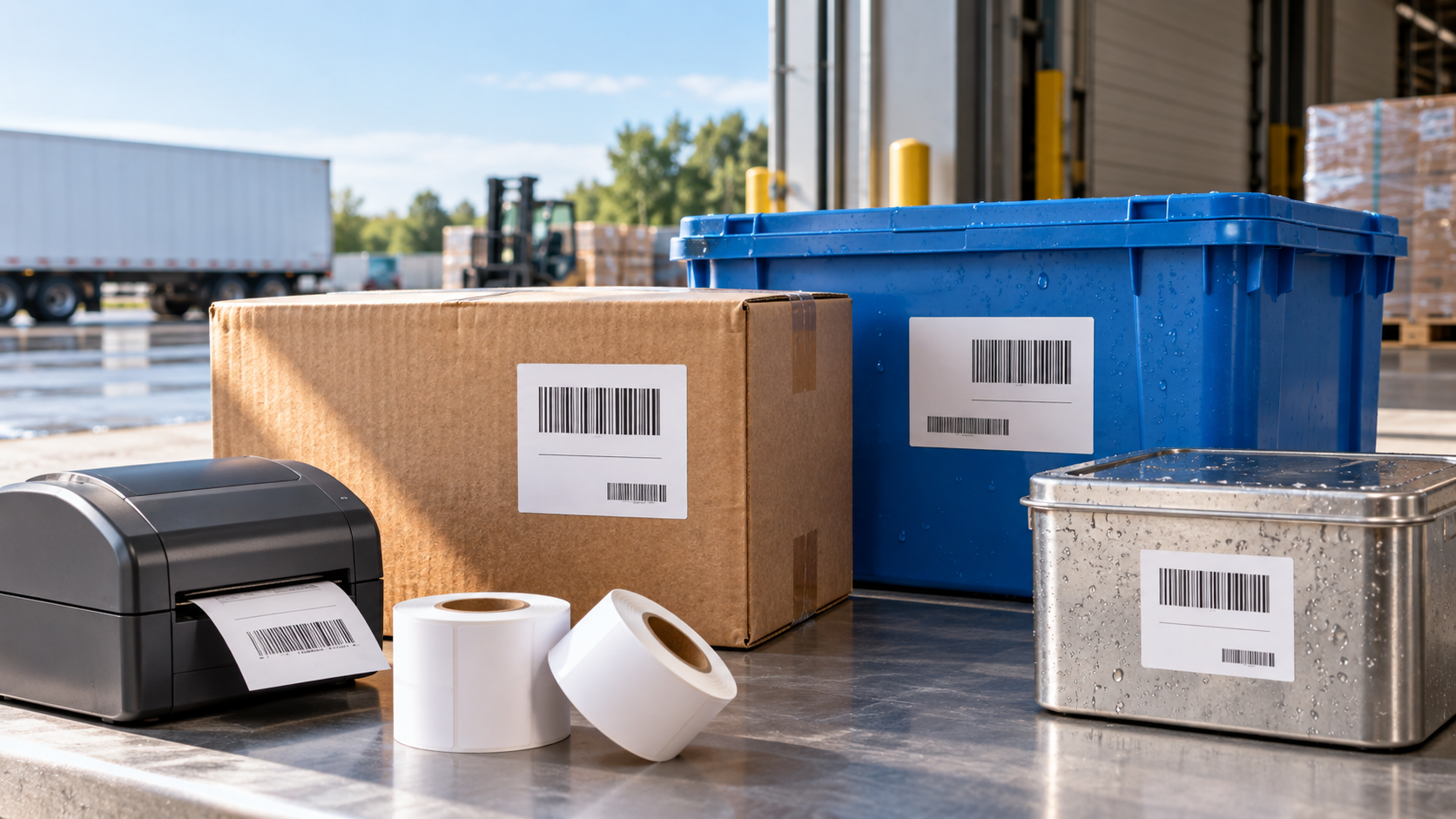
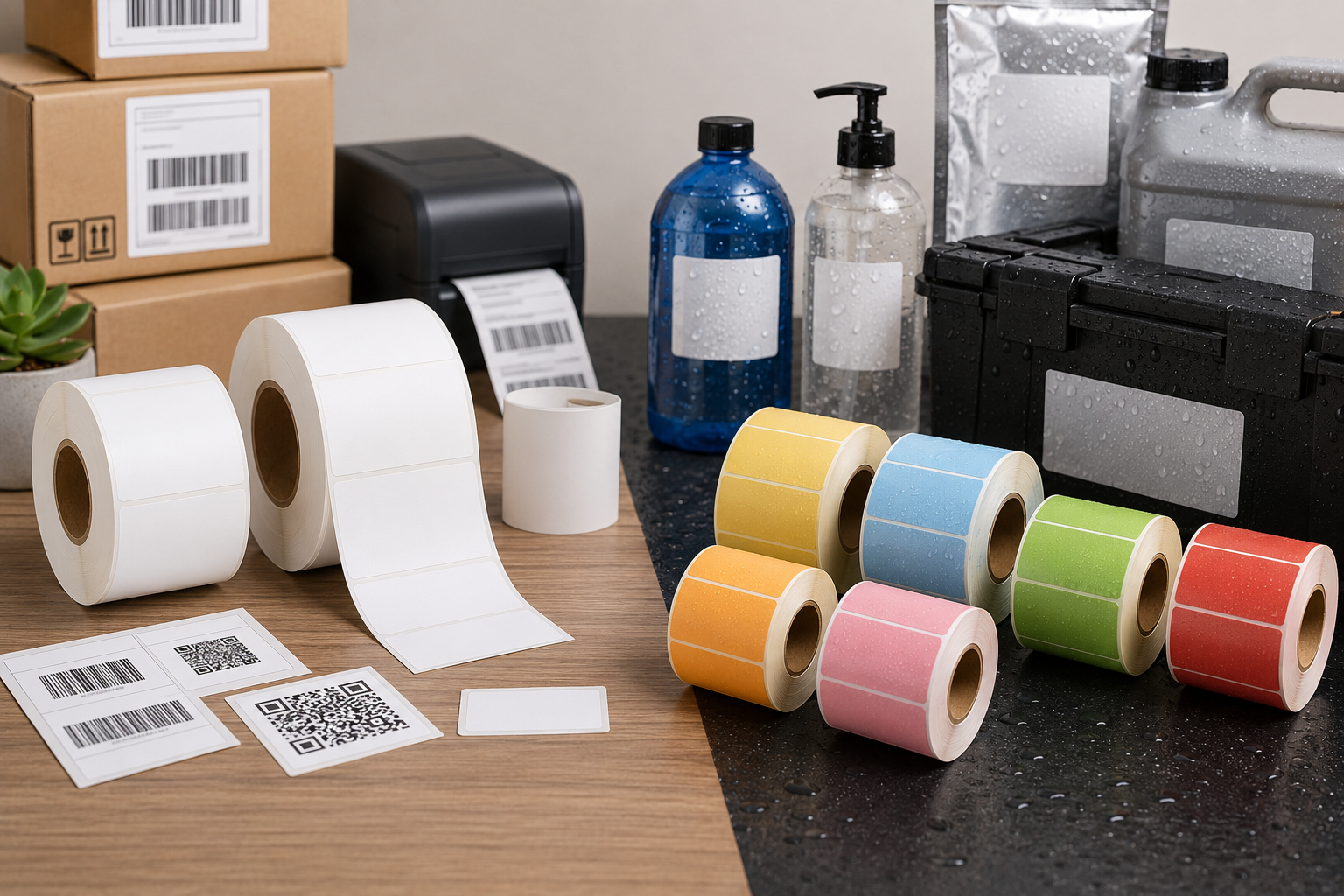
Thermal labels are used in countless industries, from eCommerce shipping and warehouse management to retail pricing, food packaging, healthcare, and manufacturing. While label size and printer compatibility are often the first considerations, choosing the right label material and label color is equally important.
The material affects durability, resistance to environmental conditions, and overall performance, while the color impacts visibility, organization, branding, and operational efficiency.
Betckey offers a wide range of thermal label solutions, including traditional paper labels and durable film labels, designed to meet various business requirements. In this guide, we’ll explain how to choose the right material and color based on your specific application.
Why Label Material Matters
The label material serves as the foundation of your thermal label. Selecting the wrong material can lead to faded prints, torn labels, poor adhesion, or damaged barcodes.
The right material ensures:
- Reliable barcode scanning
- Long-lasting print quality
- Strong adhesion
- Environmental resistance
- Professional appearance
- Reduced replacement costs
Before choosing a label, it’s important to understand the differences between the most common thermal label materials.
Paper Labels: The Most Popular Choice for Everyday Applications
What Are Paper Thermal Labels?
Paper labels are the most widely used thermal labels in the market. They are economical, versatile, and ideal for short-term applications where extreme durability is not required.
Most Betckey shipping labels, barcode labels, and address labels are manufactured using premium direct thermal paper designed for clear printing and dependable performance.
Advantages of Paper Labels
Cost-Effective
Paper labels offer the lowest cost per label, making them ideal for businesses that print large volumes daily.
This is especially beneficial for:
- Online sellers
- Amazon FBA businesses
- Shopify stores
- Warehouses
- Shipping centers
Excellent Print Quality
Betckey paper labels produce sharp text and high-contrast barcodes that are easy for scanners to read.
Fast Printing
Paper labels work perfectly with direct thermal printers without requiring ink, toner, or ribbons.
Multiple Sizes Available
Paper labels are available in numerous formats, including:
- 4″ x 6″ Shipping Labels
- 2″ x 1″ Barcode Labels
- 1″ x 3″ Address Labels
- Round Labels
- Product Labels
Limitations of Paper Labels
Although paper labels are highly versatile, they may not be suitable for harsh environments.
Paper labels can be affected by:
- Water
- Oil
- Excessive friction
- Long-term outdoor exposure
- High humidity
Best Applications for Paper Labels
Paper thermal labels are ideal for:
- Shipping labels
- Warehouse labels
- Inventory labels
- Address labels
- Retail labels
- Shelf labels
- Office organization
- General barcode labeling
For most businesses, paper labels remain the preferred option because they balance performance and affordability.
Film Labels: Maximum Durability for Challenging Environments
What Are Film Labels?
Film labels are made from synthetic materials rather than paper. Betckey offers durable film label options designed to withstand demanding environments where ordinary paper labels may fail.
Advantages of Film Labels
Water Resistant
Film labels continue performing even when exposed to moisture, condensation, or occasional splashes.
Ideal for:
- Refrigerated products
- Beverage containers
- Laboratories
- Food packaging
Oil Resistant
Unlike paper labels, film labels resist oil and grease contamination.
Suitable for:
- Automotive products
- Manufacturing facilities
- Industrial equipment
- Mechanical parts
Tear Resistant
Film labels are significantly stronger than paper labels and resist tearing during handling and transportation.
This makes them perfect for:
- Long-term asset tracking
- Equipment identification
- Product labeling
- Outdoor applications
Better Chemical Resistance
Film materials provide improved resistance to cleaning solutions and chemicals commonly found in industrial settings.
Limitations of Film Labels
Film labels typically cost more than paper labels. However, their durability often results in lower replacement costs over time.
Best Applications for Film Labels
Film labels are recommended for:
- Freezer labeling
- Cold storage
- Laboratories
- Cosmetic packaging
- Chemical containers
- Outdoor products
- Asset tracking
- Industrial environments
Businesses operating in challenging conditions often find film labels to be the most economical long-term solution.
Paper vs. Film Labels: Which Should You Choose?
| Feature | Paper Labels | Film Labels |
|---|---|---|
| Cost | Lower | Higher |
| Water Resistance | Limited | Excellent |
| Oil Resistance | Limited | Excellent |
| Tear Resistance | Low | Excellent |
| Indoor Use | Excellent | Excellent |
| Outdoor Use | Limited | Better |
| Shipping Labels | Excellent | Good |
| Industrial Use | Fair | Excellent |
| Asset Tracking | Fair | Excellent |
Choose Paper Labels If:
- You need economical labels
- Labels are used indoors
- Labels are used for shipping
- Labels have short-term usage
Choose Film Labels If:
- Labels encounter moisture
- Labels encounter oil or chemicals
- Long-term durability is required
- Labels must resist tearing
Why Label Color Matters
Many businesses focus solely on material selection and overlook the importance of color.
Color plays a critical role in:
- Inventory organization
- Visual identification
- Branding
- Workflow efficiency
- Error reduction
Choosing the correct label color can dramatically improve workplace productivity.
White Labels: The Industry Standard
Why White Labels Are Most Popular
White labels remain the most commonly used thermal labels across all industries.
Benefits include:
- Highest barcode contrast
- Professional appearance
- Easy scanning
- Universal compatibility
Most Betckey shipping labels, barcode labels, and warehouse labels are produced in bright white materials because they provide optimal print quality.
Best Uses for White Labels
- Shipping labels
- Product labels
- Inventory labels
- Address labels
- Retail labels
- Barcode labels
Colored Labels for Organization and Workflow
Colored labels help businesses visually separate products, locations, priorities, or departments.
Common colors include:
Red Labels
Used for:
- Urgent orders
- Quality control
- Warning identification
Yellow Labels
Used for:
- Temporary inventory
- Promotions
- Special handling
Green Labels
Used for:
- Approved products
- Completed inspections
- Eco-friendly products
Blue Labels
Used for:
- Department coding
- Storage zones
- Internal tracking
Orange Labels
Used for:
- Clearance items
- Special projects
- Seasonal inventory
Pink Labels
Used for:
- Marketing campaigns
- Product launches
- Retail promotions
How Betckey Helps Businesses Choose the Right Labels
Betckey offers a broad selection of thermal labels designed to fit various industries and printer models.
Popular solutions include:
Direct Thermal Paper Labels
Ideal for:
- Shipping
- Warehousing
- Retail
- Logistics
Waterproof Film Labels
Ideal for:
- Refrigeration
- Food service
- Laboratories
- Industrial applications
Colored Thermal Labels
Ideal for:
- Inventory management
- Product categorization
- Warehouse organization
- Retail promotions
Custom Label Solutions
Businesses looking to strengthen brand recognition can also consider customized labels featuring:
- Logos
- Brand colors
- Product information
- QR codes
- Promotional messaging
Factors to Consider Before Making a Purchase
Before selecting thermal labels, ask the following questions:
Will the Labels Be Exposed to Water?
If yes, choose film labels.
Will the Labels Be Used Outdoors?
Film labels are generally more durable.
How Long Must the Label Last?
Short-term use favors paper labels.
Long-term use favors film labels.
Is Cost the Primary Concern?
Paper labels provide the most economical solution.
Do You Need Color Coding?
Choose colored labels to improve organization and operational efficiency.
Final Thoughts
Selecting the right thermal label material and color can significantly impact efficiency, durability, and overall business performance.
For standard shipping, inventory, and retail applications, Betckey paper thermal labels offer excellent print quality and affordability.
For demanding environments involving moisture, oil, chemicals, or heavy handling, Betckey film labels provide superior durability through their water-resistant, oil-resistant, and tear-resistant construction.
When combined with the appropriate label color, businesses can create a more organized, professional, and efficient workflow while reducing labeling errors and replacement costs.
Frequently Asked Questions
FAQ 1: Are film labels compatible with thermal printers?
Yes. Betckey offers film label options designed for compatible thermal printing systems. Always verify printer compatibility before purchasing.
FAQ 2: Which label material is best for shipping labels?
Paper thermal labels are generally the best choice for shipping applications because they provide excellent print quality and cost efficiency.
FAQ 3: When should I choose film labels over paper labels?
Choose film labels whenever labels may encounter water, oil, chemicals, abrasion, or extended use. Film labels provide significantly better durability in challenging environments.