Thermal labels are widely used across shipping, warehousing, retail, food service, healthcare, manufacturing, and logistics industries. While label size, print quality, and material often receive the most attention, one factor is equally important but frequently overlooked: the adhesive.
Choosing the wrong adhesive can lead to labels falling off during transit, failing in freezer environments, leaving residue on products, or causing barcode scanning issues. Selecting the right adhesive ensures your labels stay attached for as long as needed and perform reliably in real-world conditions.
This guide explains the most common thermal label adhesive options, their applications, advantages, limitations, and how to determine which adhesive best fits your business needs.
Why Adhesive Selection Matters
The adhesive is the layer that bonds the label to a surface. Even the highest-quality thermal paper becomes ineffective if the label cannot remain securely attached throughout its intended use.
A properly selected adhesive helps:
- Prevent labels from peeling during shipping
- Maintain barcode readability
- Reduce replacement costs
- Improve inventory accuracy
- Enhance customer satisfaction
- Ensure compliance with industry regulations
The ideal adhesive depends on several factors:
- Surface material
- Temperature conditions
- Duration of application
- Environmental exposure
- Removal requirements
Understanding these factors is the first step toward choosing the correct thermal label.
General Purpose Adhesive
Best for Standard Applications
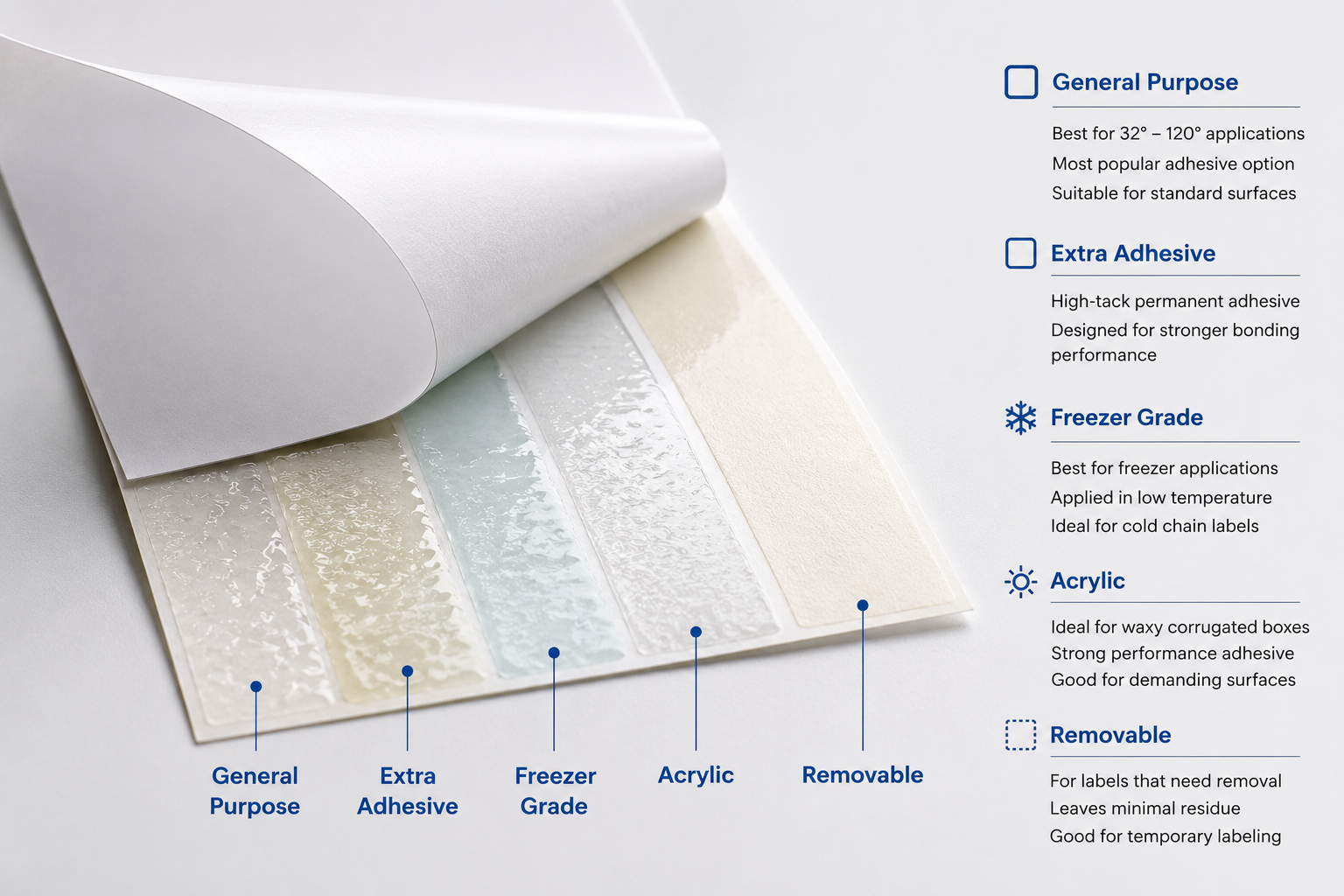
General Purpose adhesive is the most commonly used adhesive in the thermal label industry. It provides reliable bonding on a wide variety of surfaces while maintaining an affordable cost.
Typical Temperature Range
32°F to 120°F (0°C to 49°C)
Suitable Surfaces
- Corrugated cartons
- Shipping boxes
- Paper packaging
- Plastic containers
- Product packaging
- Retail labels
Advantages
- Most economical option
- Excellent all-around performance
- Suitable for most shipping applications
- Good initial tack and adhesion
- Works on clean, smooth surfaces
Common Applications
General Purpose adhesive is commonly used for:
- Shipping labels
- Warehouse labels
- Inventory labels
- Retail pricing labels
- Product identification labels
- Logistics tracking labels
Limitations
While highly versatile, General Purpose adhesive may not perform optimally under extreme conditions such as:
- Freezer storage
- Moisture-heavy environments
- Rough surfaces
- Waxy packaging
- Extremely hot environments
For most businesses, this adhesive remains the default and most popular choice.
Extra Adhesive
Stronger Bonding for Challenging Surfaces
Extra Adhesive, sometimes referred to as High-Tack Permanent Adhesive, is designed for applications requiring stronger adhesion than standard labels.
This adhesive creates a more aggressive bond and is intended for situations where labels must remain attached despite handling, vibration, or less-than-ideal surfaces.
Suitable Surfaces
- Rough cardboard
- Textured packaging
- Recycled cartons
- Industrial containers
- Plastic drums
- Warehouse storage bins
Advantages
- Stronger initial tack
- Improved long-term adhesion
- Better resistance to handling damage
- Reduced risk of edge lifting
- Ideal for heavy-duty applications
Common Applications
Businesses often choose Extra Adhesive for:
- Industrial labeling
- Long-term inventory management
- Asset tracking
- Manufacturing environments
- Distribution centers
- Export shipping
When to Choose Extra Adhesive
Consider Extra Adhesive when:
- Labels frequently fall off standard boxes
- Packages travel long distances
- Surfaces are textured or uneven
- Labels must remain attached for months or years
The stronger bond can significantly reduce relabeling costs and operational disruptions.
Freezer Grade Adhesive
Designed for Low-Temperature Environments
Freezer Grade adhesive is specifically engineered for cold storage and frozen environments.
Standard adhesives often become brittle and lose bonding strength at low temperatures. Freezer Grade adhesive remains flexible and maintains adhesion even in freezing conditions.
Temperature Performance
Typically suitable for:
- Refrigerated storage
- Freezer environments
- Frozen food packaging
- Cold-chain logistics
Advantages
- Performs in low temperatures
- Resists condensation
- Maintains adhesion during freeze-thaw cycles
- Reduces label failure in cold environments
Common Applications
Freezer Grade labels are widely used in:
Food Industry
- Frozen meals
- Ice cream packaging
- Meat processing
- Seafood products
- Refrigerated beverages
Pharmaceutical Industry
- Vaccine storage
- Laboratory samples
- Medical specimen tracking
Logistics
- Cold-chain transportation
- Refrigerated warehouses
- Temperature-controlled shipping
Important Considerations
Freezer Grade adhesive works best when applied correctly.
For optimal performance:
- Apply labels before freezing whenever possible
- Ensure surfaces are clean and dry
- Follow manufacturer recommendations for application temperature
Using standard labels in freezer environments often results in label lifting, curling, or complete failure.
Acrylic Adhesive
Ideal for Waxy and Difficult Surfaces
Acrylic adhesive is designed for demanding applications where standard adhesives struggle to achieve sufficient bonding.
Certain packaging materials, particularly wax-coated corrugated cartons, present significant adhesion challenges. Acrylic adhesives provide stronger and more durable performance on these difficult surfaces.
Suitable Surfaces
- Waxy corrugated boxes
- Coated packaging
- Glossy surfaces
- Plastic films
- Synthetic materials
- Industrial packaging
Advantages
- Excellent long-term durability
- Strong chemical resistance
- Better UV resistance
- Superior performance on difficult substrates
- Consistent adhesion over time
Common Applications
Acrylic adhesive is frequently used for:
- Export packaging
- Industrial products
- Chemical containers
- Outdoor labeling
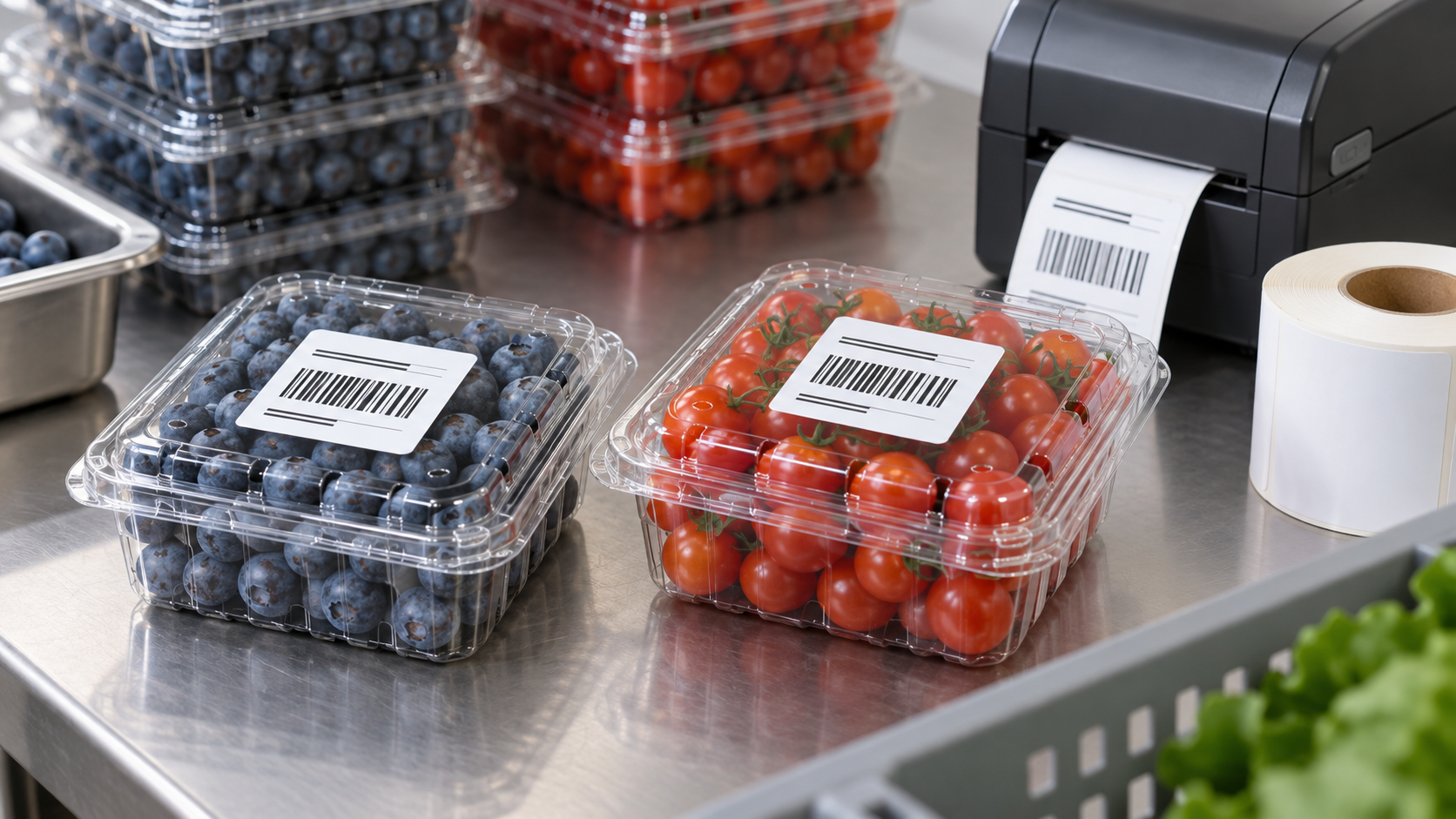
- Waxy produce boxes
- Agricultural products
Why Waxy Boxes Need Acrylic Adhesive
Many agricultural and food packaging boxes contain wax coatings to improve moisture resistance.
Traditional rubber-based adhesives may struggle to bond to these surfaces.
Acrylic adhesives are specifically formulated to overcome this challenge and provide reliable adhesion throughout transportation and storage.
Removable Adhesive
When Labels Need to Come Off Cleanly
Not all labels are intended to stay permanently attached.
Removable adhesive is designed for applications where labels need to be removed later without damaging the surface or leaving excessive residue.
Advantages
- Easy removal
- Minimal adhesive residue
- Reduced surface damage
- Flexible temporary labeling solution
- Professional appearance
Suitable Surfaces
- Glass
- Plastic
- Metal
- Electronics
- Retail shelving
- Temporary packaging
Common Applications
Removable labels are commonly used for:
Retail
- Promotional stickers
- Temporary pricing labels
- Seasonal products
Warehousing
- Temporary inventory labels
- Bin identification
Office Environments
- Asset tracking
- File organization
- Equipment labeling
Consumer Products
- Window labels
- Decorative stickers
- Reusable containers
Limitations
Removable adhesives generally provide less holding power than permanent adhesives.
They are not recommended for:
- Long-term shipping labels
- Harsh environmental conditions
- Heavy industrial use
If the label must remain attached throughout shipping and handling, a permanent adhesive is usually the better choice.
How to Select the Right Thermal Label Adhesive
When choosing an adhesive, consider the following questions:
What Surface Will the Label Be Applied To?
Different surfaces require different adhesive strengths.
| Surface | Recommended Adhesive |
|---|---|
| Standard cardboard | General Purpose |
| Rough cardboard | Extra Adhesive |
| Waxy cartons | Acrylic |
| Glass | Removable or General Purpose |
| Plastic containers | General Purpose or Extra Adhesive |
What Temperature Will the Label Experience?
Temperature has a significant impact on adhesive performance.
| Environment | Recommended Adhesive |
|---|---|
| Room temperature | General Purpose |
| Warehouse storage | General Purpose |
| Refrigeration | Freezer Grade |
| Frozen storage | Freezer Grade |
| Outdoor exposure | Acrylic |
How Long Must the Label Stay Attached?
Short-term applications often benefit from removable adhesives, while long-term identification usually requires permanent options.
| Duration | Recommended Adhesive |
|---|---|
| Temporary | Removable |
| Weeks | General Purpose |
| Months | Extra Adhesive |
| Years | Acrylic or Extra Adhesive |
Is Residue Acceptable?
If labels must be removed cleanly, Removable adhesive is typically the best choice.
If permanent identification is required, stronger adhesives are preferable.
Common Adhesive Mistakes to Avoid
Choosing Permanent Adhesive for Temporary Labels
This often results in residue, damaged surfaces, and customer complaints.
Using Standard Labels in Freezers
General Purpose adhesives may fail in cold environments.
Ignoring Surface Texture
Rough or wax-coated surfaces often require stronger adhesives.
Focusing Only on Cost
A cheaper label that falls off creates much higher costs through relabeling, shipping errors, and inventory problems.
Final Thoughts
Selecting the correct adhesive is one of the most important decisions when purchasing thermal labels. While General Purpose adhesive remains the most popular choice for standard applications, specialized environments often require more advanced options.
- Choose General Purpose for everyday shipping and warehouse labels.
- Choose Extra Adhesive for stronger bonding and industrial applications.
- Choose Freezer Grade for refrigerated and frozen environments.
- Choose Acrylic for waxy boxes and demanding surfaces.
- Choose Removable when labels must be removed cleanly.
Taking the time to match the adhesive to the application will improve label performance, reduce operational issues, and ultimately save money.
Frequently Asked Questions
FAQ 1: What is the most commonly used thermal label adhesive?
General Purpose adhesive is the most widely used option because it performs well on standard shipping boxes, packaging materials, and warehouse applications while remaining cost-effective.
FAQ 2: Can I use standard thermal labels in a freezer?
Generally, no. Standard adhesives often lose adhesion in freezing temperatures. Freezer Grade adhesive is specifically designed for cold storage and frozen environments.
FAQ 3: Which adhesive is best for wax-coated corrugated boxes?
Acrylic adhesive is typically the best choice for wax-coated cartons because it provides stronger bonding and better long-term performance on difficult surfaces where standard adhesives may fail.