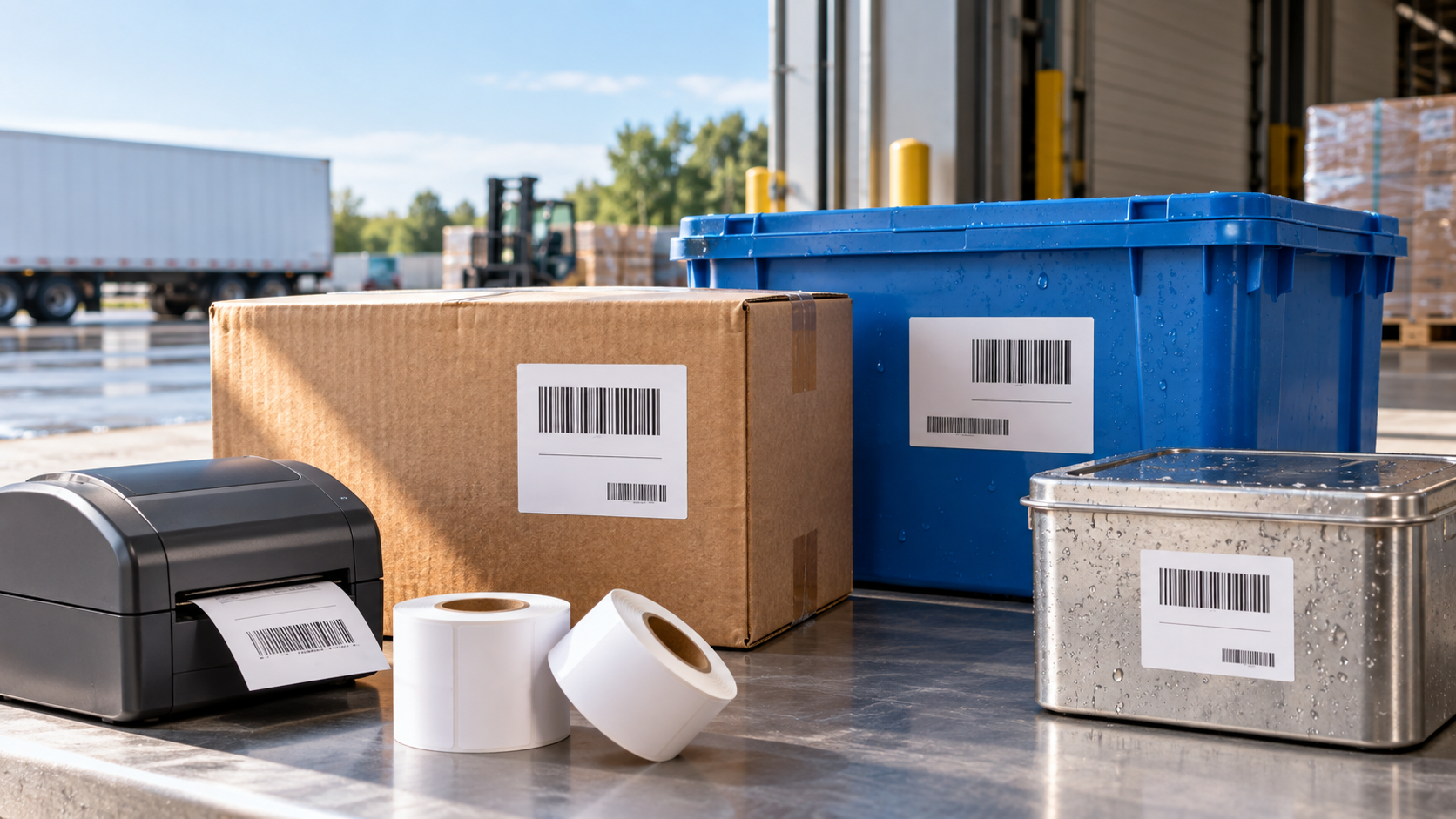
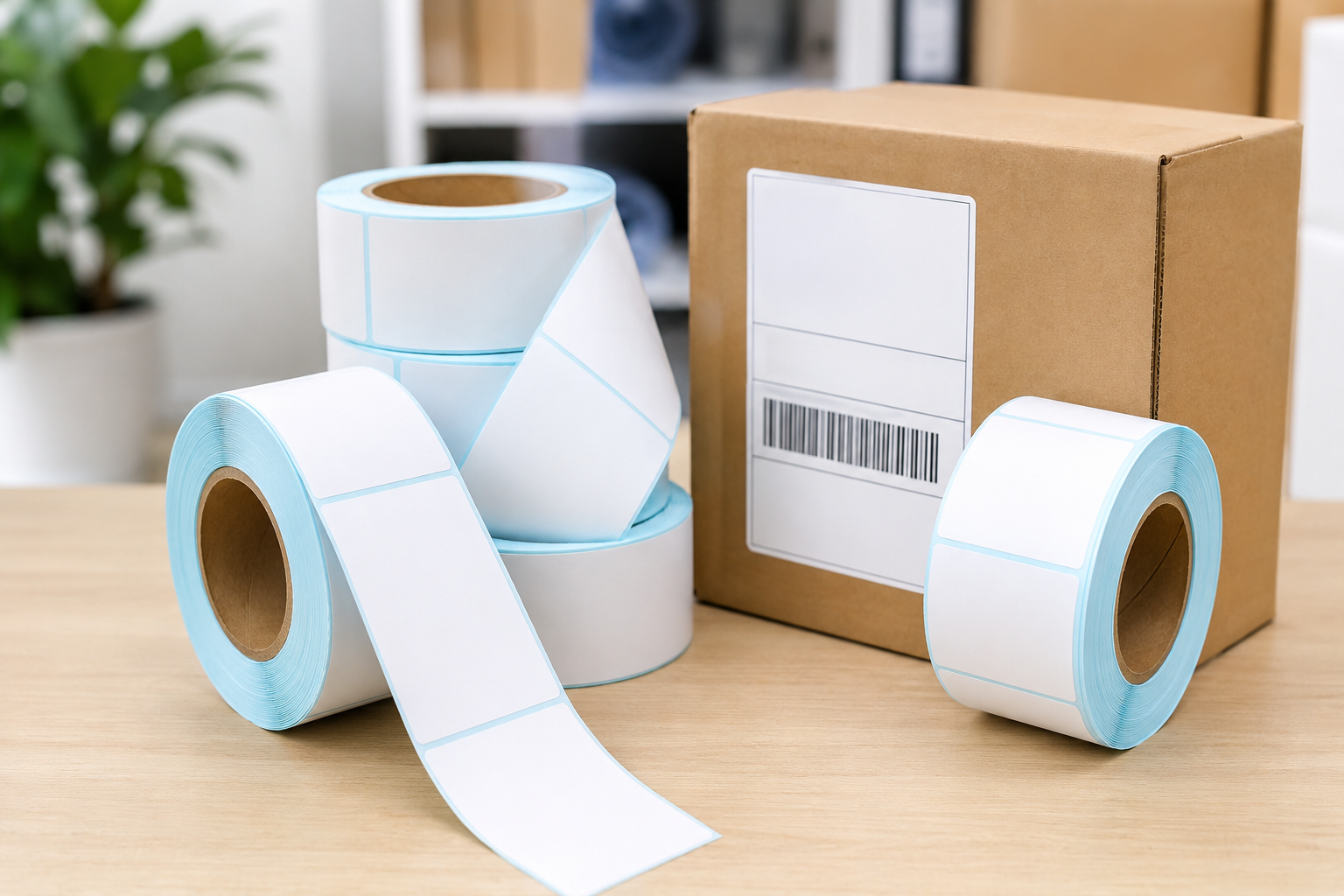
Thermal labels can lose performance before they reach a printer if they are stored poorly. Heat, sunlight, moisture, pressure, dust, and chemical exposure may affect the heat-sensitive coating, adhesive, liner, or roll shape. Good storage is inexpensive compared with the cost of jams, faded images, and labels that lift from packages.
Control Heat and Light
Direct thermal material reacts to heat by design. High storage temperatures or prolonged exposure to strong light can darken the face stock, reduce contrast, or shorten useful image life. Keep unopened rolls in a cool, dry area away from windows, heaters, hot vehicles, and production equipment that releases heat. The supplier’s recommended storage conditions should take priority because coatings and adhesives vary.
Keep Rolls in Protective Packaging
Original cartons and inner wrapping protect labels from dust, ultraviolet light, and rapid humidity changes. Open only the quantity needed for near-term work and reseal partial packs when possible. Loose rolls placed on shelves collect debris that can transfer to printer components. Packaging also prevents edges from being crushed or contaminated during routine handling.
Store Rolls Without Distortion
Heavy loads can flatten rolls or damage cores, especially when cartons are stacked beyond their designed strength. A distorted roll may feed unevenly and cause tension changes in the printer. Store cartons on stable, level shelving and follow any stacking guidance. Individual rolls should not be thrown into bins where edges and perforations can be bent. Fan-fold stacks need similar protection from compression and moisture.
Separate Labels From Chemicals
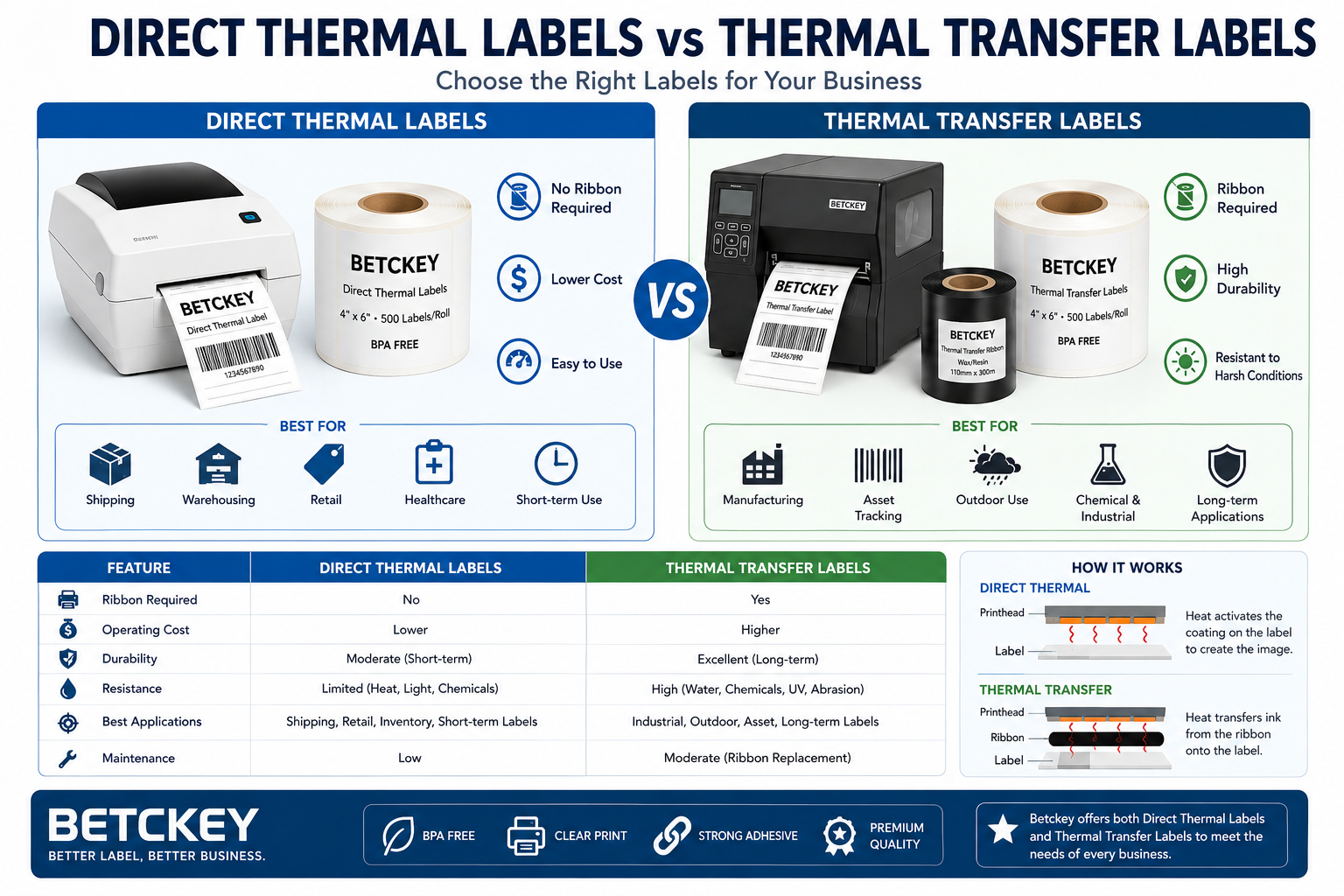
Solvents, cleaning agents, oils, plasticizers, and some packaging materials can affect direct thermal coatings or adhesive properties. Labels should not be stored beside chemical containers or in areas with strong vapors. Staff should also avoid cleaning shelves with chemicals that remain wet when cartons are replaced. Buyers reviewing direct thermal label supplies should retain any material guidance provided for the chosen construction.
Rotate Inventory
First-in, first-out stock rotation helps prevent older rolls from being forgotten behind new deliveries. Mark cartons with the receiving date or lot information and arrange shelves so the oldest acceptable stock is easiest to access. Inventory software can set reorder points based on realistic use. Large purchases may reduce price per label, but the saving is lost if rolls become damaged or obsolete before use.
Move Labels Carefully Between Environments
A roll moved from a cold warehouse into a warm, humid packing area can develop condensation. Allowing media to acclimate while still packaged can reduce moisture exposure. The same principle applies when supplies are delivered during extreme weather. Operations with refrigerators, freezers, or unconditioned storage should validate how long rolls need to reach the printing area’s normal temperature before opening.
Make Storage Part of Supplier Evaluation
Shelf-life expectations depend on the face stock, adhesive, packaging, and intended application. Ask suppliers for storage recommendations and lot traceability, then make those instructions visible to warehouse staff. Sources such as BETCKEY label supplies can be compared on both product specifications and packaging practicality. Careful storage protects the investment and gives every roll a fair chance to perform consistently.