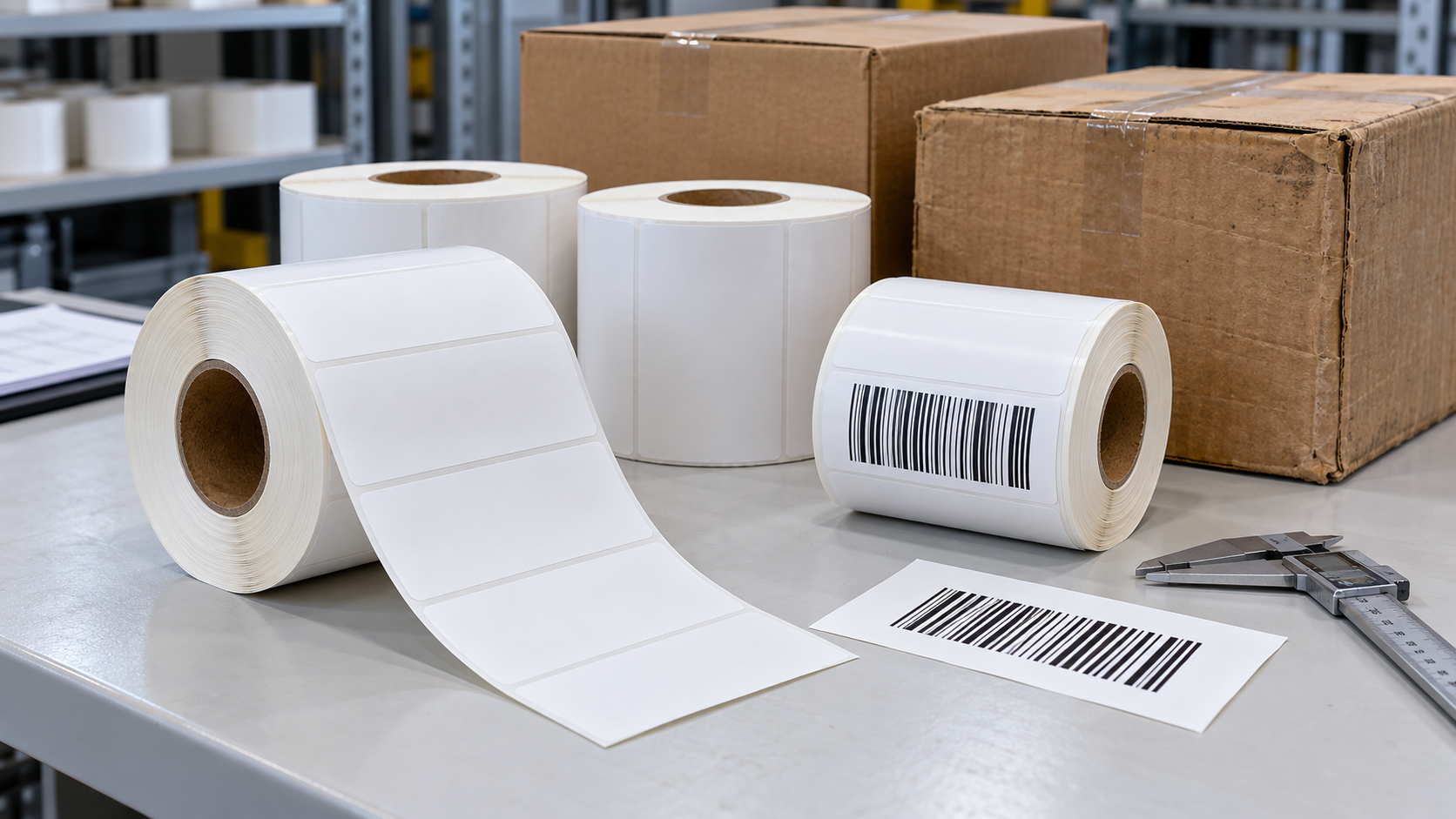
Thermal label rolls do not become unusable on a universal expiration date, but storage can change their behavior. Heat, sunlight, pressure, humidity, and damaged packaging may affect image formation, release from the liner, or adhesive performance. A roll that has sat through a warehouse move should be checked before it is loaded into a high-volume line.
Start with storage history
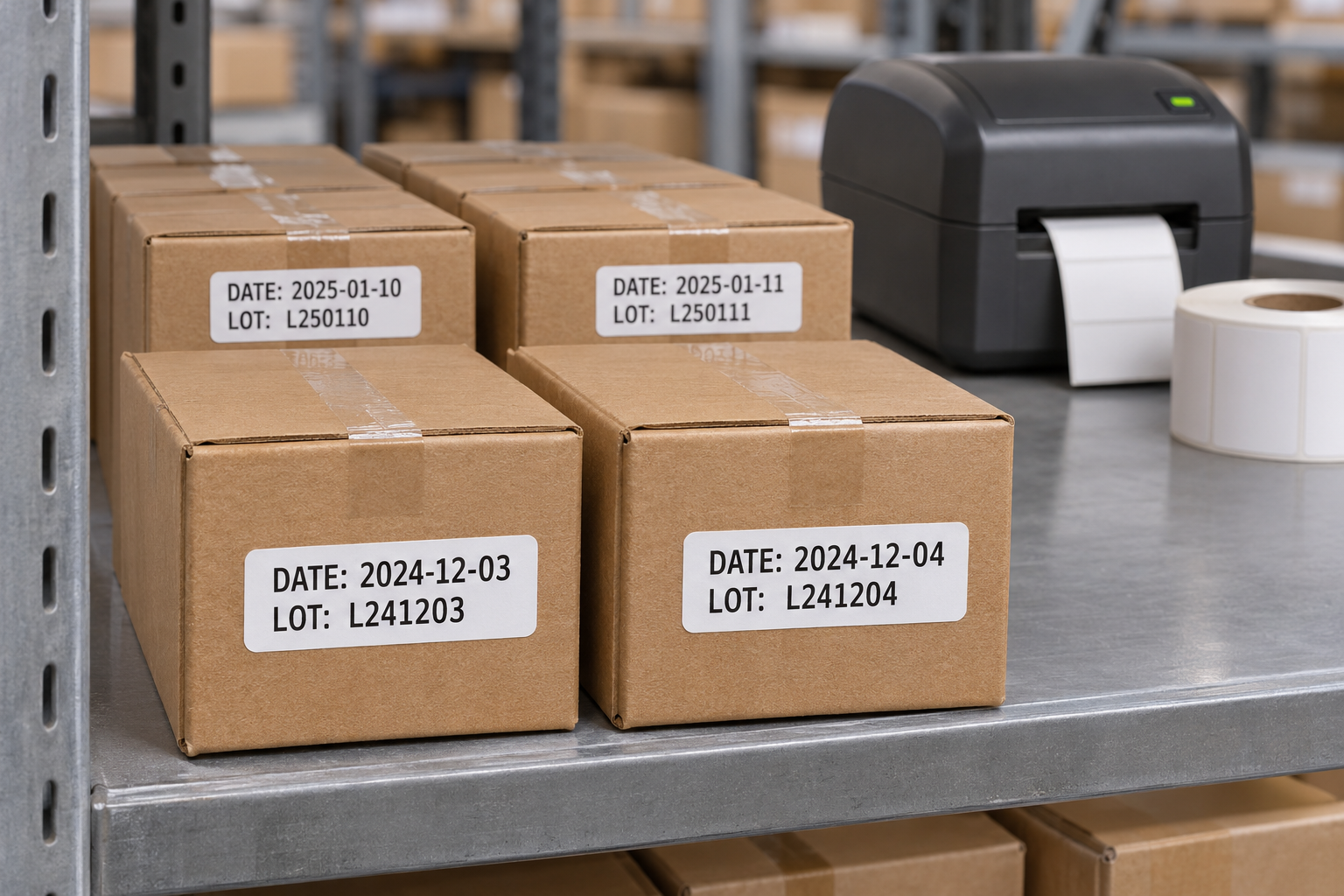
Record the supplier lot, receipt date, and the storage conditions recommended for that construction. Use older approved lots first when the supplier’s guidance supports that approach. Inspect outer cartons for water marks, crushed corners, and prolonged sun exposure. A roll near a heater or window may differ from another carton in the same delivery. Do not judge a whole pallet only from the easiest box to reach.
Open a sample roll and look for telescoping, blocked or stuck labels, edge damage, discoloration, and liner tears. Check that labels release without leaving adhesive on the liner. A roll can appear white yet feed poorly because winding tension or humidity has changed.
Print and apply a small comparison
Use the same printer and settings to print identical test data on an aged roll and a current approved direct thermal label roll. Include fine text and the smallest production barcode. Run several consecutive labels to reveal sensor misses or varying darkness. Scan the output and compare first-pass results. If the old roll needs much more heat, do not silently change every printer; investigate the stock and its storage first.
Apply labels to the real packaging surface at the actual temperature. Check edge contact after normal dwell and handling. Adhesive that feels tacky to a finger can still fail on recycled corrugate or chilled plastic. If a roll is meant for long-life identification, run a longer exposure trial before release.
Decide what to release
Define a simple pass, hold, or reject decision and record the sampled cartons. A single damaged roll may be isolated; repeated feed or adhesion failure across cartons can justify holding the lot. Do not mix questionable rolls with approved stock in the same pick location. If urgent production needs a trial, authorize a limited run and inspect its output before releasing the balance.
Ask the thermal label supplier for lot and storage information when results are uncertain. Keep a passing printed sample and the test record. The purpose is not to invent a shelf life from guesswork, but to make a repeatable decision whenever a stored roll’s condition is unknown.
Separate age from storage damage
Two rolls received on the same day may behave differently if one was left near a loading door and the other stayed in its carton. When a problem appears, compare rolls from different cartons and storage positions. Record the printer, settings, and package surface used in each test. If only one roll fails, avoid condemning an entire lot prematurely. If all rolls fail in the same way, ask whether the approved storage conditions were maintained and whether the supplier changed the construction.
Do not treat a fingernail scratch test as a full measure of image life. It can show that a direct thermal coating reacts to friction, but it does not replace a print-and-scan check after actual storage and handling. Likewise, a quick peel from a clean desk does not predict bond to cold recycled corrugate.
Improve future stock rotation
Label cartons with receipt date and supplier lot while keeping the manufacturer information visible. Keep opened rolls protected and avoid mixing partial rolls from different lots in an unmarked box. Set a periodic review for slow-moving sizes so stock is tested before a rush order depends on it. If one label size repeatedly ages in storage, reduce order quantity or consolidate formats where possible. These changes address the reason old rolls accumulate instead of relying on repeated emergency testing.
Set a retest trigger
Do not choose a universal expiration date without supplier evidence. Instead, define events that prompt a check: a roll held beyond the recommended storage period, a carton exposed to water or heat, a warehouse move with uncertain conditions, a packaging complaint, or a printer that suddenly needs different darkness. A periodic check for slow-moving stock can be added if large quantities remain on hand. These triggers focus effort where risk has changed.
For each check, sample rolls from different cartons and storage positions. Record the lot, location, printer, settings, package surface, and pass criteria. If a sample fails, expand inspection to determine whether the problem is isolated. Avoid blending failing and passing rolls together under one generic item number.
Compare image and adhesive separately
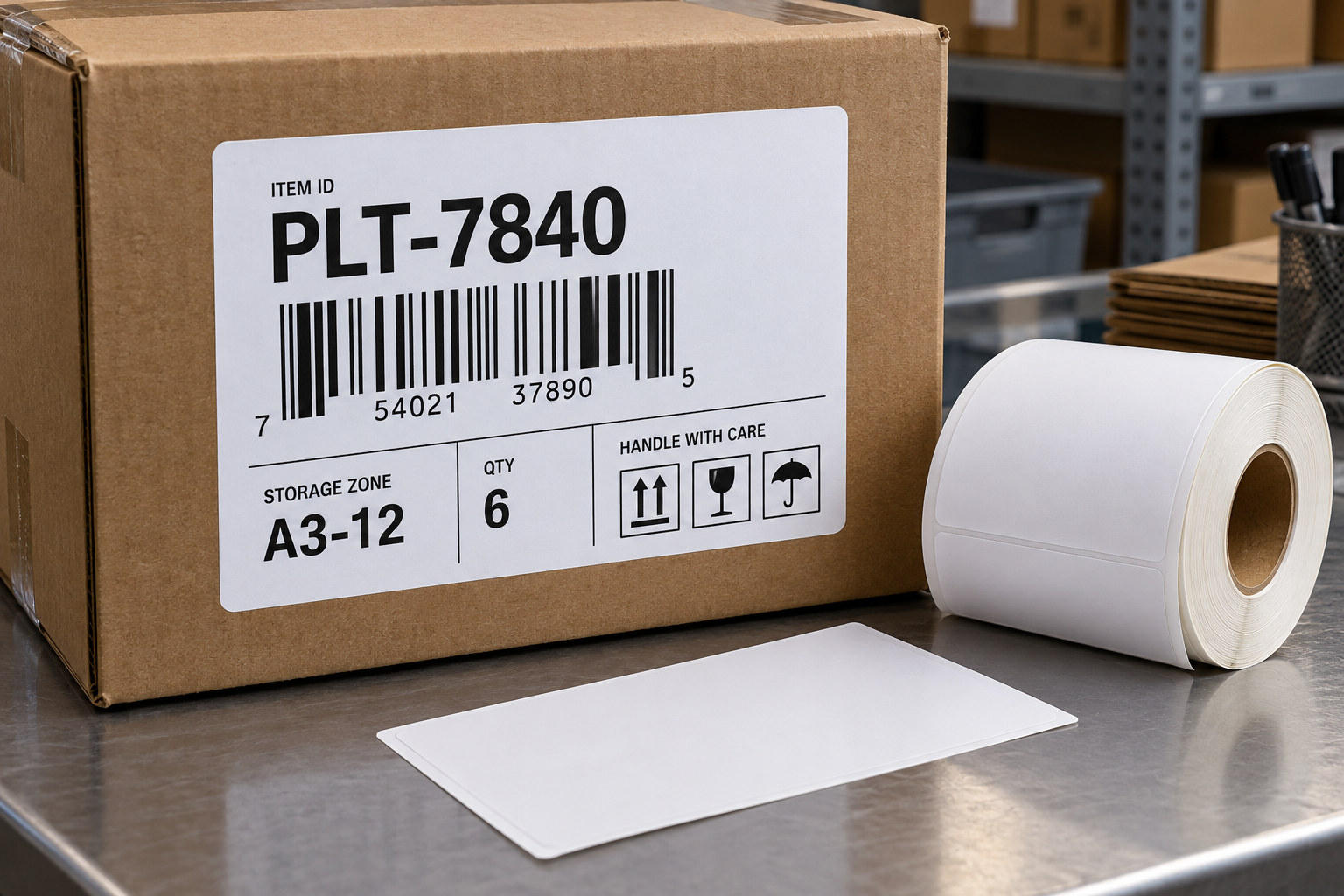
Print the smallest production barcode and fine text on an old and a current roll. Compare darkness, blank streaks, feed consistency, and first-pass scans. Then apply labels to the actual package under normal pressure and temperature. Check edge lift after dwell and handling. If only the print fails, investigate coating and printer interaction. If only adhesion fails, focus on adhesive age, packaging surface, and application conditions. Changing a printer setting will not repair aged adhesive.
Prevent recurrence
If old stock frequently needs retesting, adjust order quantities or consolidate label sizes. Keep cartons closed and protected, use clear first-in-first-out locations, and mark partial rolls with lot information. Train staff not to store a roll beside a heater or in direct sunlight merely because the next shift will use it. Record the disposal or return of failed material so it cannot reappear on another line. A better storage and purchasing routine is more efficient than repeatedly rescuing questionable rolls at the printer.
If a stored roll fails a test, tag it and remove it from the normal pick location immediately. A note in a spreadsheet is not enough when the physical carton still looks identical to approved stock. Record whether the lot was returned, discarded, or released for a limited noncritical use under an authorized decision.
Record the disposition clearly
A failed roll should not return to the ordinary shelf after testing. Record whether it was discarded, returned to the supplier, or approved for a limited noncritical use, and mark the physical carton to match. If a partial roll is kept, retain its lot number. Otherwise an employee may later load an unmarked remainder into a critical shipping-label printer.