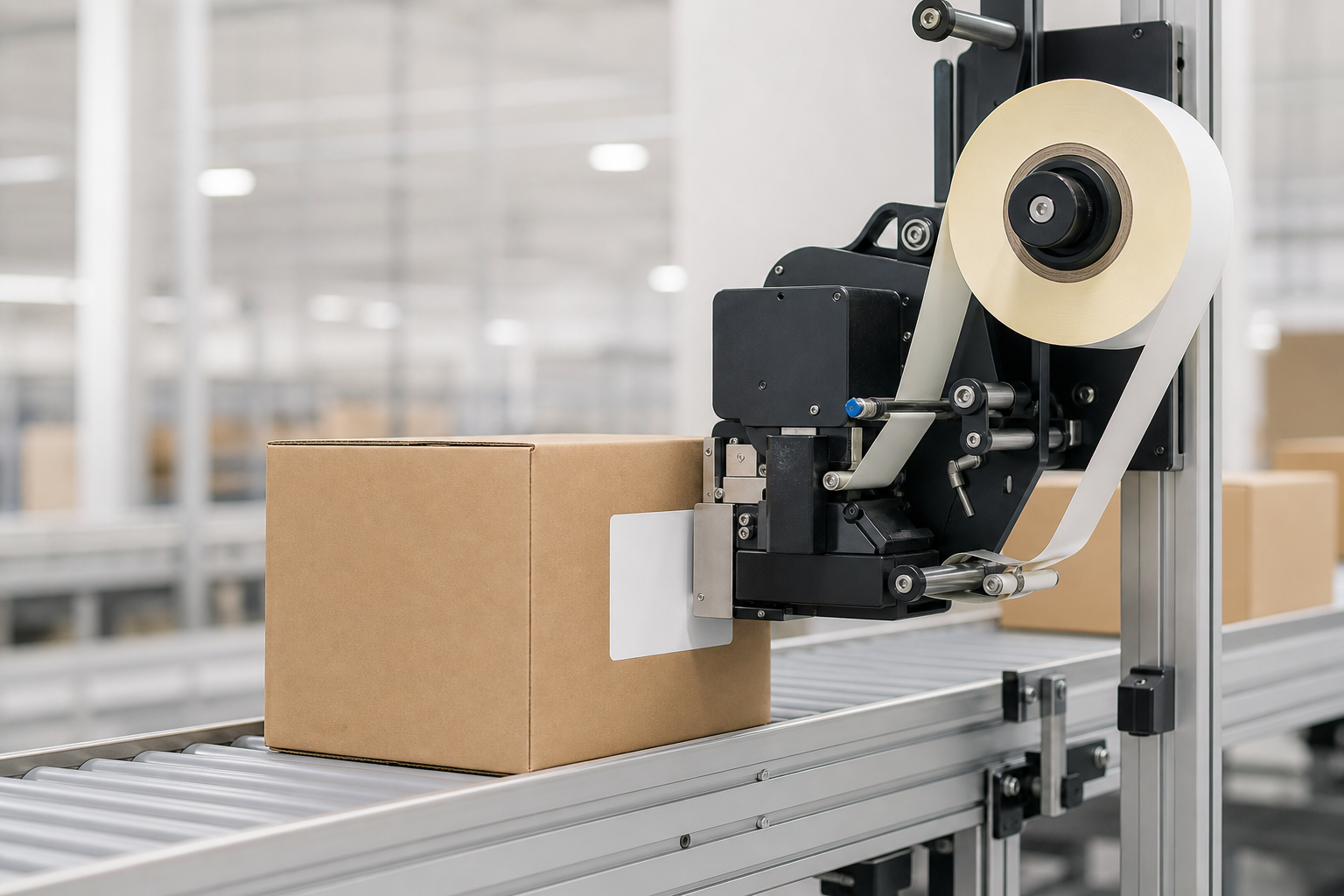
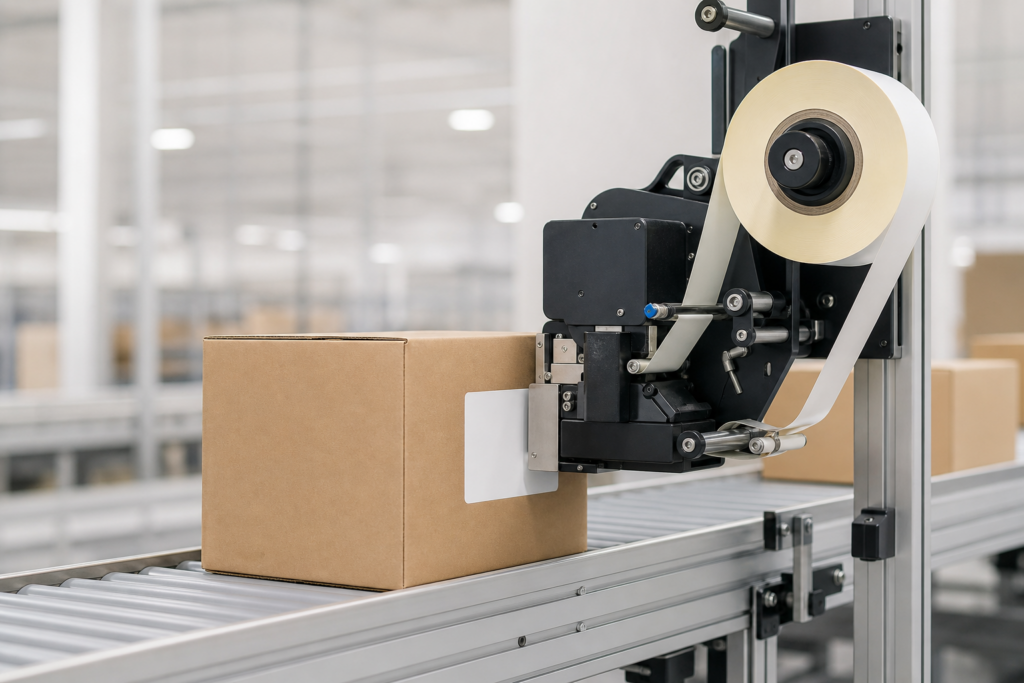
Choose thermal labels for an automatic print-and-apply system by matching the complete label construction to the print engine, applicator method, package surface, production speed, and operating environment. Width, length, gap, total thickness, liner strength, release force, stiffness, adhesive, roll direction, core size, and outside diameter must all work together.
A label that prints correctly in a desktop test can still fail on an automated line. Print-and-apply equipment must print, peel, present, transfer, and bond each label within a short cycle. The final approval therefore has to use the actual machine, package, line speed, data format, and environmental conditions.
What Makes Print-and-Apply Labeling Different?
A print-and-apply system creates variable information immediately before placing the label on a moving or stationary package. The printer advances the web, separates the label from the liner, and presents it to a tamp pad, air-blow unit, wipe mechanism, direct-apply path, or wrap applicator.
Each cycle depends on predictable label position and release. Small variations that are acceptable for manual use can cause missed pickups, skewed application, liner breaks, double feeds, or a label that remains on the peel edge. The label is part of the machine process, not only a printed consumable.
Which Printer Specifications Must Be Matched?
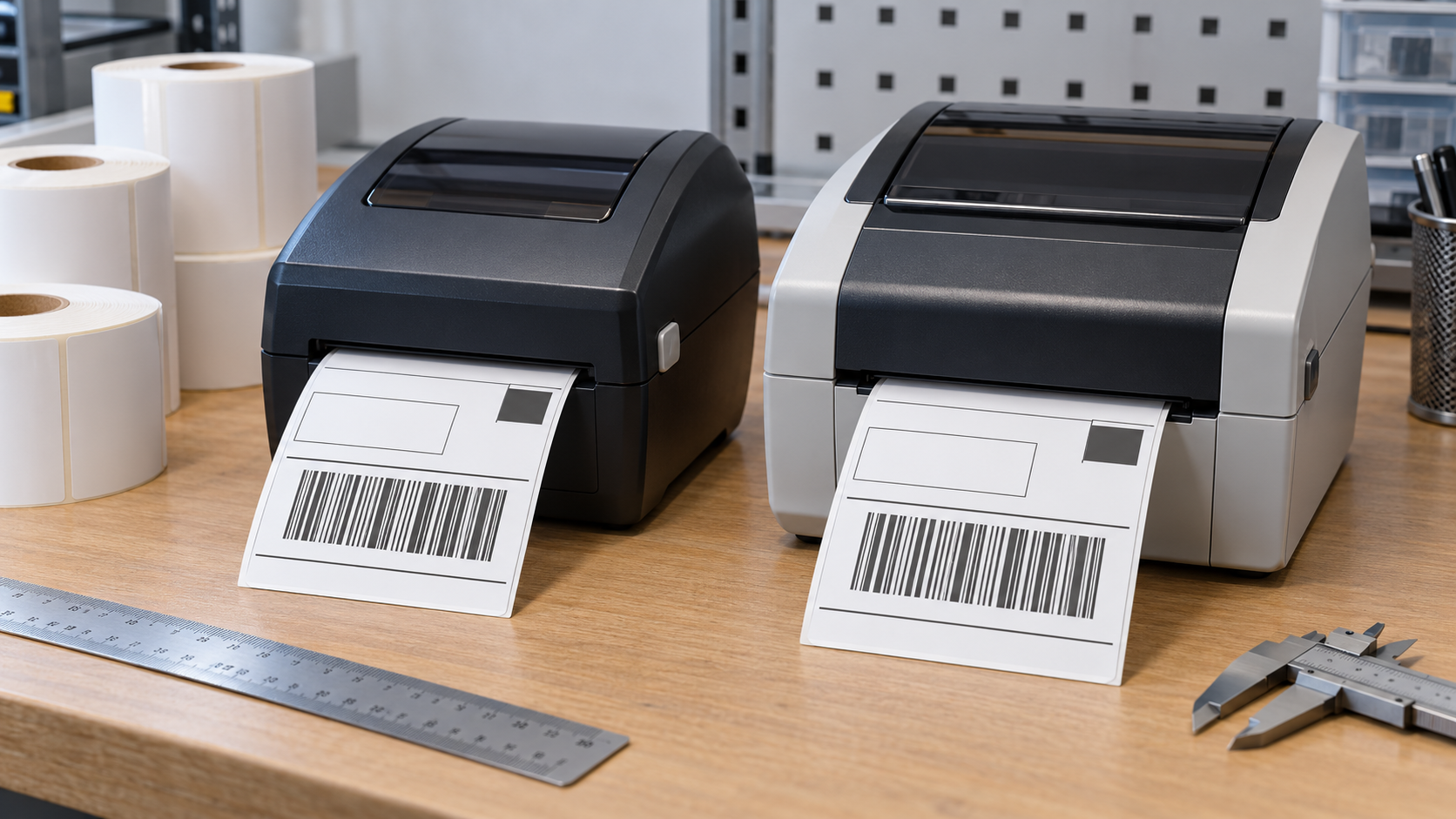
Start with the exact print engine model and installed applicator configuration. Confirm supported media width, minimum label length, total media thickness, gap range, core size, maximum roll diameter, sensing method, print resolution, and speed. Applicator mode can have different minimum-length limits from tear-off or cutter mode.
Check whether backfeed is enabled, whether the liner is driven by a peel roller, and how the waste liner is rewound. Do not copy settings from another printer family. A roll that fits physically may still fall outside the print engine’s media or tension limits.
Why Do Label Stiffness and Liner Release Matter?
At the peel edge, the liner bends sharply while the label should continue forward. A label with sufficient stiffness separates cleanly and presents predictably. A very flexible label can follow the liner around the peel edge. A very stiff construction may not conform to small packages or may lift after application.
Release must be balanced. Excessive release force can delay separation and pull the label out of position. Release that is too light can cause pre-dispensing during winding, transport, acceleration, or backfeed. Test the finished facestock, adhesive, and liner together because none of these properties can be approved independently.
How Should the Adhesive Be Selected?
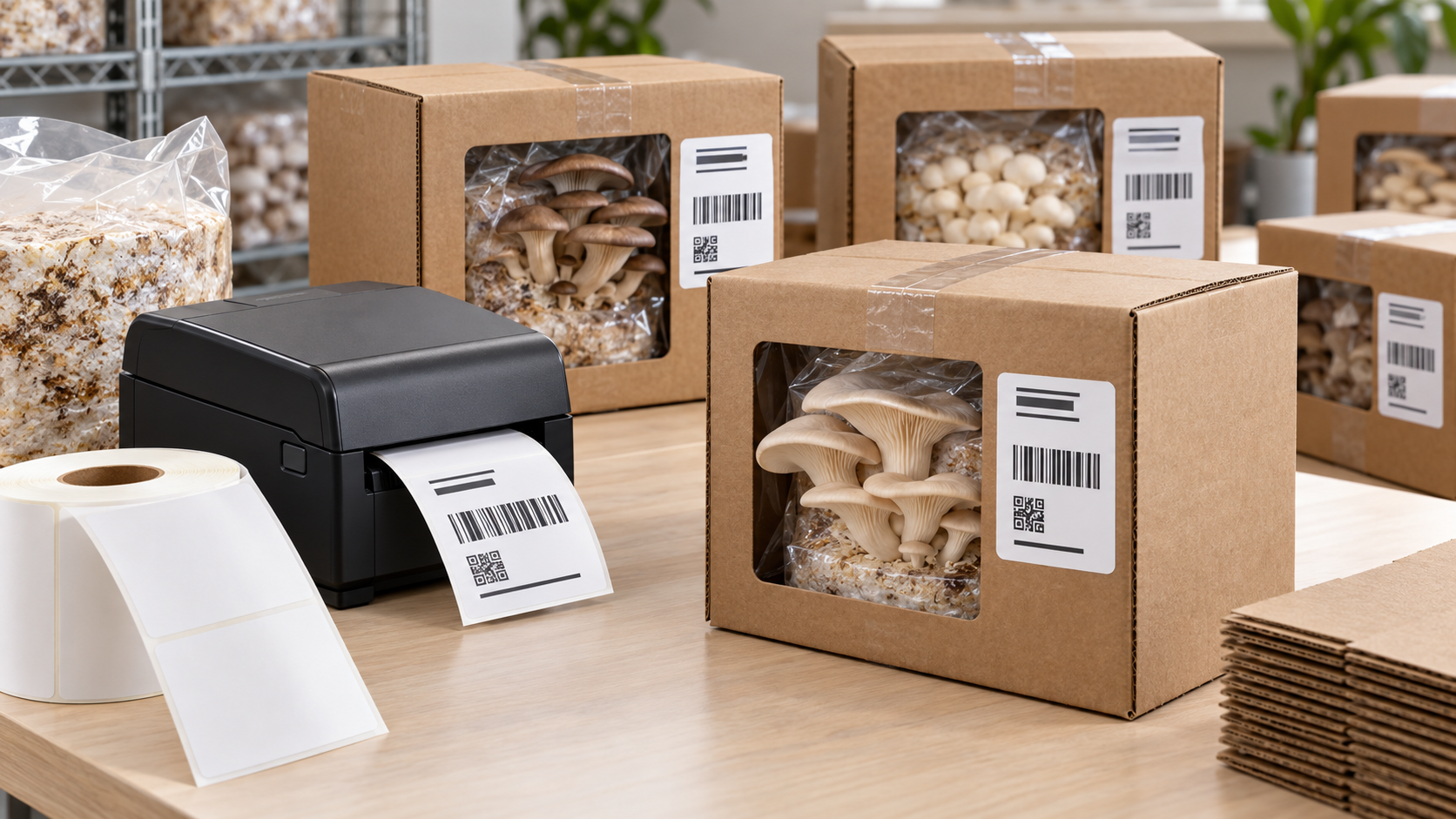
Match the adhesive to the package material, surface energy, texture, cleanliness, curvature, application temperature, and service temperature. Corrugated board, recycled cartons, shrink film, glass, metal, and low-surface-energy plastics can require different adhesive behavior. Dust, moisture, oil, and cold surfaces reduce initial contact.
Automatic application gives the label limited pressure and dwell time. The adhesive must develop enough initial tack during the actual contact event. An aggressive adhesive is not automatically better: exposed edge adhesive or excessive flow can contaminate the peel plate, pad, guides, and printer.
How Do Label Size and Shape Affect Application?
The label must be large enough for the required barcode and text but remain within the applicator’s supported range. Very short labels may not present far enough for the pickup method. Very long labels can sag, wrinkle, or require a longer tamp stroke and more cycle time.
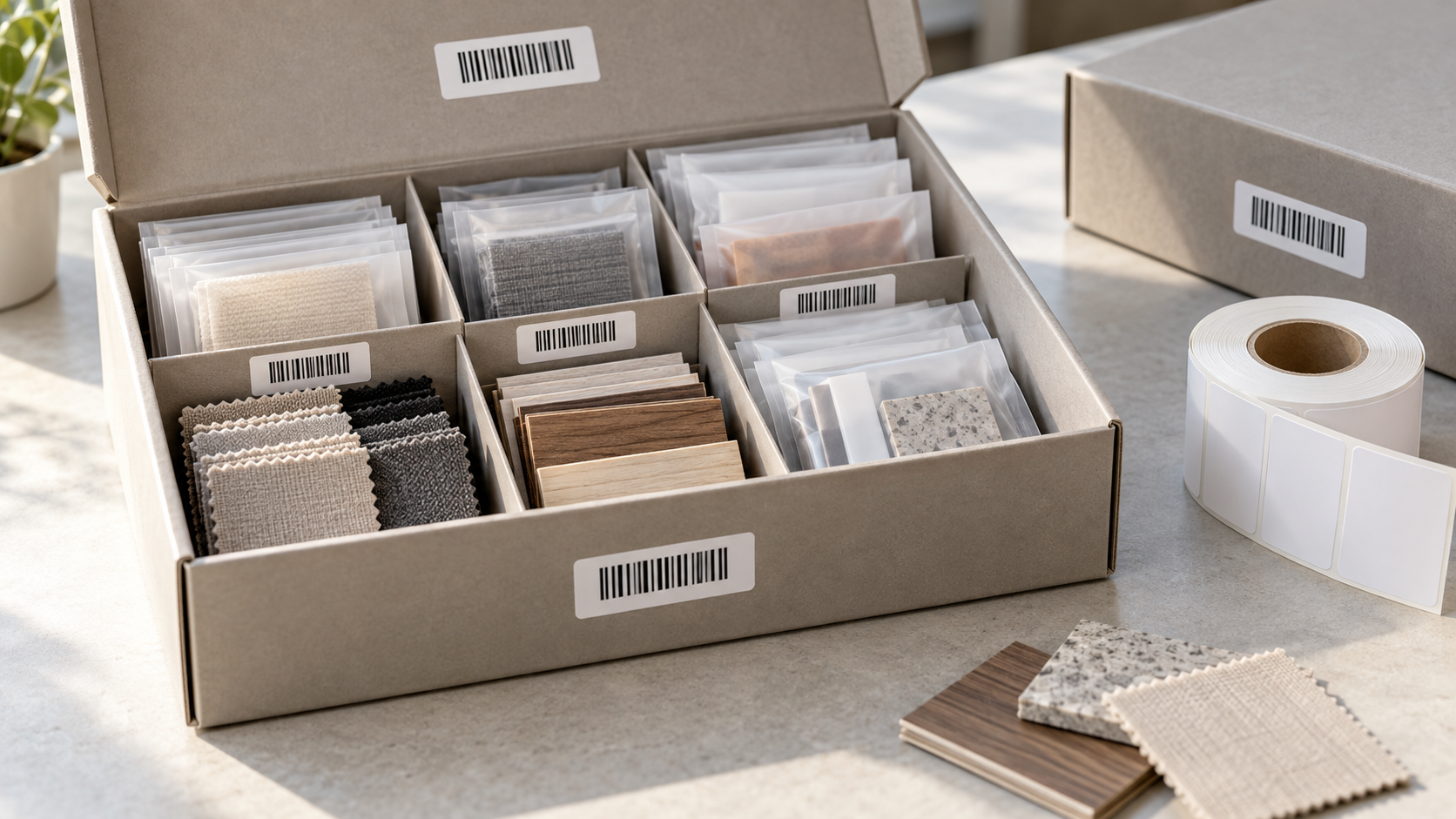
Rounded corners usually release and apply more reliably than sharp points. Narrow necks, unusual die shapes, and small liner margins can lift at speed. For corner-wrap labels, confirm the panel dimensions, wrap sequence, carton compression, and the location of package edges before approving the die line.
What Roll Construction Should Be Specified?
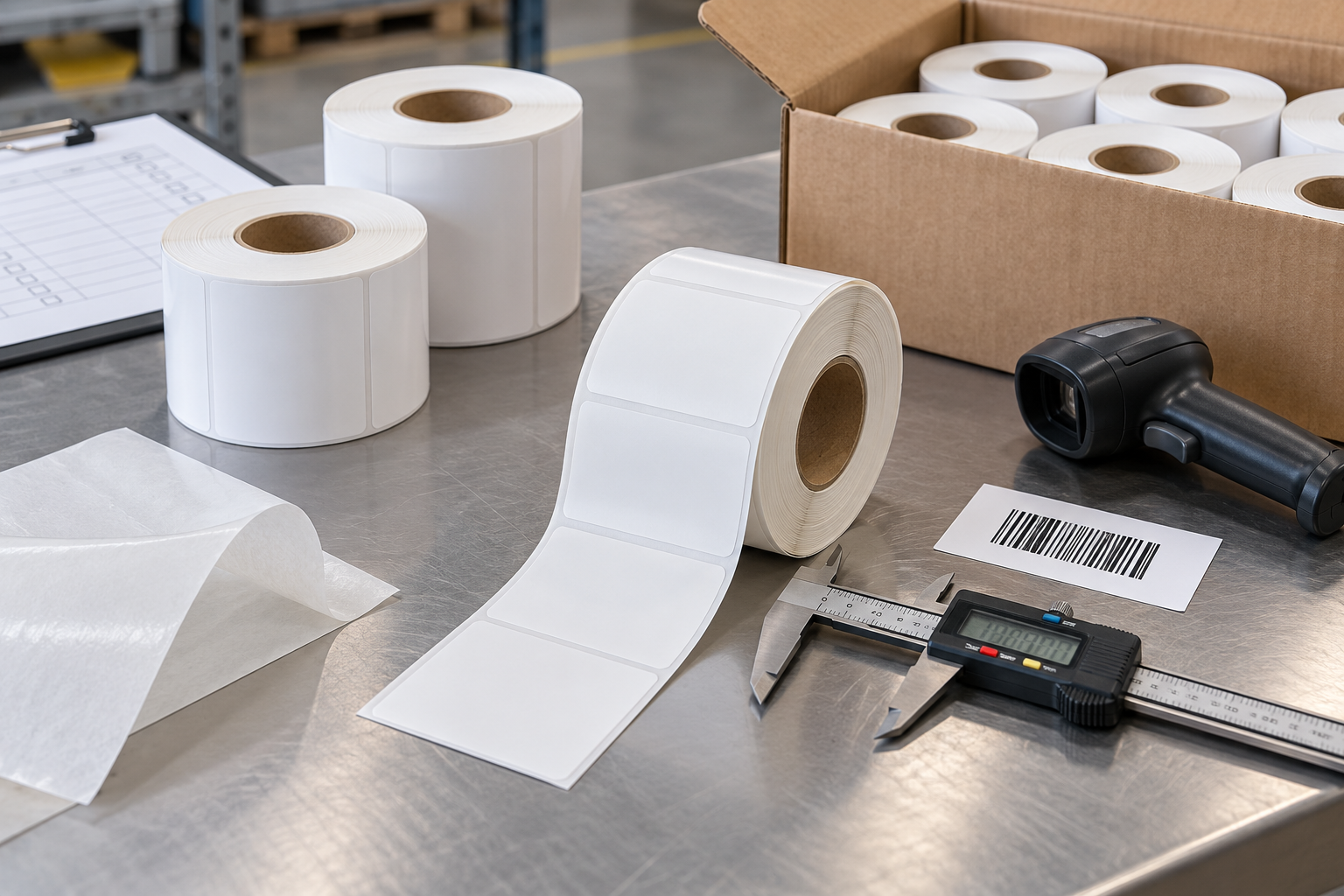
Specify core inside diameter, core width, maximum roll outside diameter, web width, winding direction, labels-in or labels-out, and which edge exits first. The roll must sit squarely on the unwind and track through the printer without lateral movement. Large rolls need cores strong enough to resist crushing.
State whether label rolls may contain splices and how they must be identified. Confirm the number of labels per roll and the waste-liner capacity. A high-count roll provides little benefit if the rewinder fills first or the added roll mass creates unstable unwind tension.
How Should Gaps, Marks, and Die Cutting Be Controlled?
Use the sensing method supported by the print engine: gap, notch, hole, or black mark. Registration features must remain consistent across the roll and pass through the correct sensor track. Preprint, transparent materials, and irregular shapes can reduce detection contrast.
The die must cut through the face and adhesive without weakening the liner. Deep die strikes can produce liner breaks under applicator tension. Shallow cuts leave labels connected to the matrix or liner. Check repeat, gap, liner margins, adhesive ooze, and label-to-print registration throughout the roll.
How Do Print Speed and Barcode Requirements Interact?
Higher throughput does not always require the highest printer speed. The system needs enough time to print a readable image, present the label, receive the applicator signal, place the label, and confirm completion. Dense barcodes and large dark areas may require reduced speed or adjusted heat.
Use the lowest darkness that creates a stable image at the selected speed. Excessive heat can spread barcode bars, darken the background, deform light media, and increase printhead wear. Grade barcodes after application because wrinkles, carton texture, curvature, and label placement can reduce scanning performance.
Which Applicator Method Changes the Label Requirement?
- Tamp application needs consistent pickup, pad vacuum, label stiffness, package distance, and contact pressure.
- Air-blow application needs a label light and stable enough to transfer accurately without folding or rotating.
- Wipe and direct-apply methods depend on controlled package motion, leading-edge contact, and smooth label release.
- Corner-wrap systems require accurate timing, package geometry, and adhesive that bonds across two adjacent panels.
Tell the converter which method is installed. The same label size can behave differently when it is carried on a tamp pad, moved through air, or wiped onto a passing carton.
How Should a Production Trial Be Run?
- Load a production-representative roll, calibrate the print engine, and verify one-label feeding and consistent peel position.
- Run every required label format at normal and peak line speed on actual packages from the expected tolerance range.
- Inspect barcode grade, placement, wrinkles, edge lift, missed labels, waste-liner tracking, roll changes, and recovery after stops.
Continue long enough to test warm equipment, a nearly full waste rewinder, and labels near the core. A short demonstration may not reveal changes in curl, release, roll tension, or adhesive buildup.
What Should Be Approved with the Supplier?
Give the label supplier the print engine and applicator models, application method, label drawing, roll diagram, material construction, package samples, speed, environment, barcode requirements, and acceptance criteria. Record the approved printer settings and media handling mode with the label specification.
Require notification before changing the face, thermal grade, adhesive, liner, die, core, winding direction, or manufacturing source. Retain an approved roll and applied package samples. Final acceptance should cover continuous feeding, clean release, accurate application, barcode readability, adhesion, and predictable roll-to-roll performance.