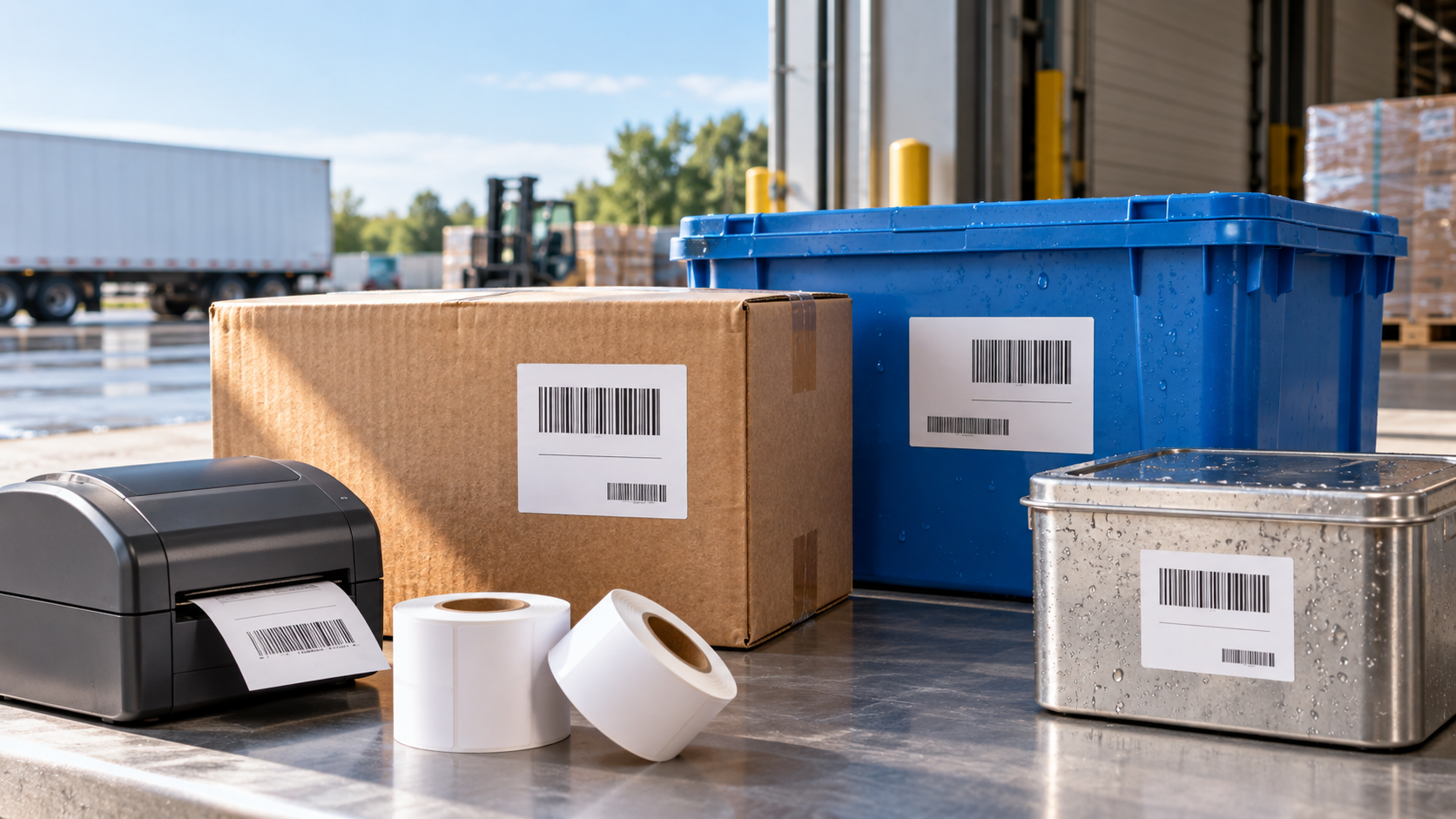
Direct thermal labels can work outdoors for a limited period when the construction is matched to sunlight, heat, moisture, abrasion, and the application surface. Standard paper labels are often unsuitable for uncontrolled exposure. Buyers should define the required outdoor life and test a protected or synthetic construction under the actual conditions.
A reliable choice begins with define the required outdoor life and account for sunlight and heat. The specification should also state the printer, surface, application temperature, service conditions, and acceptance test.
Buyers can review available outdoor thermal labels to identify possible formats before requesting samples. A product page narrows the search, but the real package and printer determine whether a construction is suitable.
Define the Required Outdoor Life
Outdoor use can mean a few hours on a delivery tote, several days at a loading area, or months on stored equipment. These applications do not need the same facestock, adhesive, or image protection. A useful specification states how long the text and barcode must remain readable and what happens if the label fails.
Set a clear period such as 48 hours, two weeks, or one season instead of asking for a weatherproof label. Identify whether the item returns indoors at night and whether the label is scanned once or repeatedly. The required life determines whether direct thermal remains a reasonable printing method.
Account for Sunlight and Heat
Direct thermal media reacts to heat by design. Sunlight can warm a dark container or enclosed vehicle far above the surrounding air temperature, and ultraviolet exposure can reduce image stability. Background darkening lowers barcode contrast even when the printed bars still look black.
Place printed samples on the actual product in the sunniest expected location. Check them at the hottest time of day and after cooling. If long exposure or high surface temperature is unavoidable, compare thermal transfer media or another durable marking method.
Separate Rain From Condensation
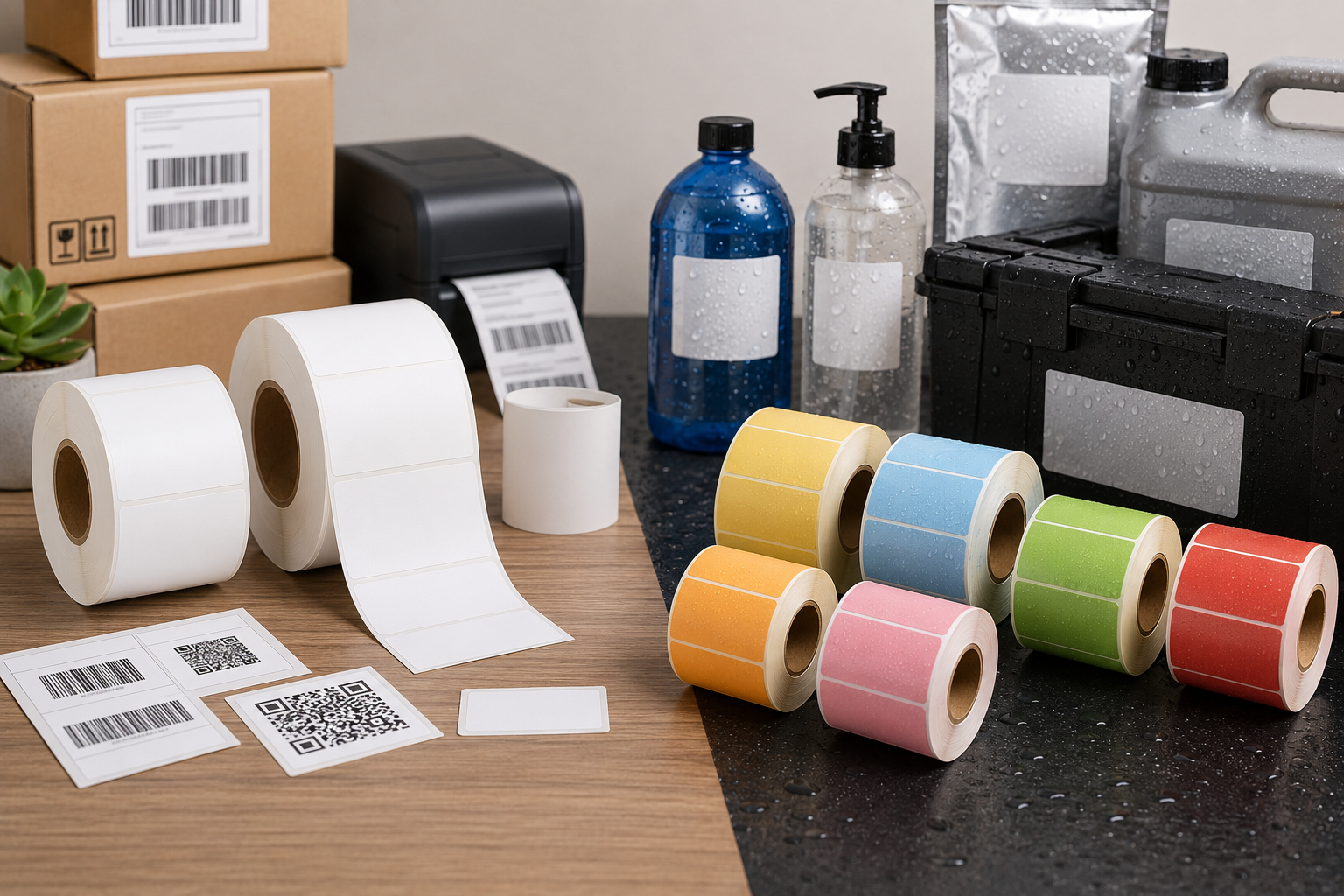
Rain strikes the label from outside, while condensation forms when a cold item enters warmer humid air. Water-resistant facestock may remain intact while the adhesive releases from a wet surface. Droplets can also create glare that interferes with scanning.
Test the complete label after application, not loose facestock. Include the real water source, duration, drying cycle, and wiping or handling that follows. Apply labels to clean and dry surfaces whenever the workflow allows.
Choose the Facestock and Protective Layer
Top-coated direct thermal paper adds protection over the imaging layer, while synthetic film can improve resistance to tearing and water. Neither term guarantees unlimited outdoor durability. Coating chemistry, film type, adhesive, liner, and print sensitivity vary among products.
Request performance information for the proposed construction and compare it with the stated outdoor period. Print samples on the target printer because a new coating may require different darkness or speed settings. Confirm barcode quality after exposure as well as before it.
Match Adhesive to the Outdoor Surface
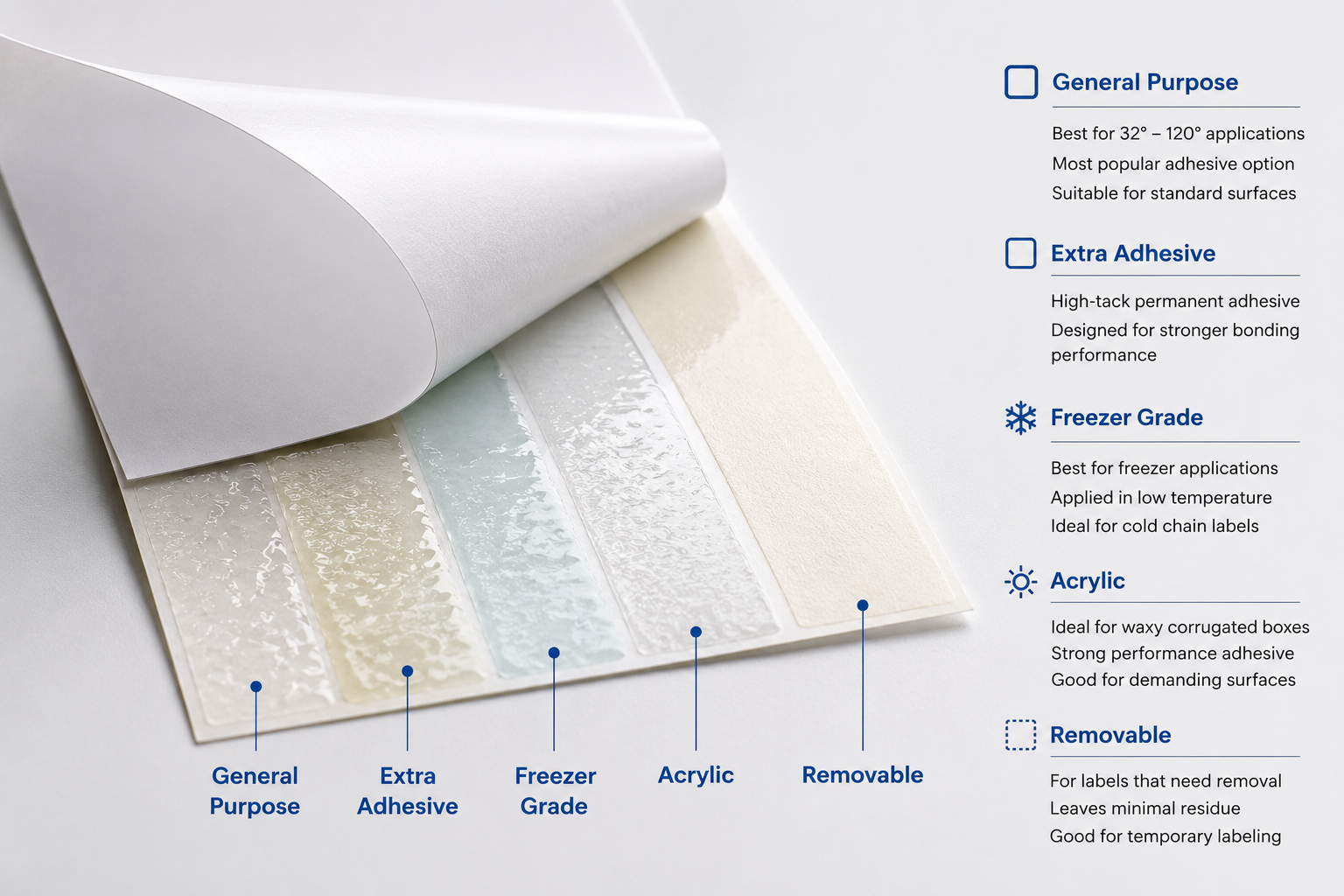
Outdoor labels may be applied to corrugated cartons, plastic totes, coated metal, glass, painted equipment, or flexible film. Dust, texture, low surface energy, curved shapes, and cold application reduce adhesive contact. A stronger adhesive description does not remove the need for surface testing.
Name the substrate and measure its temperature during application. Apply samples with consistent pressure, then inspect edge lift after heat, cooling, moisture, and normal handling. Test removability at the end of the service period when the container must be reused.
Protect Label Placement
A label placed on a top surface receives more direct rain and sunlight than one on a vertical or recessed panel. Corners, seams, straps, abrasion points, and flexible areas add mechanical stress. Placement can therefore extend usable life without changing the material.
Choose a smooth, sheltered panel that remains visible to the scanner. Keep the barcode away from package edges and avoid transparent covers that create glare unless they have been tested. Standardize the location so employees do not select a new exposure level for every item.
Approve Performance With a Field Trial
Laboratory data helps screen materials, but an outdoor field trial reveals the combined effect of weather, surface, handling, printer settings, and placement. One surviving sample is not enough to estimate a dependable failure rate.
Label a representative group of items from different container lots. Record the media lot, print settings, application date, weather, scan results, edge lift, background darkening, and physical damage. Approve the construction only after it completes the required service period.
Field Test Checklist
- Define the Required Outdoor Life Set a clear period such as 48 hours, two weeks, or one season instead of asking for a weatherproof label.
- Account for Sunlight and Heat Place printed samples on the actual product in the sunniest expected location.
- Separate Rain From Condensation Test the complete label after application, not loose facestock.
- Choose the Facestock and Protective Layer Request performance information for the proposed construction and compare it with the stated outdoor period.
- Match Adhesive to the Outdoor Surface Name the substrate and measure its temperature during application.
- Protect Label Placement Choose a smooth, sheltered panel that remains visible to the scanner.
Before approving a full order, provide the written requirements for how do you choose thermal labels for short term outdoor use to BETCKEY thermal labels. Confirm the exact facestock, adhesive, dimensions, roll format, printer compatibility, and sample conditions rather than assuming that a general product name proves performance.
Common Questions
Are direct thermal labels waterproof Some protected paper and film constructions resist water better than standard paper, but waterproof should not be assumed without a defined test. Water resistance also does not prove that the adhesive will bond to a wet surface.
Can a clear cover protect an outdoor barcode A cover may reduce direct water and abrasion, but it can trap heat, collect condensation, or create scanner glare. Test the complete covered package from the planned scan distance.
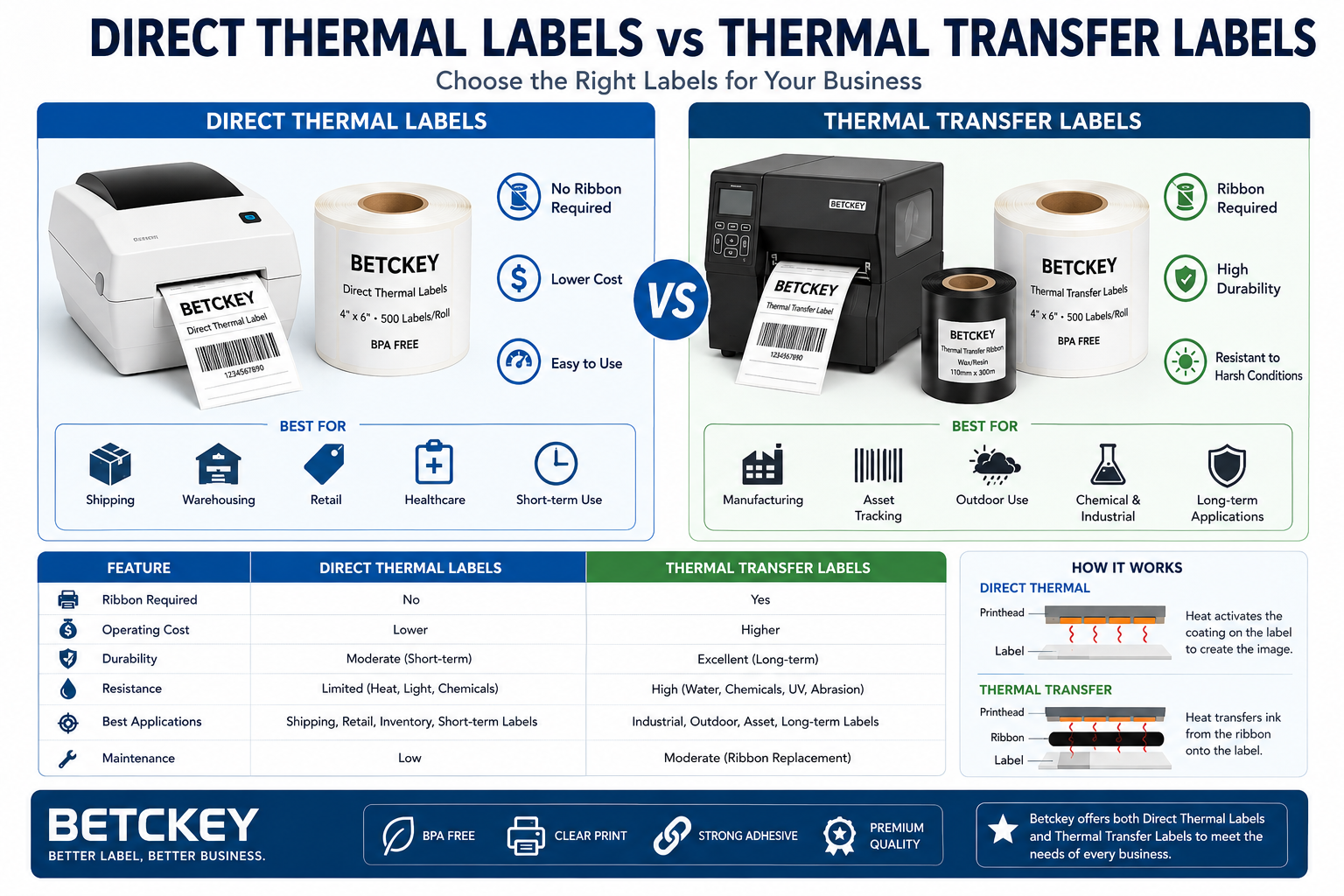
When should thermal transfer labels be considered Consider thermal transfer when the required outdoor life, heat, sunlight, chemicals, or abrasion exceeds the demonstrated capability of direct thermal media. The printer must support a ribbon and the ribbon must match the label material.
Final Selection
Approve the label only after the field test confirms the required service life and approve performance with a field trial. Retain the printed sample, media lot, printer settings, package description, exposure record, and acceptance result. These details let purchasing compare future lots against the same requirement and help operations investigate a failure without guessing.