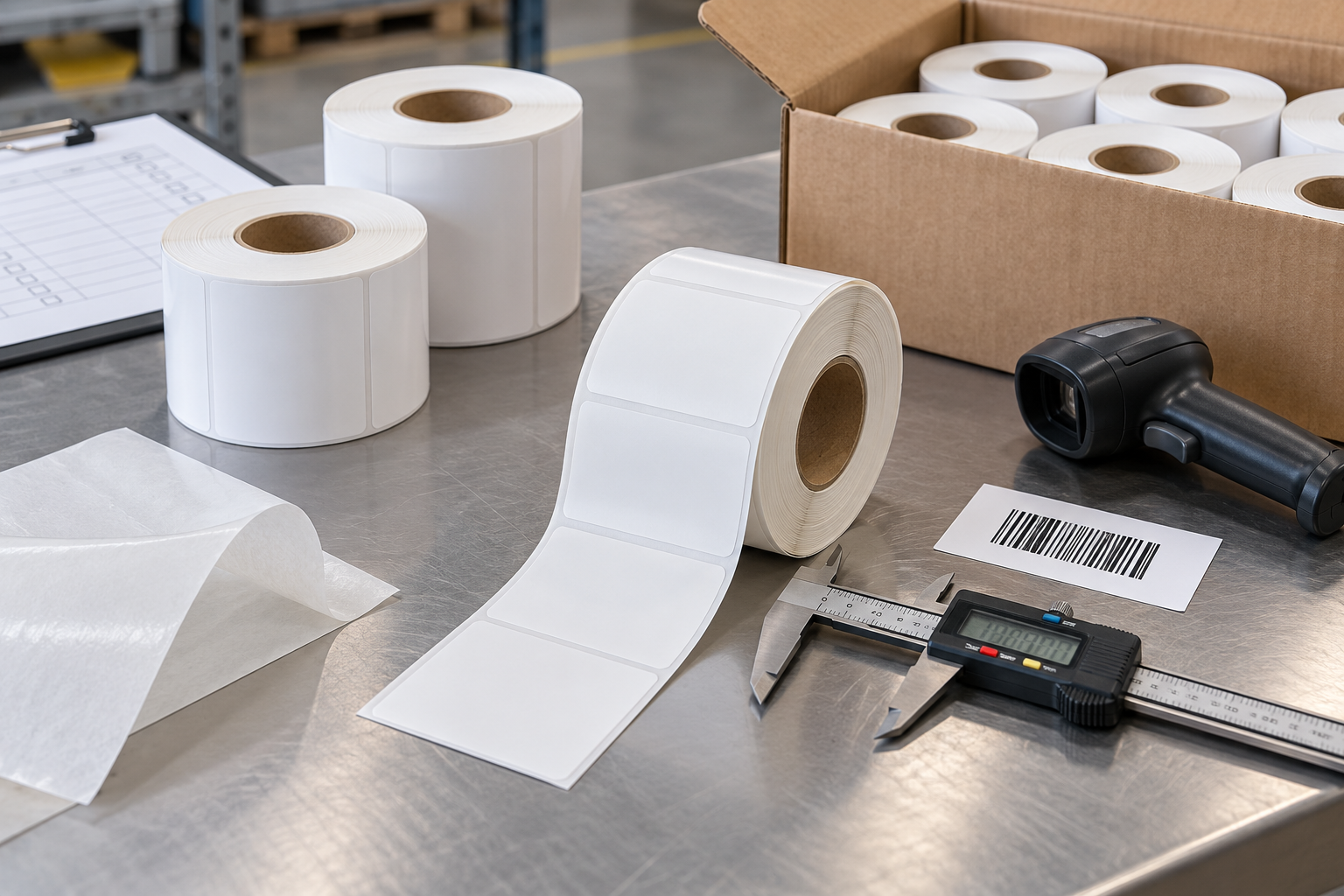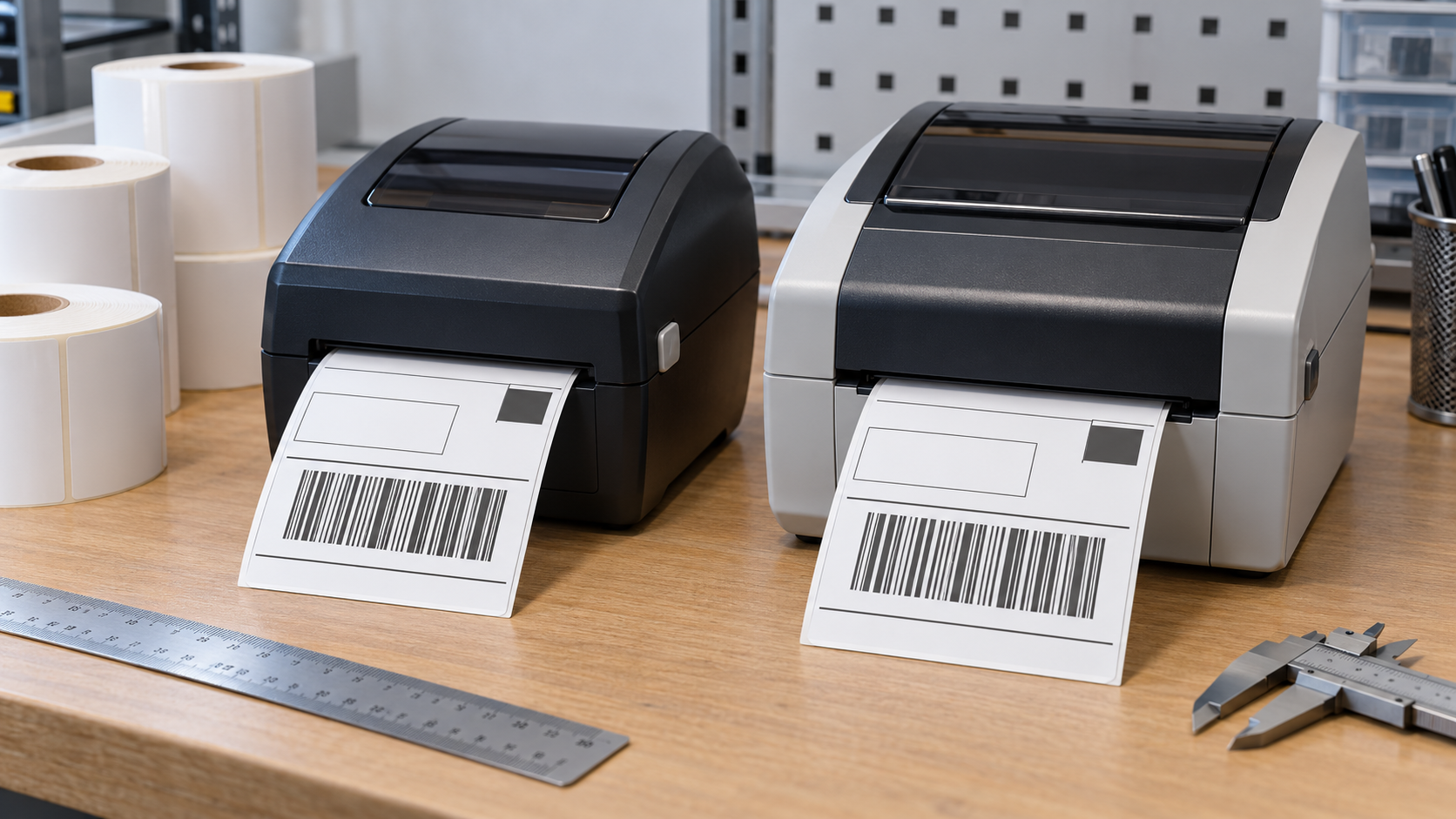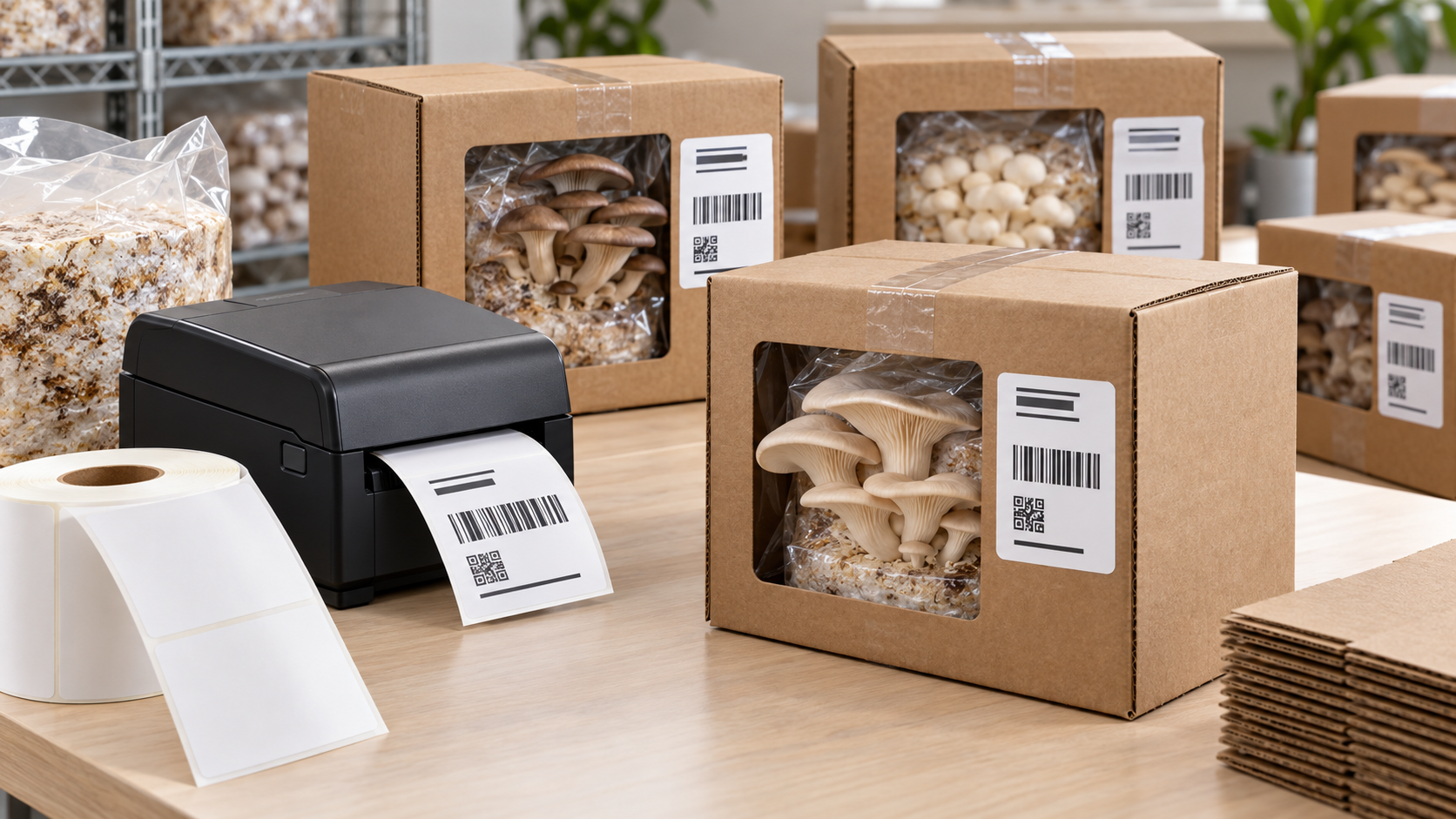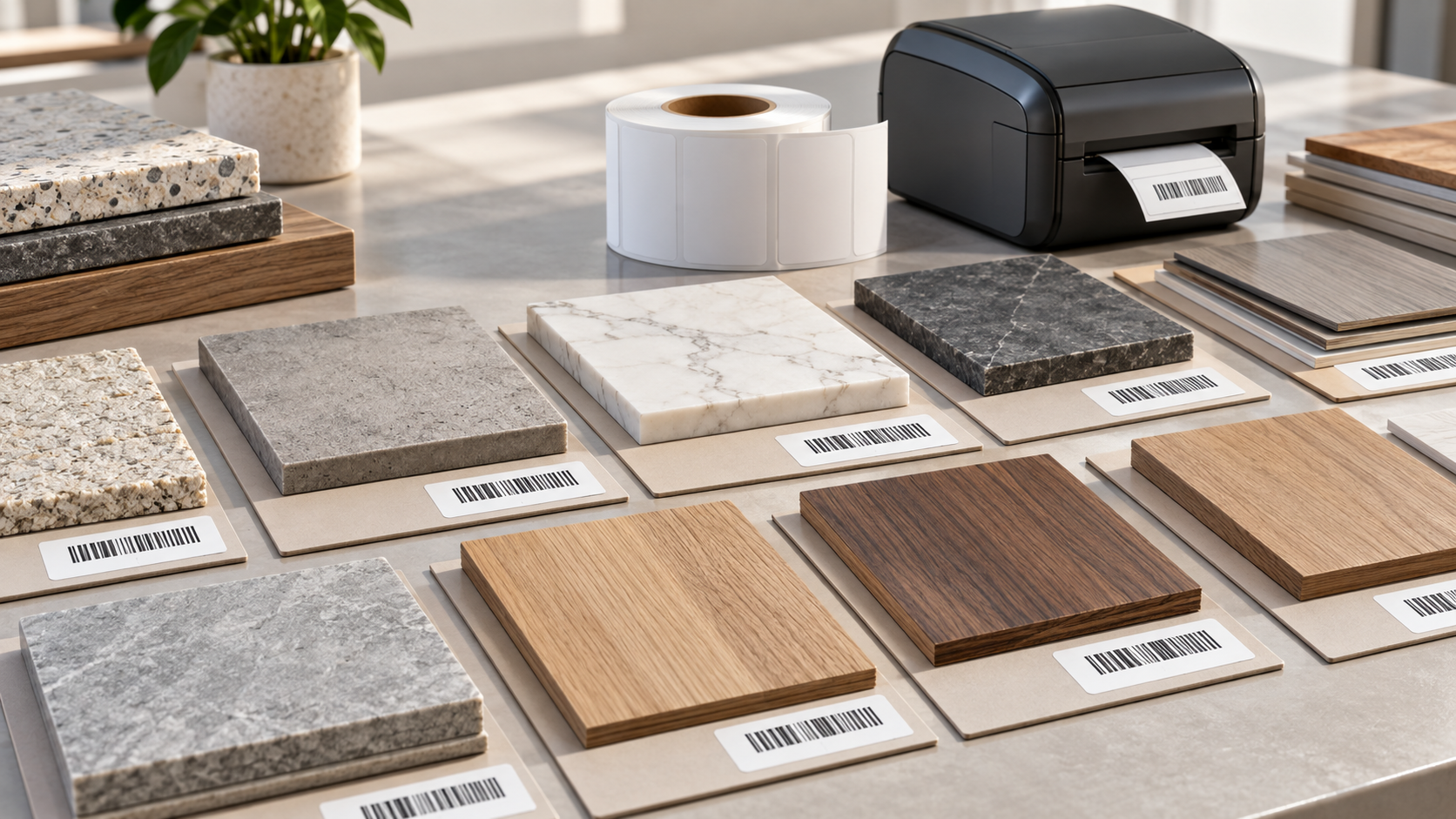
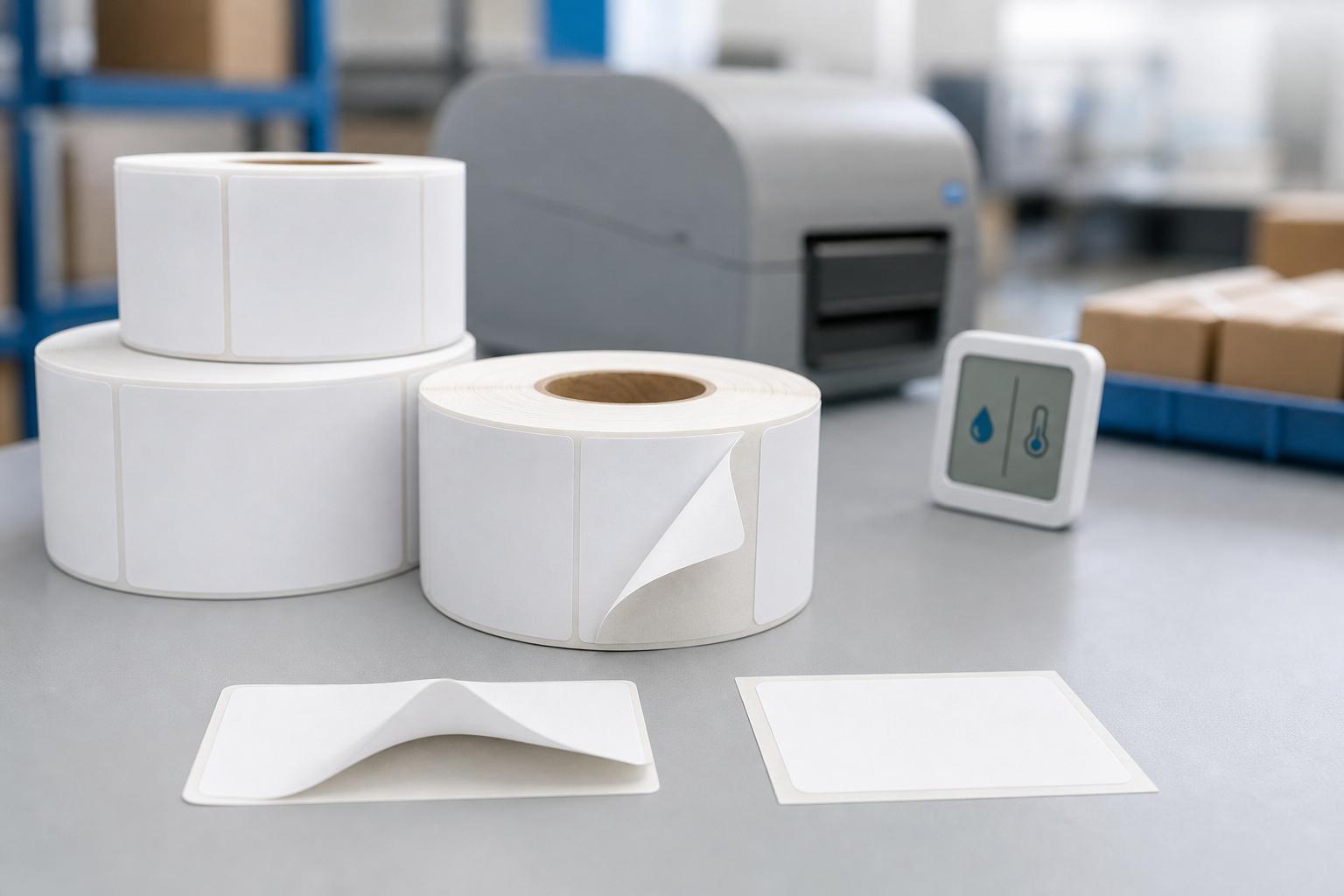
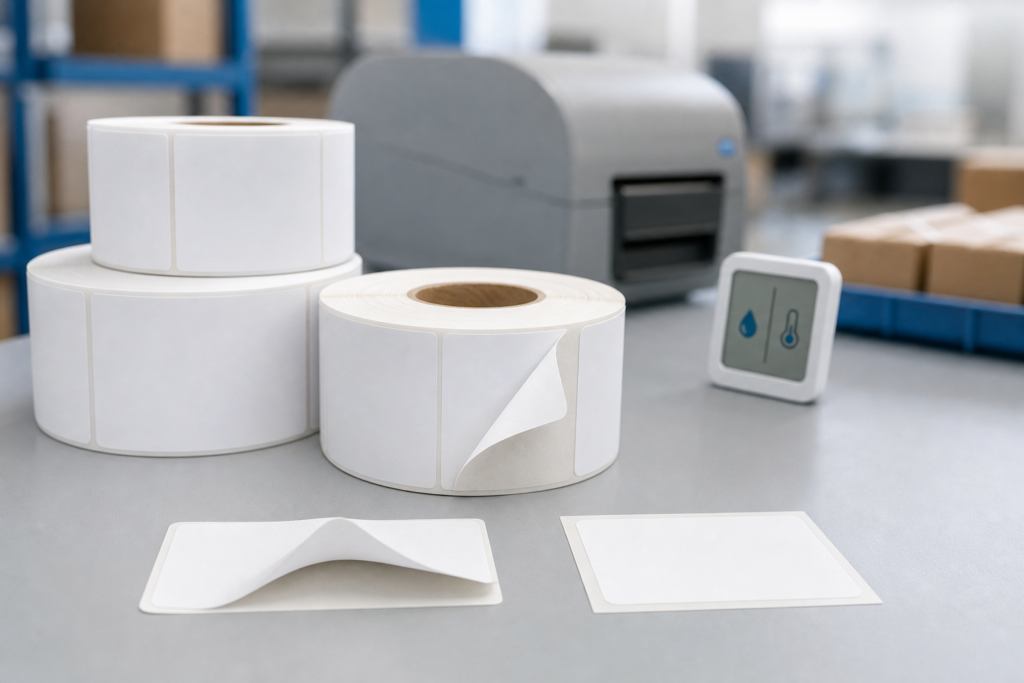
Thermal label curl is usually caused by an imbalance in moisture, coating, adhesive, liner, tension, or temperature across the label construction. Paper expands and contracts as humidity changes, films can retain converting stress, and adhesive or overlaminate layers can pull against the face material. The result may be edge lift, a tube-shaped curl, or an uneven potato-chip shape.
Prevent curl by selecting a balanced construction, controlling converting tension, storing rolls in stable conditions, allowing cold or hot rolls to acclimate before use, and testing the finished label on the real printer and package. A curled label should not be treated only as a cosmetic defect because it can cause dispensing, feeding, and adhesion failures.
What Does Label Curl Look Like?
Machine-direction curl makes the label roll toward its leading or trailing edge. Cross-direction curl lifts the side edges. A label may also twist diagonally or form waves across its surface. Record the direction, whether the label is still on the liner, and whether the curl appears before or after printing or application. These observations narrow the cause.
A label that lies flat on the liner but curls immediately after peeling often has an internal construction imbalance. Curl that develops while the label remains on the liner more often points to humidity, winding tension, liner distortion, or storage. Curl that appears only on a package may involve the adhesive, surface shape, or application pressure.
How Does Humidity Cause Curl?
Paper face stocks and paper liners absorb and release moisture. If one layer changes dimension faster than the other, the laminate bends toward the more stable or more highly tensioned side. High humidity can swell paper and tighten a finished roll. Very low humidity can dry the paper, increase static, and make edges lift or become brittle.
Keep unopened rolls in protective bags and cartons until needed. Store them away from concrete floors, exterior walls, heaters, vents, and direct sunlight. Move rolls into the print area early enough to reach the room’s temperature and moisture level while still wrapped, then open the package shortly before loading.
Can Temperature Create Curl?
Yes. A cold roll placed in a warm, humid room can attract condensation, while a hot roll can soften adhesive and increase edge ooze. Large temperature changes also make the facestock, adhesive, and liner expand at different rates. Printing before the roll stabilizes can lock in a temporary distortion and create unreliable dispensing.
Do not place rolls beside loading-bay doors, radiators, or sun-facing windows. If labels arrive very cold or hot, leave the sealed cartons in the operating area until the rolls are close to room conditions. The required time depends on roll size and the temperature difference, so verify flatness before production.
How Do Converting and Winding Tension Affect Curl?
Excessive or uneven tension during printing, laminating, die cutting, stripping, or rewinding can stretch one component more than another. When that tension is released, the stretched layer attempts to return to its original length and pulls the construction into a curve. A roll wound too tightly can also squeeze adhesive toward the edges.
The converter should use stable web tension and reduce rewinding pressure as needed for the material. The finished roll should be firm enough to handle but not hard, dished, or distorted. If curl repeats at regular intervals or differs from one side of the web to the other, request a review of tension, nip pressure, and roll alignment.
Can Overlamination Cause Thermal Labels to Curl?
An overlaminate can create curl when it is applied under more tension than the label face. The finished label normally curls toward the layer that carried the greater tension. A thick film over a light paper face can also overpower the paper even when the converting process appears stable.
For thermal labels that need protection, use a compatible thin overlaminate and keep it away from areas that must remain heat responsive unless the construction is designed for it. Test the final laminated label, not the unlaminated stock, because the added layer changes stiffness, heat transfer, dispensing behavior, and curl balance.
Does the Adhesive Matter?
Adhesive coat weight, softness, temperature response, and compatibility with the face and liner all affect dimensional balance. A soft adhesive may flow under heat or roll pressure and produce edge ooze. An adhesive that grips a curved package too slowly can allow a curled edge to lift before the bond develops.
Choose the adhesive for the application surface, application temperature, service temperature, and package shape. Clean the surface and apply firm, even pressure. Do not attempt to solve severe material curl by selecting an unnecessarily aggressive adhesive; the label still needs to feed, dispense, and remain stable before application.
How Can Curl Affect Printing and Application?
Curl can lift the leading edge into the printhead area, cause the web to track against a guide, or make a peeled label miss the applicator pad. It may also create wrinkles, barcode distortion, pre-dispensing, liner breaks, or labels that bridge over a curved surface instead of making full contact.
Run enough label rolls to evaluate repeated starts, stops, and speed changes. Check the first and last sections of the roll because winding pressure and moisture exposure may differ. A short successful print near the outside of a roll does not prove that the entire roll will remain flat.
What Should Be Checked When Curl Is Reported?
- Identify the face material, adhesive, liner, overlaminate, roll number, storage conditions, and time since opening.
- Photograph the label on the liner, immediately after peeling, and after application, with the curl direction clearly shown.
- Compare an unopened control roll with the affected roll under the same room conditions and printer settings.
Do not flatten the sample before sending it for evaluation. Preserve several affected labels on the liner and pack the roll so the edges are not crushed. The original curl pattern is important evidence for separating a material issue from handling or application conditions.
How Should a Supplier Prevent Curl?
A qualified label supplier should match the face, adhesive, and liner as a complete construction; control moisture and web tension during converting; use suitable roll hardness; protect finished rolls from climate changes; and retain production records. The supplier should also confirm whether the planned overprint process adds heat or tension.
Approve a production-representative sample on the actual printer and application line. Define acceptable flatness after acclimation, after peeling, and after application. If the label must wrap a small cylinder or pass through an automatic dispenser, include those conditions in the approval test rather than judging flatness only on a desk.