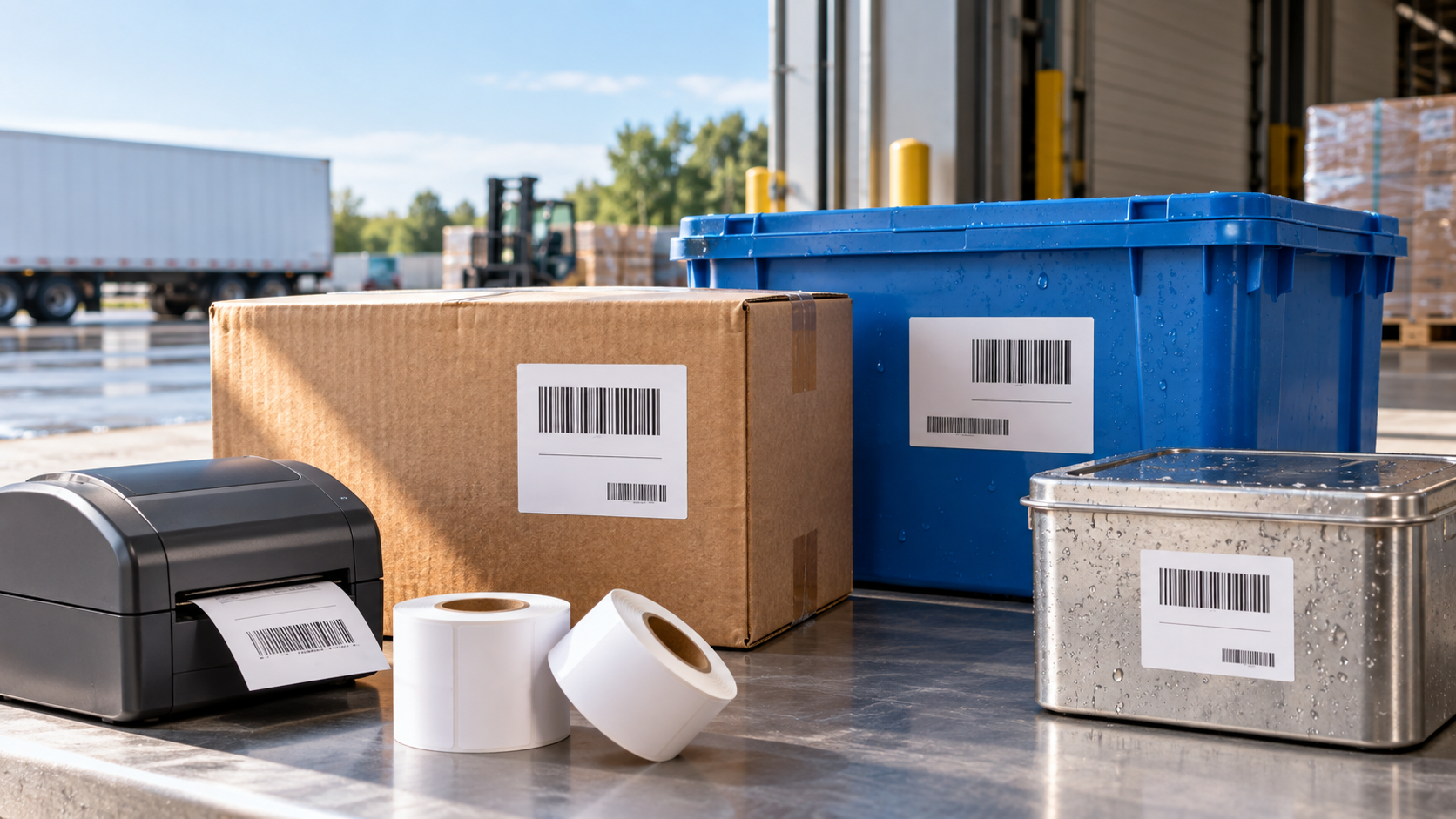
A splice joins two sections of label web so converting can continue after a material break, a defect is removed, or one source roll ends. Splices are common in roll manufacturing, but they can interrupt printing and automatic application if their number, construction, position, and identification are not controlled.
A splice is not automatically a defective roll. Acceptance depends on the purchase specification and the equipment using the roll. Manual or low-volume printing may tolerate clearly marked splices, while unattended print-and-apply, serialized labeling, healthcare identification, or other critical processes may require splice-free rolls.
What Is a Splice in a Thermal Label Roll?
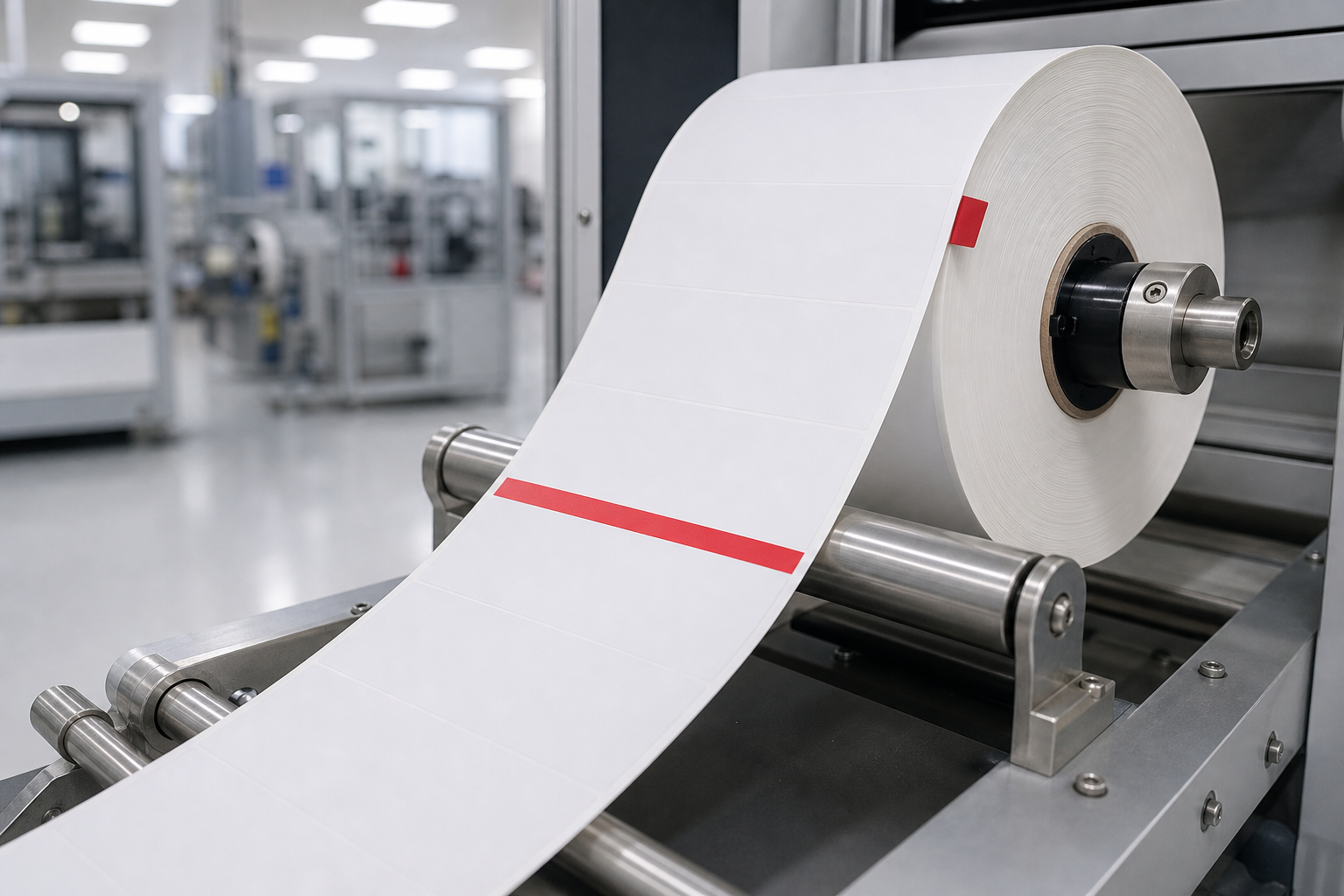
A splice is a planned joint where the end of one web section is connected to the beginning of another. It may join raw pressure-sensitive material during converting or join finished label web during rewinding. Splice tape normally holds the liner side without leaving loose edges that can catch in equipment.
The joint is thicker and less flexible than the surrounding web. It may contain missing labels, extra liner, tape, or a registration interruption. For this reason, the splice should be designed and marked as a controlled event rather than hidden inside the roll.
Why Are Splices Used?
Large source rolls can contain manufacturing splices, and converters may need to remove damaged material, contamination, coating defects, or incorrect print. A web break during printing, die cutting, matrix stripping, or rewinding can also require a joint so acceptable material can be recovered instead of discarded.
Splicing reduces waste and can make long production rolls practical. It becomes a customer problem only when the supplier exceeds the agreed allowance, makes a weak or bulky joint, fails to identify it, or places it where normal equipment cannot handle it safely.
Are Splices Considered Defects?
There is no universal answer for every label product and roll length. Material manufacturers publish different splice allowances based on construction and footage. Finished-label buyers may set stricter limits. The accepted number should therefore be written into the order rather than assumed.
A splice becomes nonconforming when it violates the agreed count, spacing, location, tape, identification, strength, or performance requirement. Even an allowed splice can be rejected if it damages labels, exposes adhesive, breaks the liner, or cannot pass through the intended printer.
What Problems Can a Splice Cause in a Printer?
The added thickness can lift the printhead or change pressure temporarily. Tape can create a blank or distorted printed area. A sensor may read the tape, missing label, or unusual liner opacity as a gap, mark, or media-out condition. The joint can also catch a guide or peel edge.
If the splice is weak, calibration, backfeed, acceleration, or waste-liner tension can pull it apart. If adhesive is exposed, it can contaminate the platen, sensor, printhead, or cutter. Operators should not continue printing blindly after a splice-related jam because loose tape or adhesive may remain inside the media path.
Why Are Splices More Critical in Automatic Application?
Automatic systems depend on continuous web tension and exact label presentation. A splice may prevent the next label from peeling, create a false label-present signal, break at the waste rewinder, or produce an unlabelled package. Unattended lines may process many products before the problem is noticed.
Systems that apply unique serial numbers or regulated information also need data control. If several labels around a splice are discarded, software must know which records were not applied. The operational procedure must connect physical splice handling with print-job recovery and product verification.
How Should a Good Splice Be Constructed?
The web should remain square, aligned, and close to its original width. The splice should be strong enough for normal unwind and rewind tension without creating a hard ridge, loose flap, or adhesive-exposed edge. Tape must be compatible with the liner and should not transfer residue.
The joint should not create an abrupt sideways step that steers the web. Finished labels surrounding it should be removed or controlled according to the agreed method. Splice design must be validated on the actual printer because a joint acceptable on a straight path may fail at a sharp peel plate.
How Should Splices Be Identified?
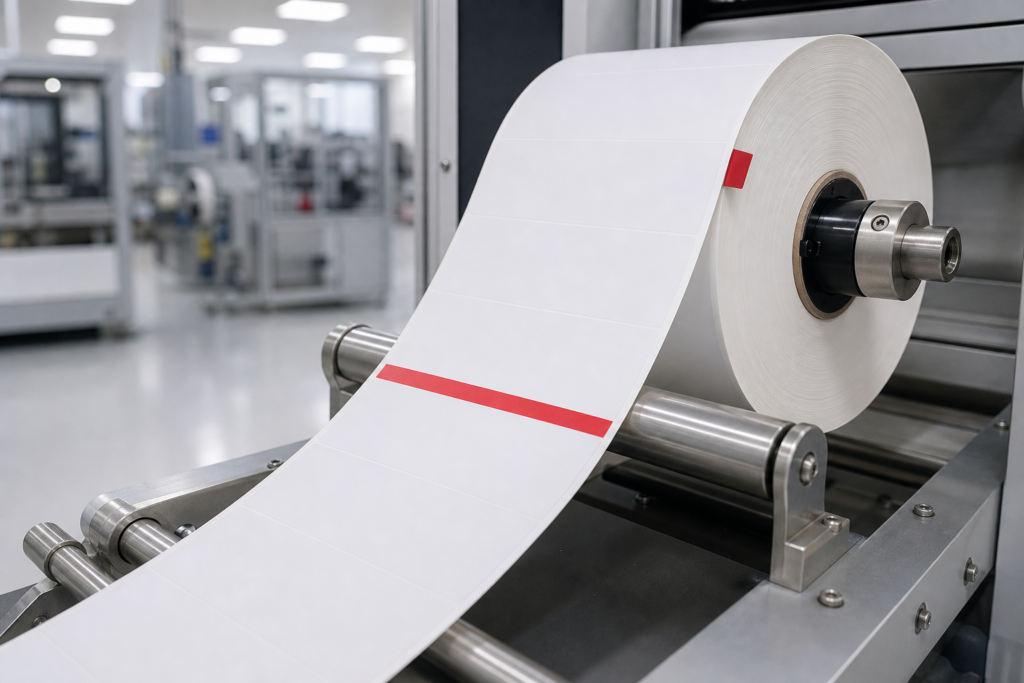
Mark the roll edge or outer packaging so receiving staff and operators know a splice is present. Use an agreed visible tape color or flag that does not contaminate the printer. If the equipment has a splice detector, confirm the mark material, position, contrast, and sensor settings.
The roll label should state the number of splices when required. For critical operations, include their approximate positions or remaining-label counts. A marker that is visible only after the splice enters the printer gives the operator too little time to stop the line.
How Many Splices Should Be Allowed?
Set the maximum according to roll length, material construction, equipment risk, and commercial agreement. Longer raw-material rolls may have tiered allowances, while converted desktop rolls may be required to contain none. Avoid copying a source-material policy directly into a finished-label specification.
Also specify minimum distance between splices and distance from the beginning or end of the roll. Closely spaced joints create repeated downtime, and a splice near the outside or core may complicate loading, calibration, or end-of-roll handling. The rule should be measurable during supplier inspection.
What Should Operators Do When a Splice Approaches?
- Pause the print or application process before the marked joint reaches the printhead or peel mechanism.
- Advance or remove the splice and any affected labels according to the approved work instruction without cutting into machine components.
- Re-thread the liner, recalibrate if necessary, resume the job, and verify the first printed and applied labels.
- Reconcile skipped serial numbers or label records and inspect products that passed during the interruption.
Do not pull a splice backward through the printer unless the equipment procedure permits it. Backward movement can peel labels inside the mechanism or transfer tape residue to sensors and rollers.
When Should Splice-Free Rolls Be Required?
Require splice-free thermal labels when the process cannot stop safely, labels are applied without an operator, every label carries a controlled serial number, a liner break creates substantial cleanup, or a missed label creates regulatory or customer risk. Splice-free supply may affect price, lead time, and available roll length.
The phrase splice-free should appear on the purchase order and approved specification. Confirm whether it applies to the finished roll only or also to the underlying facestock. If zero splices cannot be guaranteed, agree on detection, marking, and controlled-removal procedures before production.
What Should Be Included in the Purchase Specification?
- Maximum splices per finished roll, minimum spacing, allowed position, tape type and color, joint orientation, and identification method.
- Printer or applicator model, sensing method, peel mode, waste rewinder, web tension, speed, and whether automatic splice detection is installed.
- Required records, roll labeling, lot traceability, operator notification, sample approval, and treatment of labels adjacent to the splice.
Ask the label maker to document the approved splice standard and retain converting records. Incoming inspection should compare roll markings, packaging, and certificates with the order. During qualification, run a representative splice through the complete process or require splice-free samples when testing the event would create unacceptable risk.